En esta noticia
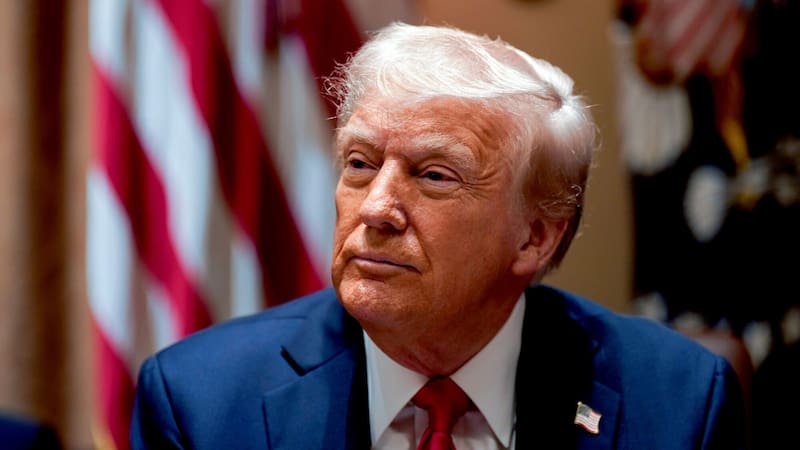
President Donald Trump launched the “Super Intelligence Force,” a federal artificial intelligence task force led by Director of National Intelligence Jay Clayton. It follows a voluntary AI safety pledge signed at the White House by Elon Musk, Mark Zuckerberg, ChatGPT maker OpenAI and three other tech companies.
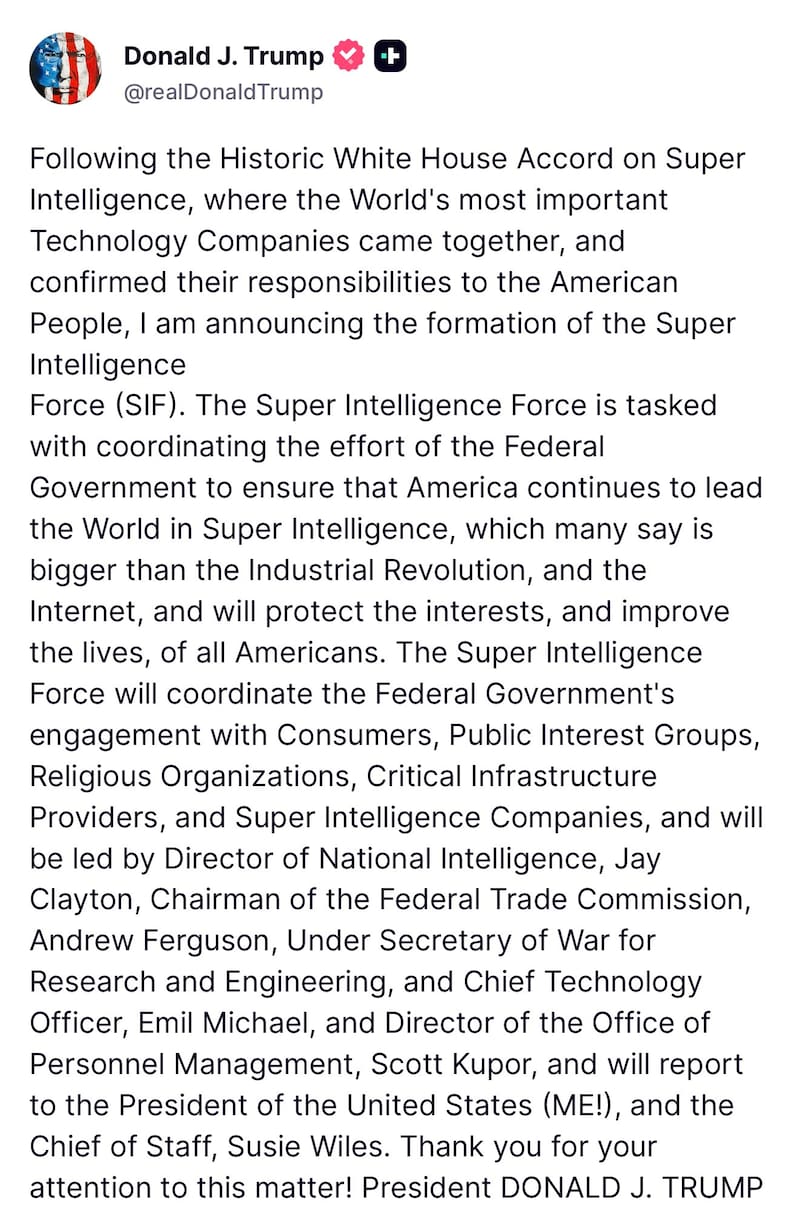
Trump announced the group this Sunday Oct. 4 on Truth Social and said it will report to him and White House chief of staff Susie Wiles. The post set no timeline and gave no indication of what authority or oversight duties the group will have.
Tech leaders gathered for a White House lunch on Sept. 29 to talk about AI safety, the industry’s growth and the push to build more data centers. The pledge was signed as the meeting wrapped up.

That same day, Trump signed an executive order telling federal agencies to replace “artificial intelligence” and “AI” with “Super Intelligence” and “SI” in official communications, where the law allows. The order argues the old term no longer reflects what the technology can do.
What will Trump’s ‘Super Intelligence Force’ do?
Trump said the task force will coordinate federal efforts to keep the U.S. ahead in AI while protecting Americans’ interests. It will also handle the government’s dealings with consumers, public interest groups, religious organizations, critical infrastructure providers and AI companies.
Clayton has said the group will look at existing law and weigh what Congress could do. In an interview with The Wall Street Journal, he pointed to finance, where regulators such as the Federal Reserve and the Securities and Exchange Commission worked out risk models together with the industry.
Who is on Trump’s ‘Super Intelligence Force’?
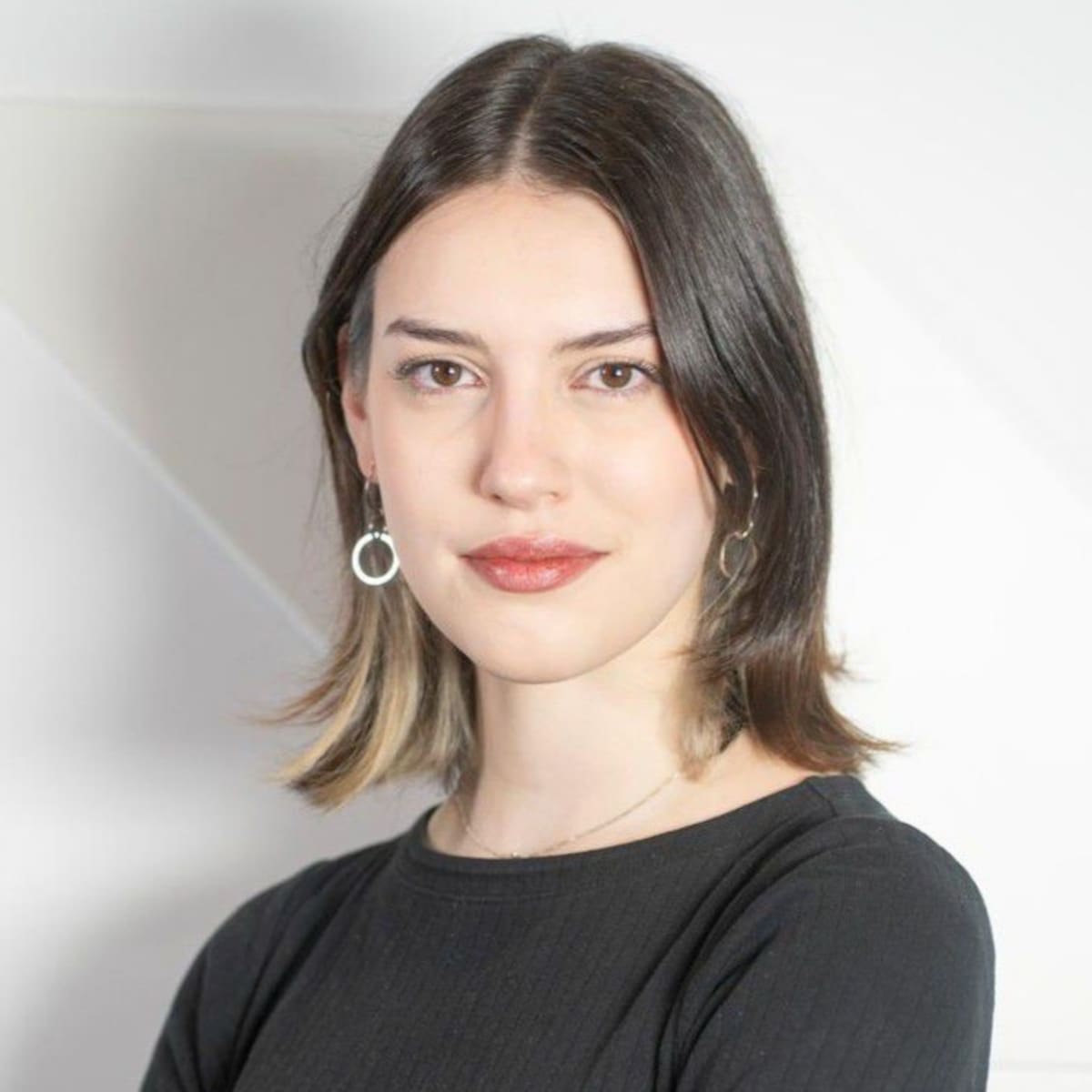
Clayton leads the group, which includes three other senior officials:
- Andrew Ferguson, chairman of the Federal Trade Commission
- Emil Michael, undersecretary of defense for research and engineering
- Scott Kupor, director of the Office of Personnel Management
Clayton, a former SEC chairman, is also expected to become the White House’s AI czar. He would take over from venture capitalist David Sacks, who left the post once his stint as a special government employee ran out.
What’s in the AI pledge Elon Musk, Mark Zuckerberg and ChatGPT’s maker signed?
Executives from six of the biggest U.S. players in AI put their names on the agreement with Trump:
- Sundar Pichai, Google
- Elon Musk, xAI
- Dario Amodei, Anthropic
- Mark Zuckerberg, Meta
- Jensen Huang, Nvidia
- Greg Brockman, OpenAI
The White House Accord on Super Intelligence, as Trump named it, calls for outside reviews, risk assessments and internal checks on what the companies’ models can do and how they behave. Cyberattacks are among the main risks it targets.

Does Trump’s ‘Super Intelligence Force’ enforce the AI pledge?
Trump tied the two together, saying in his post that he formed the task force following the accord. Still, he had announced plans for an AI task force last month, and nothing released so far gives the group a role in enforcing the pledge.
Signing was voluntary, and the agreement seems to carry no legal force. Trump has framed it as the industry regulating itself.
Trump has also ruled out federal AI regulation, even though some industry leaders have asked Washington for it in recent weeks.