
En esta noticia
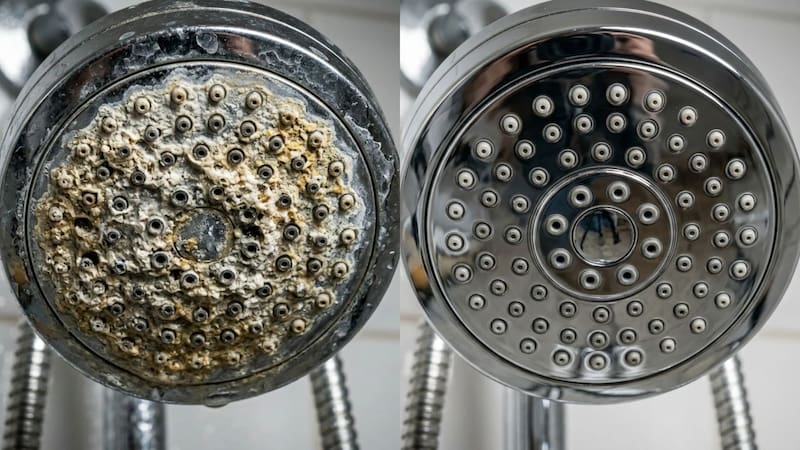
Poor water distribution in the shower can be a sign that the fixture needs more than a quick rinse. When mineral residue accumulates inside its tiny openings, some nozzles may become partially obstructed, affecting the spray pattern and making the water flow seem weaker than usual.
Instead of relying exclusively on traditional household remedies, there is another ingredient worth considering: citric acid. This compound can help loosen stubborn mineral deposits and make them easier to remove. However, using it correctly is essential to clean the showerhead without compromising its finish or components.

How citric acid works against limescale buildup
Hard water contains dissolved minerals, including calcium and magnesium. When water droplets remain on a surface and evaporate, some of these minerals are left behind. Over time, repeated exposure can create a hard, whitish layer around the showerhead’s small outlets.
Citric acid is a naturally occurring substance found in citrus fruits and widely used in household cleaning formulations. According to the University of Missouri’s explanation of acids and bases in cleaning products, acidic cleaning solutions can help dissolve mineral residues that are difficult to remove through ordinary cleaning.
This happens because many limescale deposits contain calcium carbonate, which reacts with acidic substances. As the reaction breaks down the mineral buildup, the residue becomes easier to wash away with water.
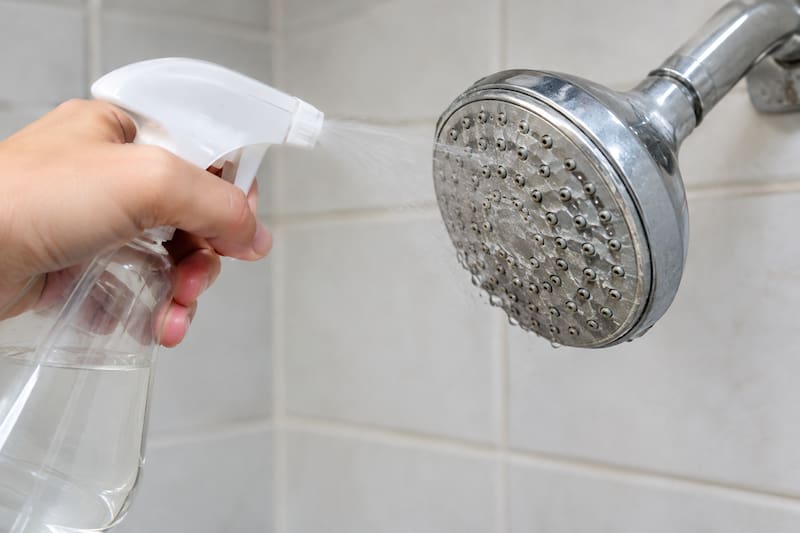
Baking soda works differently. Because it is mildly alkaline, it is more commonly used for light cleaning, deodorizing and gentle abrasion. It does not provide the same chemical action against calcium-based deposits as an acidic descaling product.
For this reason, citric acid may be worth considering when mineral buildup is affecting a showerhead. Nevertheless, its suitability depends on the fixture’s construction, surface coating and manufacturer’s recommendations.
Step-by-step instructions for cleaning a showerhead with citric acid
Before applying any acidic solution, check the showerhead manufacturer’s maintenance guidelines. Some finishes and materials may be sensitive to acidic products, even when they are diluted.
- Prepare the descaling solution: Choose a citric-acid cleaning product approved for the type of showerhead you have. Dilute it according to the instructions on its label rather than estimating the proportions yourself.
- Treat the affected area: If the showerhead can be detached and its manufacturer allows soaking, place it in a container filled with the prepared solution. Make sure the mineral deposits are covered. For fixed fixtures, follow the product’s instructions for cleaning without removing the showerhead.
- Allow the product to work: Respect the contact time indicated on the packaging. Leaving an acidic solution on the surface longer than recommended could affect certain finishes or components.
- Remove the remaining residue: Once the treatment is complete, gently brush the nozzles with a soft toothbrush or wipe them with a nonabrasive cloth. Avoid sharp objects, metal brushes or anything that could scratch the surface or enlarge the openings.
- Rinse thoroughly and check the spray: Wash away all traces of the cleaning solution with clean water. Reattach the showerhead if necessary and turn on the shower to see whether the water distribution has improved.
Safety precautions: Citric acid is not suitable for every showerhead. Do not use it if the manufacturer advises against acidic cleaners. Stop immediately if you notice discoloration, a dull finish or signs of surface damage. Never combine citric acid with bleach or other household cleaning products.