
En esta noticia
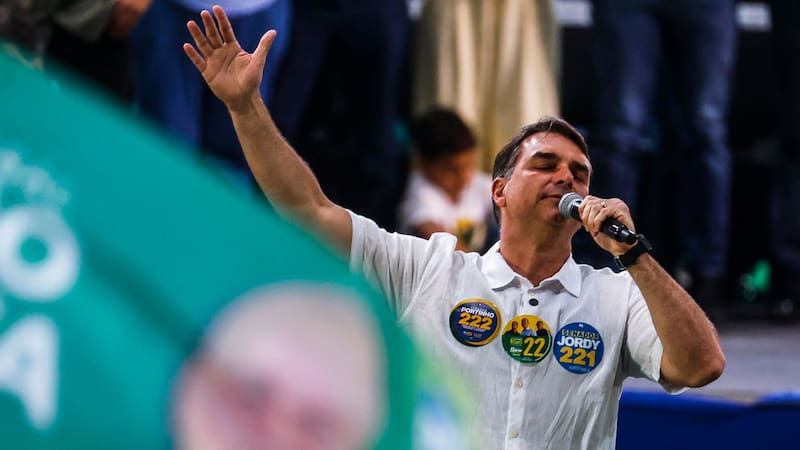
Defying most preelection polls, right-wing candidate Flávio Bolsonaro took the lead over President Luiz Inácio Lula da Silva in the first round of Brazil’s presidential election Sunday, winning 47% of the vote to 45.1%.
The son of former President Jair Bolsonaro — who is serving a 27-year sentence for plotting a coup after losing the 2022 election — and an ally of President Donald Trump, Flávio fell short of an outright majority, sending the race to an Oct. 25 runoff.
Flávio finished more than 2.2 million votes ahead of Lula, according to Brazil’s Superior Electoral Court.

Brazil’s Congress also shifted right. Flávio’s Liberal Party nearly doubled its Senate seats, from 15 to 28, a total no party has reached since 1985, and projections show it with the largest delegation in the lower house.
What would a Flávio Bolsonaro win mean for the US?
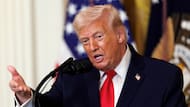
Brazil has held direct presidential elections since 1989, and in every runoff since then, the first-round leader has gone on to win. Analysts see Brazil as the biggest prize yet in Trump’s push for U.S. dominance over the Western Hemisphere, an approach dubbed the “Donroe Doctrine” by political analysts.
The policy treats the region as a U.S. sphere of influence. Its priorities include fighting cartels, curbing migration, securing critical minerals and countering China’s economic presence in Latin America.
Markets cheered the result, and the U.S.-listed iShares MSCI Brazil exchange-traded fund jumped as much as 15% in premarket trading in New York on Monday. Beyond Wall Street, a Bolsonaro government could reshape ties with Washington in several areas:
Regional security
Analysts expect Brazil would join the Shield of the Americas, the anti-cartel coalition Trump launched in March. Brazil and Mexico, Latin America’s two largest economies, are its most notable absences.
Organized crime
Flávio’s platform pledges to declare the PCC and Comando Vermelho, Brazil’s two largest gangs, narco-terrorist organizations. The U.S. gave both groups a similar designation in May, a step that could open the door to deeper U.S. involvement.
Trade and minerals
Flávio has floated a free trade agreement with the U.S. and pitched Brazil’s rare earths as a way to cut American dependence on China. His platform also promises to repair relations with Washington, which it says came close to a rupture under Lula.
China
China is Brazil’s largest trading partner and the top buyer of its soybeans, iron ore and oil. Flávio’s platform keeps China among Brazil’s negotiating partners, and analysts say those ties would limit how far Brazil could tilt toward Washington.
A Lula win, by contrast, would keep Brazil as the most prominent holdout to Trump’s regional agenda. Analysts expect Lula would work with Mexican President Claudia Sheinbaum to push back on the Donroe Doctrine.
How have Trump’s clashes with Lula shaped Brazil’s election?
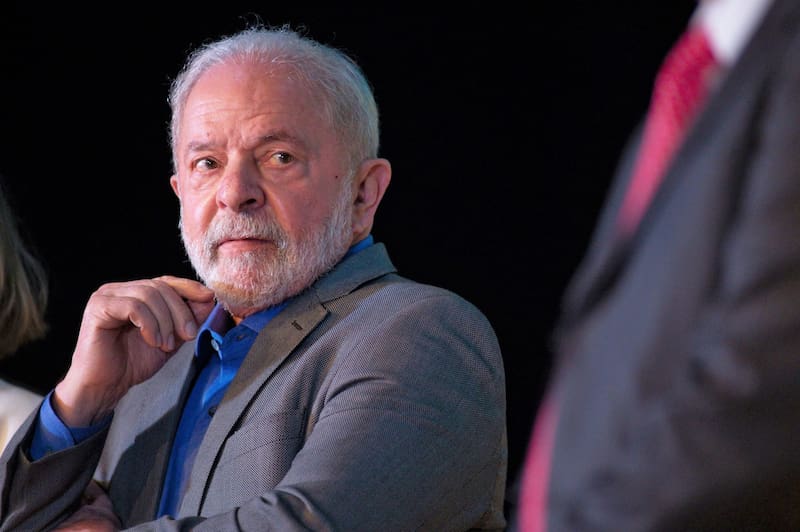
Lula’s Brazil has stood apart as governments aligned with Trump took power in Argentina, Chile and Colombia. The rift with Washington opened in mid-2025, when Trump hit Brazilian imports with 50% tariffs in protest of the coup case against Jair Bolsonaro.
The administration also placed Treasury sanctions on Alexandre de Moraes, the Supreme Court justice in charge of the trial. Neither move changed the outcome: The former president was found guilty two months later, and Lula gained ground in the polls.
Trump eventually eased duties on a range of Brazilian foods, but tensions flared again this year. He added a 25% tariff in July, the same month Brazil denied entry visas to two senior State Department envoys, saying they planned to interfere in the vote.
The U.S. canceled the visa of Brazil’s ambassador in Washington in August. Lula has framed the dispute as a matter of sovereignty, telling the U.N. General Assembly in September that Brazil “is nobody’s backyard,” a remark widely understood as a jab at Trump.
How close are the Bolsonaros to Trump?
Jair Bolsonaro, known as the “Trump of the Tropics,” questioned Brazil’s voting system and never clearly conceded in 2022. Days after Lula took office, his supporters stormed Congress, the Supreme Court and the presidential palace, in scenes compared to the Jan. 6, 2021, attack on the U.S. Capitol.
His third son, Eduardo Bolsonaro, later moved to the U.S. and lobbied the Trump administration for the tariffs and sanctions imposed in 2025. The Bolsonaro camp also pushed Washington to designate Brazil’s two largest gangs as terrorist organizations.
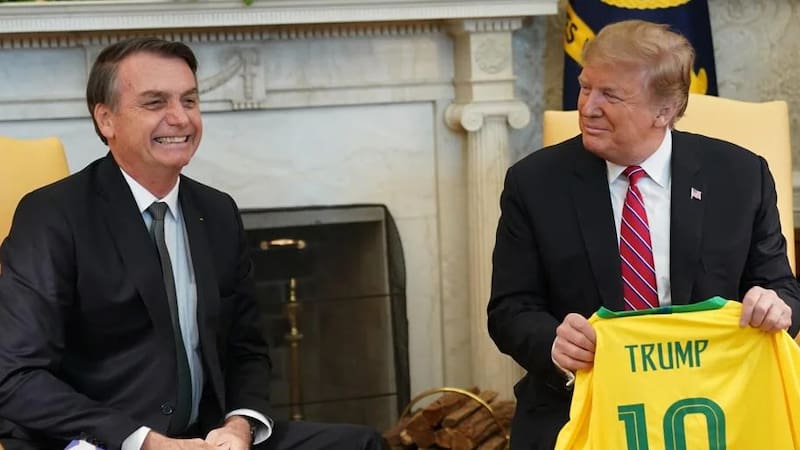
Flávio courted the American right at CPAC in Texas in March, and Trump has hosted him at the White House and praised him publicly. Flávio says his family’s ties to Trump benefit Brazil but insists he is not receiving help from the U.S. president.
Trump has not formally endorsed Flávio. Before the vote, Lula’s allies warned that Washington could refuse to recognize a Lula victory, citing the blocked U.S. observer mission. The State Department has denied trying to influence the election.