

En esta noticia
In the United States, the 2026 daylight saving time will end next Sunday, November 1, at 2:00 a.m., local time, according to the National Institute of Standards and Technology (NIST). At that time, the clocks must be set back one hour.
The change is part of the current rules of Daylight Saving Time (DST), also known as daylight saving time. During this year, and following the NIST’s official publications, this period began last March 8 at 2:00 a.m.
When does the time change in the United States in 2026?
The time change in the United States will be on November 1. At 2:00 a.m., the time will go back to 1:00 a.m.
The regulations establish that daylight saving time begins each year on the second Sunday in March (“spring forward”) and ends on the first Sunday in November. When the end of DST arrives, the clocks are set back one hour and the day gains an extra hour.
The recommendation is to set the clocks back one hour before going to sleep on Saturday, October 31.
The change is known as “fall back” and, regarding it, NIST notes that the shift to standard time effectively moves one hour of daylight from the end of the afternoon to the morning.
How do you adjust the clocks?
In most cases, cell phones, computers, and other connected devices should update the time automatically, as long as the time zone is correctly configured and the operating system updates are up to date.
NIST clarifies that its time services transmit Coordinated Universal Time (UTC). Then, what relates to the local time zone and daylight saving time is handled by the device’s operating system.
It should be noted that the Internet Time Service mainly uses the Network Time Protocol (NTP), which does not include daylight saving time information on its own, meaning it depends on the operating system.
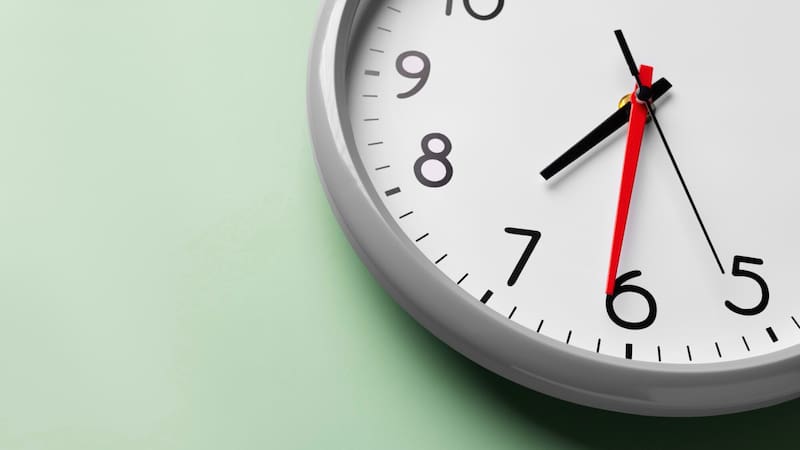
The official recommendation is to keep the software updated and, in the event of any error, check the date, time, and time zone settings.
What happens with radio-controlled clocks?
Radio-controlled clocks that receive the NIST time signal should make the change automatically. The WWVB signal that each device receives contains information that detects whether one schedule or the other is in effect.
If the clock does not change correctly, the agency advises checking whether it recently received the time signal, as well as reviewing whether the configured time zone is correct.
In which U.S. states does the time not change?
Although most of the United States will undergo a time change, it is worth noting that there are some exceptions.
According to NIST, daylight saving time does not apply in:
- Hawaii
- American Samoa
- Guam
- Puerto Rico
- U.S. Virgin Islands
- Arizona (the Navajo Indian Reservation does apply)
Is the end of daylight saving time coming to the United States?
Not yet. The time change once again became a topic of debate in Washington after the House of Representatives approved the Sunshine Protection Act last July, a bill aimed at keeping daylight saving time all 365 days of the year and eliminating the semiannual time changes.
However, since the proposal still requires Senate backing, there is not yet any current change to the rules.