

The Supreme Court of Justice of Mexico (SCJN) set new standards to protect the rights of older adults facing criminal proceedings. It also reaffirmed that the same circumstance cannot be used twice to increase a sentence.
The rulings were issued by the full bench of the high court on May 20, 2026, as it decided two cases related to criminal proceedings in the state of Nuevo Leon.
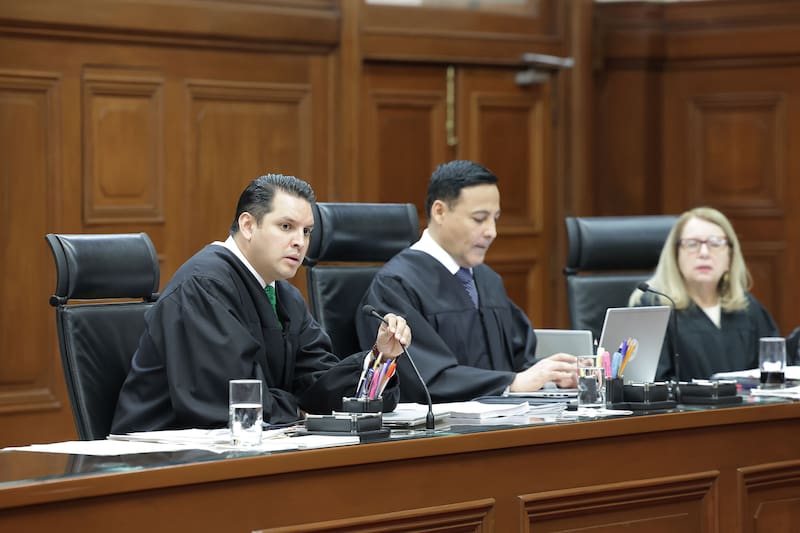
Specialized support in criminal proceedings
In the first case, the court reviewed a criminal proceeding for the offense of unlawful occupation of property against two older adults. The debate focused on whether the hearing to determine the penalties and restitution for damages could be held by a different judge from the one who had originally issued an acquittal.
The full bench ruled that another judge may preside over that hearing when an appeals court overturns the acquittal and finds that the offense and criminal liability have been proven. That is because the question of guilt has already been decided, and the next stage is limited to determining the applicable penalties and restitution for damages.
The ruling also reaffirmed the importance of respecting the principles of immediacy and impartiality during judicial proceedings. The first requires the judge to have direct contact with the relevant proceedings, while the second ensures that decisions are made without bias or personal interests.
The SCJN also highlighted that older adults must receive protection and specialized support during criminal proceedings , depending on the specific needs of each case. To that end, they have the right to assistance from an agent of the System for the Protection of Older Adults, with the aim of helping them understand the proceedings and ensuring an adequate defense.


For that reason, judges must inform them of the option to receive that support, taking into account each person’s circumstances and any possible vulnerability.
Finally, the full bench overturned the ruling by the appellate panel that had denied the amparo and ordered a new ruling that reflects these protection and adequate-defense standards.
The ban on punishing the same crime twice
In a second ruling, the Supreme Court reaffirmed that a person cannot receive a duplicate penalty when the same circumstance is used both to establish a crime and, at the same time, to increase the sentence.
The standard is based on the constitutional principle of non bis in idem, set out in Article 23 of the Mexican Constitution, which bars a person from being tried or punished more than once for the same acts.
The case stemmed from the conviction of a person for spousal rape, as defined in the Nuevo Leon penal code. During the proceedings, an aggravating factor tied to the marital relationship and domestic violence was also applied.
After reviewing the case, the full bench determined that it is not valid to use the marital relationship twice to establish criminal liability and then increase the sentence. That is because that condition was already included as part of the definition of the offense of spousal rape.