
En esta noticia
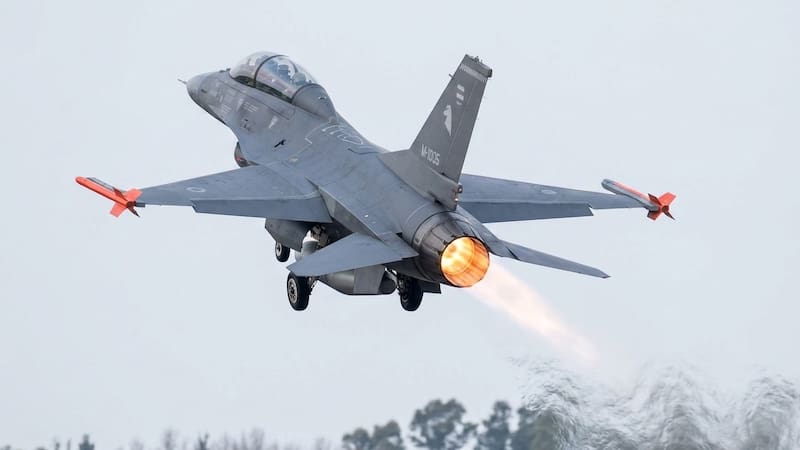
The Argentine government has authorized the Defense Ministry to turn to an international arbitration tribunal if disagreements arise during the implementation of a new contract linked to the Argentine Air Force’s F-16 Fighting Falcon fighter jets.
The measure was established in Decree 1324/2026, published Tuesday in the Official Gazette. The procedure says any possible disputes will be resolved under the International Chamber of Commerce (ICC) Arbitration Rules in proceedings based in Boston, Massachusetts, United States.
From Denmark to the United States: the background of the F-16 contracts
The new authorization follows earlier agreements tied to the fighter jets. In April 2024, Decree 315/2024 authorized an arbitration mechanism in Denmark for the original contract to buy the F-16s.
Later, Decree 423/2025 established a similar procedure for another agreement aimed at upgrading the aircraft’s avionics hardware and software.
What is different about the new decree is the venue and the institution chosen to resolve possible disputes: while the earlier agreements called for the Danish Institute of Arbitration, this time the International Chamber of Commerce, based in Boston, United States, will handle the case.
How many F-16 fighters Argentina has received and how the program is progressing
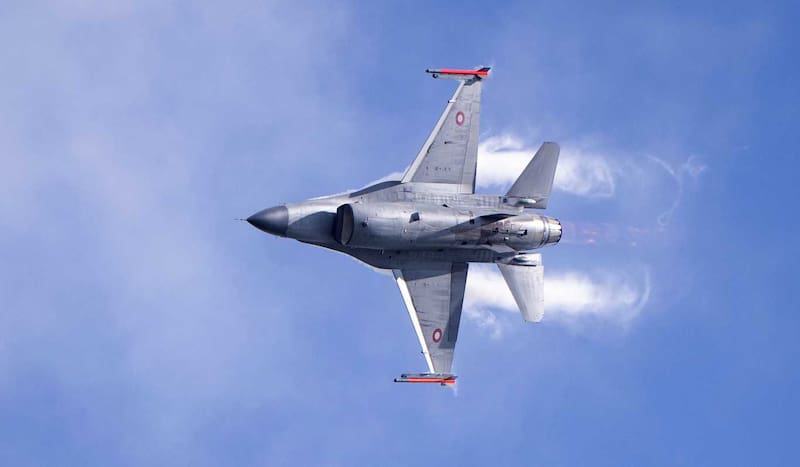
The new authorization comes as the Argentine Air Force continues bringing in the 24 fighter jets purchased from Denmark. On Sept. 29, 2026, with the arrival of a second batch at the Rio Cuarto Material Area in Cordoba, the country reached 12 aircraft received.
That means Argentina has now taken delivery of half of the fleet planned under the Peace Condor Program. It also has one aircraft designated for maintenance training, which will help prepare the technical teams responsible for working on this weapons system.
The addition of the F-16s also requires a range of adaptation, maintenance and technology upgrade work. That includes changes to the electronic systems and operational software needed to tailor the aircraft to the Air Force’s needs.
In March 2025, the U.S. government awarded Lockheed Martin a contract to update the operational flight program for Argentina’s F-16s and provide support during the aircraft transfer from Denmark.
F-16 Fighting Falcon: what are the fighter jet’s features
The F-16 Fighting Falcon is a multirole fighter jet designed to carry out both air defense missions and attacks on ground targets. According to the U.S. Air Force, it stands out for its high maneuverability, its ability to operate in a range of weather conditions and its navigation and target-detection systems.

One of its main features is its ability to perform different roles in a military operation. In air-to-air missions, it is designed to intercept and engage other aircraft. In air-to-ground operations, it can strike ground targets with precision weapons and return to base, even after traveling long distances.
The fighter jet also has an electronic flight control system known as fly-by-wire, which transmits the pilot’s commands through electrical signals. It also includes inertial and GPS navigation systems, radar and electronic countermeasure devices to respond to different threats.
As a reference, the U.S. Air Force fact sheet for the F-16C/D versions says these aircraft can reach a top speed of Mach 2, equivalent to about 2,400 kilometers per hour at high altitude, and can operate above 15,000 meters.
Its armament can include an M61A1 20-millimeter internal cannon and different types of air-to-air and air-to-ground missiles and munitions carried on external pylons. The configuration depends on the mission it must carry out.
Because of its combination of speed, maneuverability and ability to carry out different missions, the F-16 has become one of the most widely used multirole fighter jets by air forces around the world.