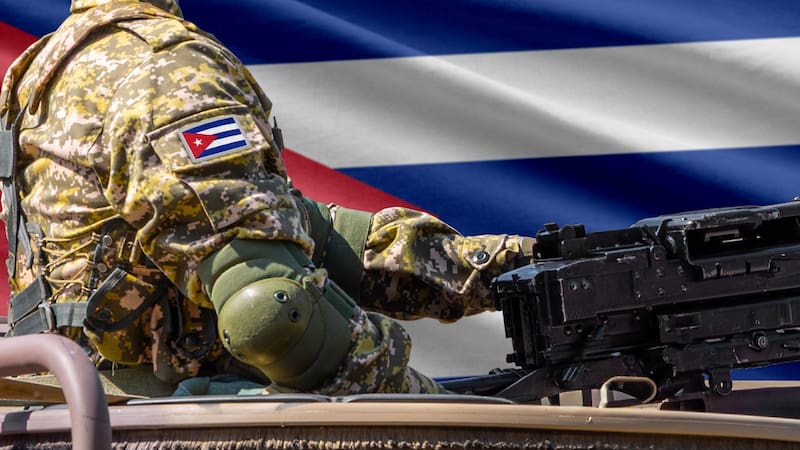

The Cuban government launched the Moncada 2026 Strategic Exercise, which will take place this Wednesday and Thursday across the country as part of its preparations for a possible U.S. military attack, amid the highest tensions between Havana and Washington in decades.
The island’s National Defense Council reported that the military exercise aims to “continue raising the level of preparedness and cohesion” among the country’s leadership and command structures, troops, territorial defense system, and economy at all levels to face any form of aggression.
The council’s statement, widely circulated by Cuban state media, also announced that Friday, November 6, will be National Defense Day. The population will participate in “various activities related to defense preparedness.”
The Moncada exercise is “the highest and most complex form of training for the country’s leaders and governing bodies,” according to a report by the Prensa Latina news agency.
The report also indicated that these exercises “are carried out in the field, through the occupation of practice command and control posts, and allow participants to exchange information and organize cooperation under conditions as close as possible to those of actual warfare.”
For months, the Havana government has repeatedly denounced what it describes as threats of military intervention by Washington. In response, it has resumed its strategy of involving the entire population in preparedness drills for that potential scenario.
On October 23, U.S. President Donald Trump said during a campaign rally in Florida that American ships would “pass by” Cuba after the war in Iran and that Secretary of State Marco Rubio would be responsible for resolving the island’s situation.
“What we’re going to do with Cuba is, we’re going to come back from Iran, those beautiful ships, we’ll pass by Cuba, we’ll have one of them stop about 50 yards (45 meters) off the coast. They’ll raise their hands, and then we’re going to send Marco Rubio in to close the deal,” Trump said.
The U.S. administration has been pressuring the Cuban government since January to implement sweeping reforms to its economic system and political regime. Havana has rejected those demands, arguing that these matters fall “within national sovereignty and are not negotiable.”
To increase pressure on the island, Washington has imposed an oil blockade, which has worsened the energy crisis Cuba was already experiencing. It has also introduced additional sanctions targeting individuals and entities operating in key sectors of the island, including energy, defense, finance, and mining.
These U.S. measures, combined with failed domestic policies, have worsened the economic and energy crisis that has affected the island for several years. The consequences include prolonged power outages, shortages of basic goods, disruptions to essential services, soaring inflation, and growing partial dollarization.
Source: EFE