
By Sofía Renó
En esta noticia
The Venus of Alicante comes to light for the first time since it was discovered last May during regeneration work on Almadraba Beach, near the Lucentum archaeological site. The Roman sculpture, dating to 2,000 years ago, is considered the greatest archaeological find in the city’s history and is now part of its heritage.
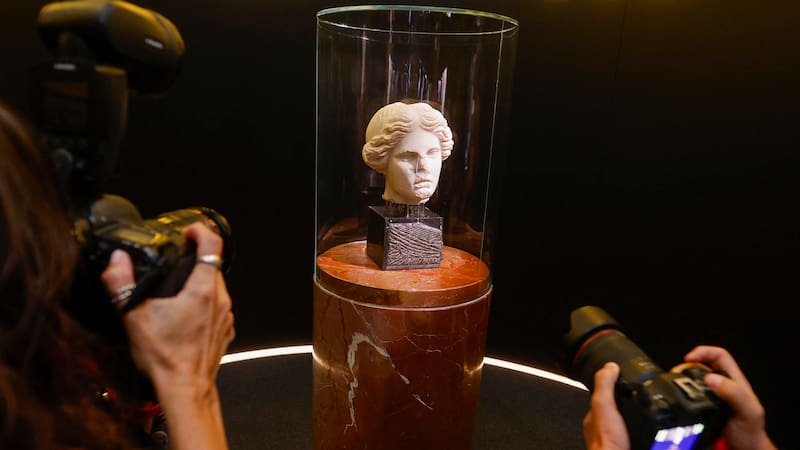
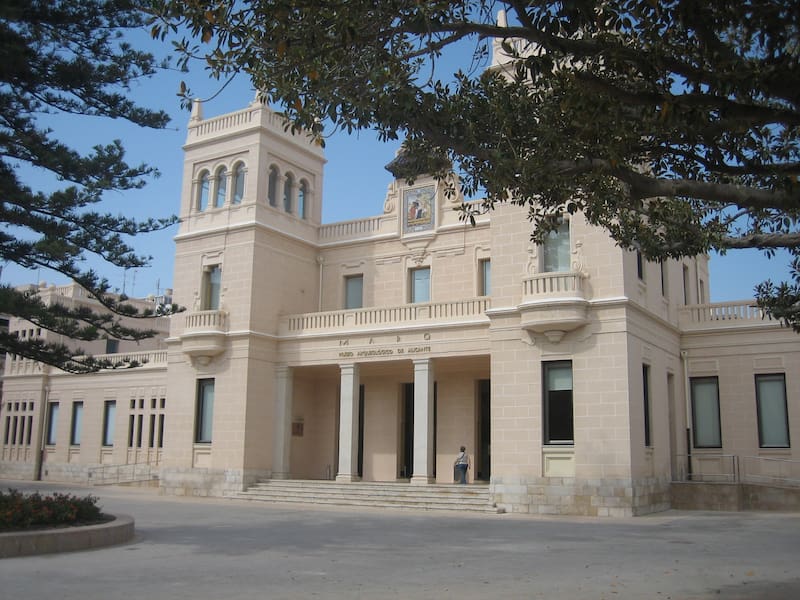
The piece has been on display since Wednesday at the Alicante Archaeological Museum (MARQ), where it will be open to the public free of charge through Jan. 10. The special exhibition, titled Venus. A View from Roman Alicante, offers a close look at this sculpted head from the early imperial period. Its high-quality marble may have come from the eastern Mediterranean and could shed light on the commercial and cultural exchanges of ancient Lucentum.


The Venus of Alicante Goes on Display for the First Time at the Archaeological Museum
The sculpted head is in the grand hall of the MARQ library and anchors an exhibition organized specifically to present this discovery to the public. Along with the original piece, visitors will also find a touchable replica, designed to make the work accessible to all residents.
During the technical presentation, MARQ director Manuel Olcina, Alicante city heritage chief José Manuel Pérez Burgos and the provincial government’s architecture director Rafael Pérez highlighted the historical and heritage significance of the find.
Specialists said that although the sculpture was found out of archaeological context, its characteristics and the material used place it in the period of greatest prosperity for the ancient Roman city of Lucentum, between the first and second centuries A.D.
A Marble Roman Sculpture That Could Have Come from Greece or Turkey
One of the most striking aspects of the Venus of Alicante is the quality of the material used to make it. Experts identified white marble of “very high quality,” which could have come from the quarries of Paros in Greece or from Asia Minor, in what is now Turkey.
This possible eastern Mediterranean origin opens new perspectives on exchanges between those regions and the Alicante area during the Roman Empire. The sculpture would have reached ancient Lucentum during a period of expansion and growth for the city.
The piece weighs 14 kilos and measures 22.22 centimeters high and 19.78 centimeters wide. Its near-life-size dimensions and state of preservation, along with the quality of its workmanship, make it an exceptional find for the local archaeological heritage.

What the Venus of Alicante Looks Like: The Face, Hair and Details of the Sculpture
The figure depicts a deity and stands out for its serene expression and enigmatic gaze. The face is elongated and slightly asymmetrical, while the neck tilts gently to the right.
The hair is parted down the middle and features two thick wavy side locks framing the forehead and partially covering the ears. At the back, the hair is gathered at the nape in a wide coiled bun.
Another detail that caught specialists’ attention is the pierced earlobes, meant for earrings. These elements help shed light on the technical and aesthetic methods used in Roman sculpture at the time.
The Venus of Alicante is thus a key piece for deepening understanding of the city’s Roman past and its ties to other Mediterranean territories. Its public unveiling will bring visitors closer to heritage that remained hidden for about two millennia.