
En esta noticia
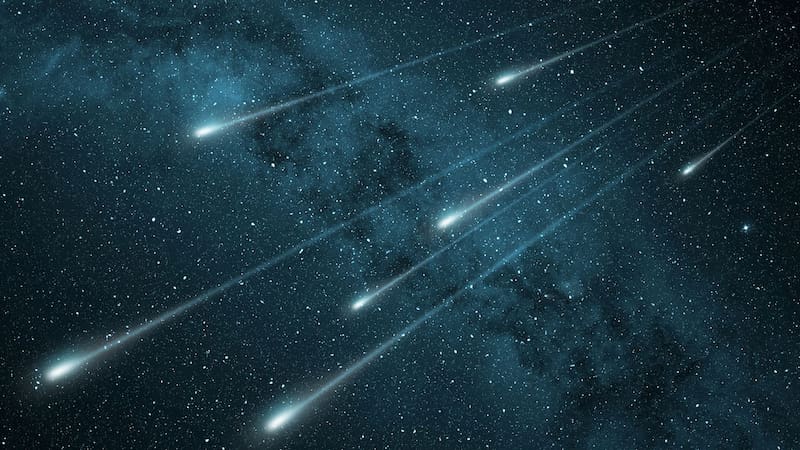
The Leonid meteor shower reaches its peak in November 2026, offering another chance to see one of the most well-known astronomical phenomena of the fall. Unlike other events, no telescope or binoculars are needed to watch the meteors.
According to forecasts from the National Geographic Institute (IGN), the phenomenon can be seen from different parts of Spain as long as weather conditions cooperate and locations with little light pollution are chosen.


Leonid meteor shower reaches peak activity in November 2026
According to the IGN, the Leonid meteor shower is active every year from Nov. 6 to Nov. 30. In 2026, peak activity occurred during the night of Nov. 17-18, at about 12:45 a.m. on the Spanish mainland.
The agency says this shower typically produces between 10 and 20 meteors per hour, although what can actually be seen depends on sky conditions and the viewing location.
The Leonids are named after the constellation Leo, since the meteors appear to come from that part of the sky. They are produced when Earth passes through the dust and particles left behind by comet 55P/Tempel-Tuttle as it orbits the sun.
Although the 2026 peak has already passed, the Leonids will remain active until Nov. 30. For that reason, there will still be opportunities to catch some meteors in the coming nights, as long as visibility conditions are favorable.

Where in Spain the Leonid meteor shower can be seen
The Leonid meteor shower can be seen from any autonomous community in Spain as long as the sky is clear and light pollution is low. According to the IGN, for observers located near 40 degrees north latitude, the Leonid radiant stays above the horizon from midnight until dawn. For that reason, the late-night hours and the time before sunrise are the best for trying to see them.
Rural areas, natural spaces and lookouts far from urban centers are some of the best options. It is also a good idea to avoid places with buildings, trees or mountains that block the view of the sky.
The agency recommends looking toward the darkest parts of the sky and not focusing only on the constellation Leo: even though the meteors appear to come from that point, they can appear anywhere in the sky.