
En esta noticia
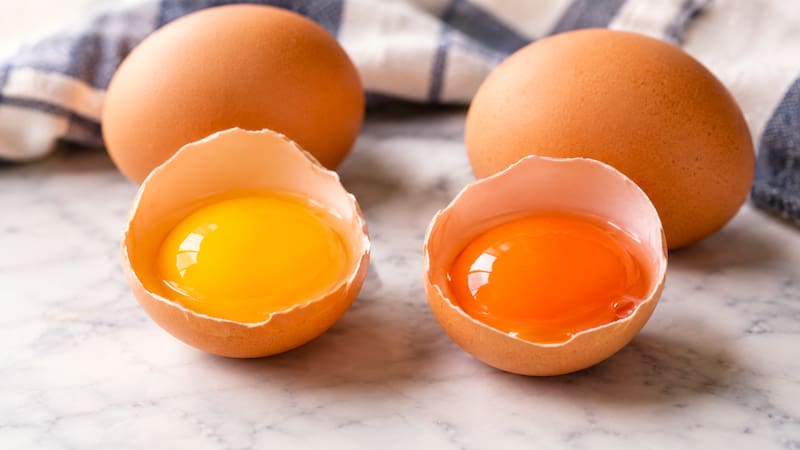
The University of Florida Institute of Food and Agricultural Sciences explains on its official website why some eggs crack open to reveal a bright yellow yolk while others have orange yolks, and seeing that difference often raises the question of whether one is more nutritious than the other or whether it means anything in terms of quality.

Experts, however, are clear in their answer: “It is important to understand that yolk color does not necessarily determine whether an egg is healthier or tastes better,” the institution says.
Eggs With Yellow Yolks or Orange Yolks: What’s the Difference?
As explained, the shade of the yolk is closely linked to the hen’s diet; hens that eat corn and grains tend to produce eggs with lighter yellow yolks. By contrast, those that eat leafy plants, alfalfa, grasses or insects produce darker yellow or orange yolks.
The variation comes from the amount of carotenoids, natural compounds found in plants. The more present they are in the feed, the more intense the yolk color will be.

“Some poultry producers even adjust hens’ feed specifically to create darker yolks, since many consumers prefer the look of a deep orange yolk,” the IFAS says.
Which Yolk Is More Nutritious, Yellow or Orange?
Experts say yolk color alone does not make an egg more or less nutritious. This food contains high-quality protein, minerals, and fats that are present whether the yolk is yellow or orange, so there really isn’t one that is considered “better” nutritionally.
“Both pale yellow yolks and deep orange yolks can be nutritious and safe to eat,” the specialists say.