
En esta noticia
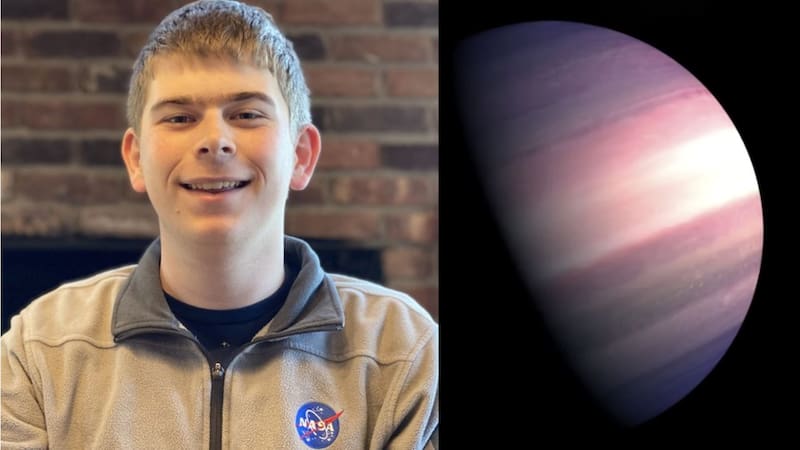
While most people spend the first days of a new job filling out forms and learning the basics, seventeen-year-old Wolf Cukier was on the third day of his internship at NASA when he discovered a new planet previously unknown to scientists.

In the summer of 2019, after he finished his junior year at Scardale High School, in New York, the 17-year-old began a two-month internship at NASA’s Goddard Space Flight Center, in Greenbelt, Maryland.
His first task was to review changes in star brightness captured by NASA’s Transiting Exoplanet Survey Satellite (TESS). It was from that role that he found a world no one had seen before.
How did Wolf Cukier discover a new planet on his third day at NASA
“About three days into my internship, I saw a signal from a system called TOI 1338. At first I thought it was a stellar eclipse, but the timing was wrong. It turned out to be a planet,” Cukier told NASA.
After months of checks, NASA confirmed that the two stars Cukier saw were actually orbiting a new planet unknown to scientists.
They announced it in January 2020 at the American Astronomical Society meeting. Cukier co-authored the scientific paper.
The main characteristics of the planet discovered by Cukier
The planet, named TOI 1338 b, is 6.9 times bigger than Earth, between the size of Neptune and Saturn, and lies about 1300 light-years away. It was the first planet found by TESS that orbits two stars.
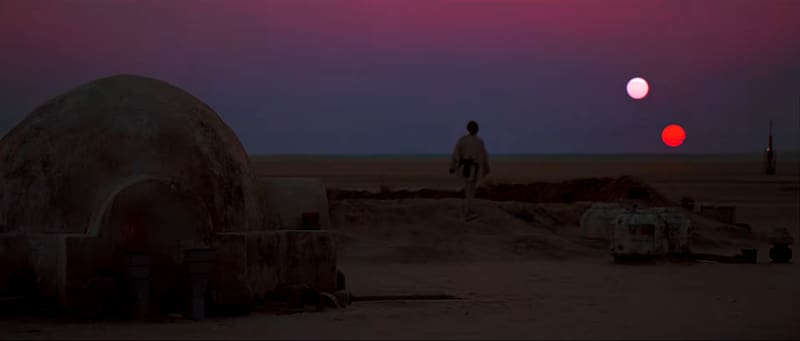
“If you think of Luke’s homeworld, Tatooine, from ‘Star Wars,’ it’s like that. Every sunset, there’s going to be two stars setting,” Cukier told News 12.
According to him, these planets are hard to detect because computer programs often confuse them with eclipses.
From NASA to Princeton
At the time, Cukier said his top college choices were Princeton, MIT, and Stanford. He chose Princeton, where he studied astrophysical sciences.
According to the university, he worked with a NASA-funded space physics lab to study how the meteorites of the Geminids could have formed from an asteroid.
Looking back on the attention his planet received, he told Princeton: “The experience was a bit surreal.”