
En esta noticia
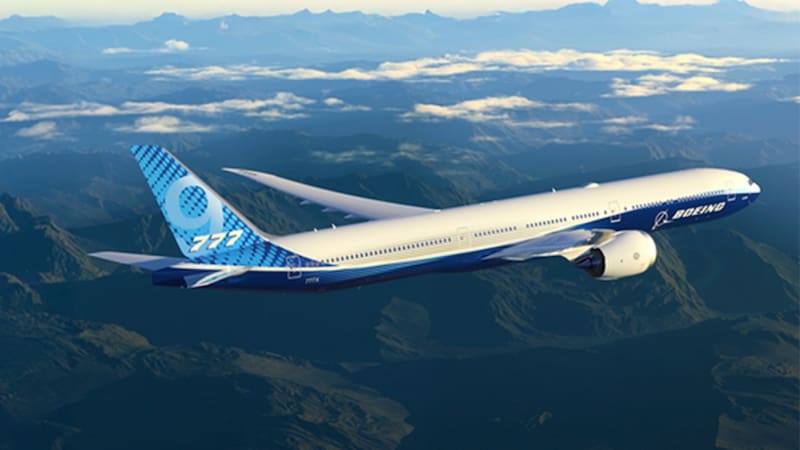
The U.S. manufacturer Boeing is moving ahead with development of the 777X, a family of aircraft that will feature the 777-9 as its flagship model. It will be the world’s largest twin-engine commercial plane.
The project combines technologies from the Boeing 777 and the 787 Dreamliner with GE9X engines, composite-material wings and improved aerodynamics. Its goal is to carry more passengers, reduce fuel consumption and offer a different flying experience on international routes.


How big is the Boeing 777X and how many passengers can it carry
The largest model in this family is the Boeing 777-9, which measures 76.7 meters long, has a wingspan of 71.8 meters with its wings fully extended and stands 19.5 meters tall. It also stands out for its ability to carry up to 450 passengers and fly 14,820 kilometers.
The family also includes the 777-8, a shorter 70.9-meter version that prioritizes range: it can fly up to 17,590 kilometers and carry between 350 and 425 passengers, depending on the cabin layout.
What makes the engine special
One of the project’s main advances is its GE9X engines, developed by GE Aerospace. This is a technology designed to improve the performance of a large aircraft without proportionally increasing fuel consumption.
According to Boeing, the 777-9 will use 20% less fuel and produce 20% fewer emissions than the aircraft it will replace. It also promises a 40% smaller noise footprint and operating costs 10% lower than those of the competition.
The design also includes carbon-fiber composite wings and folding wingtips. That feature allows for a greater wingspan in flight while reducing the space the wings take up when the plane is on the ground.
What it will be like to fly on Boeing’s largest plane
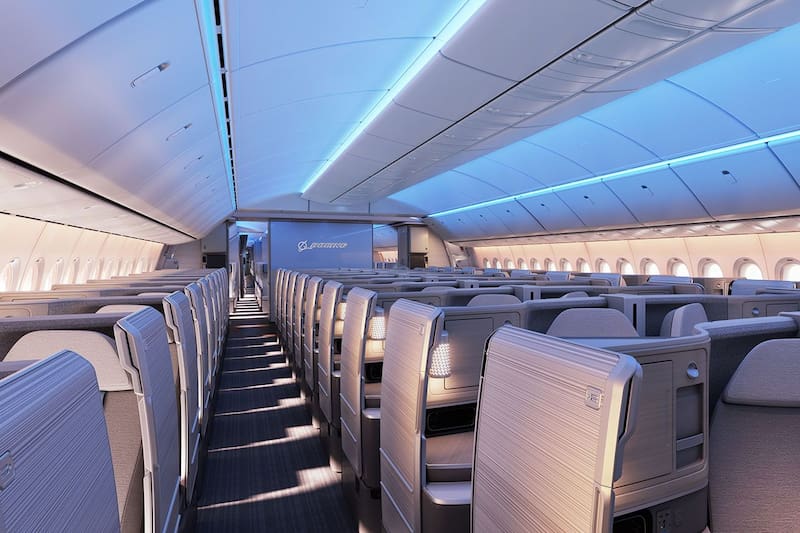
The Boeing 777X is not meant to stand out only for its size. The company also designed a cabin with upgrades aimed at increasing comfort on international flights:
- Larger windows: they have a surface area of 162 square inches, 30% larger than that of the competitor aircraft Boeing uses as a reference.
- Larger overhead bins: they can hold twice as much carry-on luggage and require 40% less force to close.
- Higher humidity and improved air: the manufacturer promises a more comfortable cabin environment.
- LED lighting: it allows the cabin atmosphere to be adjusted to match different stages of the flight.
- Less noise: insulation and improvements in airflow are designed to reduce cabin noise.
When it will start flying and who ordered it
Although the program has already completed numerous tests, the 777X still must clear certification steps before entering commercial service.
One of the most important milestones came on May 8, when Boeing conducted the first flight of the 777-9 destined for Lufthansa. After the flight, Capt. Ted Grady, chief pilot for the 777/777X program, said: “The airplane behaved as we expected. The 777-9 continues to handle exceptionally well”.
Boeing said at the time that the test fleet had logged more than 4,700 flight hours. The company is still targeting 2027 for the first delivery of the 777-9.
Airlines that have backed the project include Lufthansa, Qatar Airways, Emirates - which raised its order for the 777X family to 270 aircraft after adding another 65 Boeing 777-9s - and Ethiopian Airlines, which ordered eight 777-8 freighters and two additional 777s in September 2026.