
En esta noticia
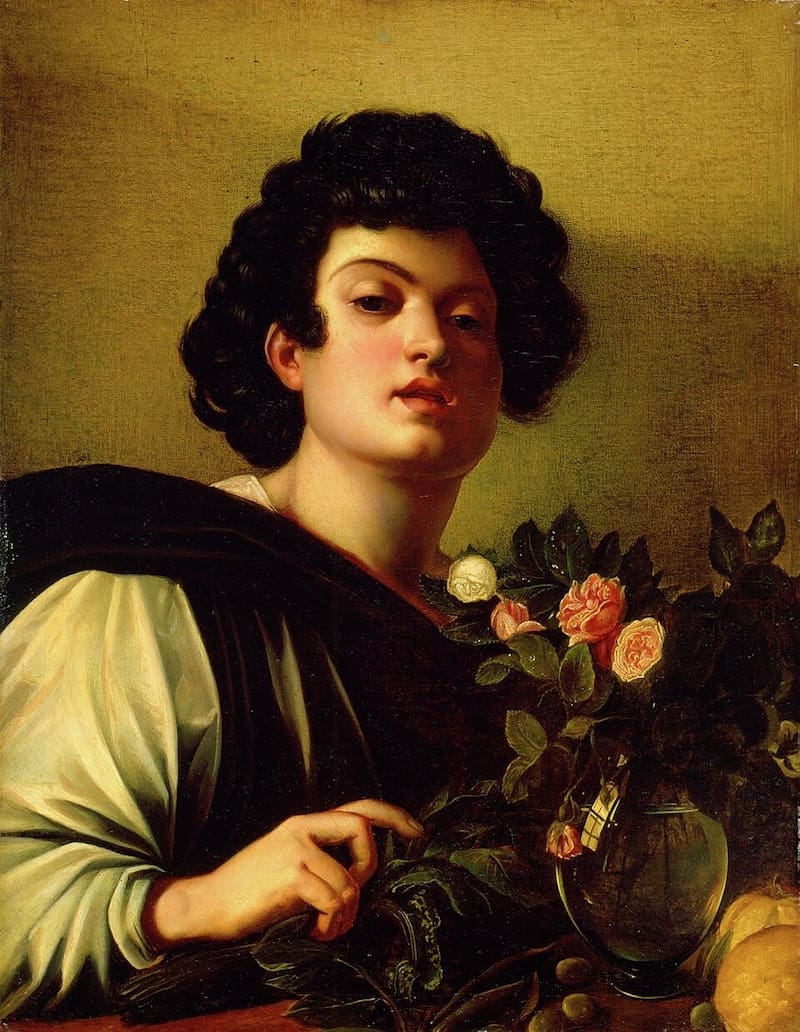
A historic lost painting by Italian artist Michelangelo Merisi, known as Caravaggio, has recently resurfaced in the French capital. Specialists identified the painting, titled Boy with a Rosebush, in a Paris gallery after it had remained off the academic radar for nearly two centuries.
The piece belonged to a private collection, and the current owners were unaware of its true historical value. However, the discovery made a major impact on the art market and changes the foundations of Baroque painting, particularly that of the famous artist.


How Caravaggio’s lost painting was found
Art historian Maria Cristina Terzaghi located the original canvas in the back room of a Paris gallery. The work had only been known through four old copies preserved in different European museums.
Experts analyzed the quality of the chiaroscuro, the naturalism of the figure and the detailed reflections in the water in Boy with a Rosebush. The researchers thus confirmed the technical traits characteristic of the painter during his early years in Rome.
In this way, based on these features, the famous Caravaggio artwork that resurfaced in Paris changes everything we know about the Baroque painter after nearly 200 years, especially the style of his early period.
The importance of this painting for art history
The canvas dates to between 1596 and 1597 and portrays a pensive young man accompanied by flowers. In this way, the depiction redefines the concept of love and melancholy in the early Baroque period.
The composition is directly linked to the series on the senses that the artist developed in his youth. The piece thus provides a key insight into the Italian master’s artistic evolution in his view of love and the senses, according to specialists.