
En esta noticia
Leaving a car parked in the sun for several hours can cause the cabin temperature to rise sharply, even when the outside temperature does not seem especially high. For that reason, some people turn to homemade tricks to reduce heat buildup inside and protect the seats, dashboard, and other components.

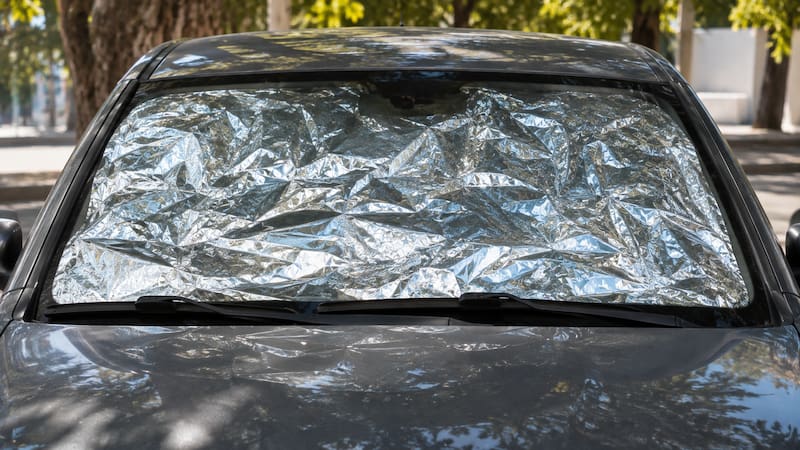
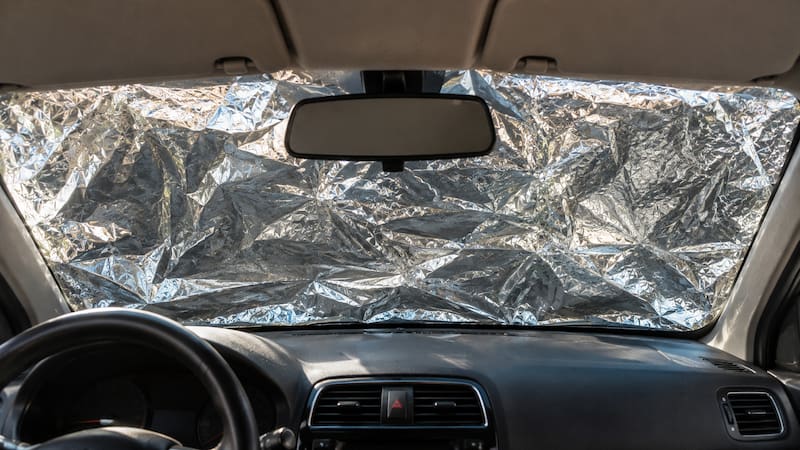
One of these methods involves placing aluminum foil on the windows to reflect some of the sun’s radiation. While it can help reduce incoming thermal energy, its effectiveness depends on how much surface area it covers and how it is placed.
What Is Aluminum Foil Used for Inside a Car?
Placing aluminum foil on a car’s windows is intended to reduce the amount of solar energy that enters the cabin through a physical process known as radiation reflection. When sun rays hit a surface, some of their energy can be reflected, some absorbed and some pass through. The share of each depends on the optical properties of the material.
Aluminum has high reflectivity, especially against infrared radiation, which is linked to the transfer of thermal energy. That is why, when used as a reflective barrier, it can send part of the radiation it receives back outside instead of allowing it to be absorbed by the vehicle’s interior materials.
The goal is to reduce the greenhouse effect inside the car, since solar radiation that passes through the windows is absorbed by the dashboard, seats, and other surfaces and turns into thermal energy. These objects heat up and transfer warmth to the surrounding air.
What Effect Does It Have on the Temperature When the Car Is Parked in the Sun?
When a vehicle remains parked in the sun, a process of thermal energy buildup occurs. Shortwave solar radiation passes through the windows and reaches the interior surfaces. They absorb part of that energy and raise their temperature.
As they warm up, the materials inside the cabin release energy through longwave infrared radiation and also transfer heat to the air through conduction and convection. Because the vehicle remains closed, air exchange with the outside is limited and heat builds up gradually.
Aluminum foil can play a role in this process by reflecting some of the sun’s radiation before it reaches the interior surfaces. That reduces the energy those surfaces can absorb and, under certain conditions, helps lower the temperature inside the cabin.
What Alternatives to Aluminum Foil Can Serve This Function?
There are several options to reduce incoming solar radiation and keep the vehicle’s interior from heating up so much:
- Reflective windshield sunshade: One of the most practical alternatives. It is placed behind the windshield when the vehicle is parked and reflects some of the sun’s radiation.
- Sun shades for windows: They reduce direct sun exposure and protect the seats and other interior components.
- Solar-control window film: These are films installed on the glass that can reduce the transmission of solar energy. It is important to choose products allowed under local regulations and that do not compromise visibility.
- Exterior car covers: They cover much of the body and glass surfaces, helping reduce direct exposure to solar radiation.
- Parking under cover or in the shade: One of the most effective measures for preventing the vehicle from receiving direct sunlight for long periods.