
The clothespin is one of those household objects that almost nobody thinks about. The current version has American roots dating back to the mid-19th century, and it has survived the arrival of every new laundry gadget, such as the dryers.
Yet many people still use them without knowing a small design detail that can make a difference in hanging clothes.

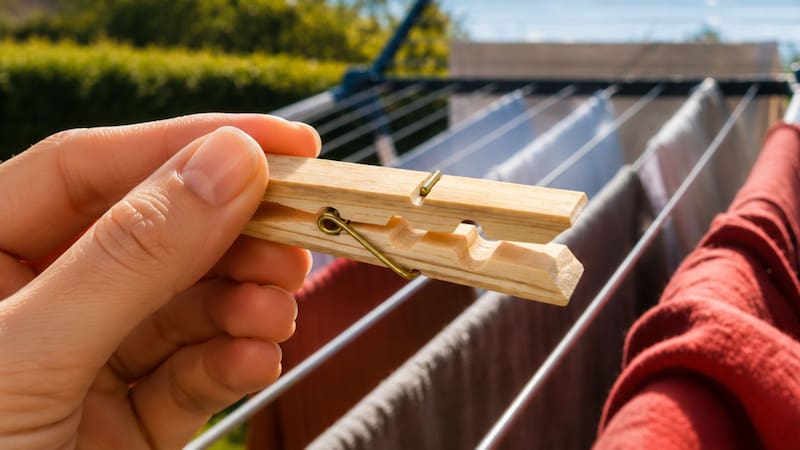
In every ordinary clothespin there are two openings where the halves meet. The smaller one is near the spring, and the larger one is toward the tips. Most people clip their laundry with whatever part of the jaw lands first, but each opening is meant for a different job.
What are the two clothespin holes made for?
The smaller opening, closer to the center, is designed to grip the clothesline or the rail of a drying rack. The larger opening, at the outer end, is meant to hold the fabric.
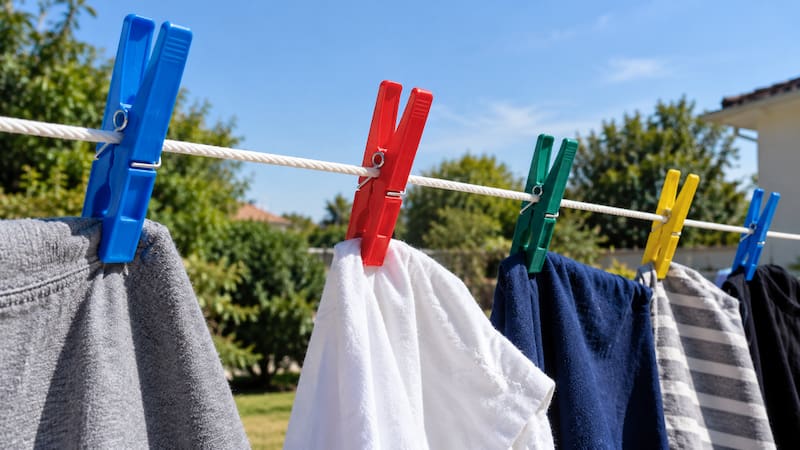
The idea is to clip the pin so the line sits in the small hole and the clothes in the large one. That way, the pressure lands where it should.
The physics behind the life hack
The explanation lies in how a clothespin works. It is essentially a lever: the spring acts as the pivot point, and the force it applies gets weaker the farther you move from it. That means the jaws squeeze hardest near the spring and more softly at the tips.
Using the right opening is only half of it. Where you clip matters too:
- T-shirts and light tops: by the hem, not the shoulders, which can stretch.
- Pants and jeans: by the leg hems, hanging upside down.
- Dresses and skirts: at the waistband or sturdy side seams.
- Socks and underwear: by the elastic.
When clothes hang freely from the fabric instead of being pressed flat against the line, air circulates better around them, so they can dry faster and more evenly, especially in thick items like towels and jeans.