

En esta noticia
When buying eggs, one of the most noticeable differences is the color of the yolk.
Some have a pale yellow hue, while others have a deep orange color that is often linked to higher quality.
Even so, according to the U.S. Department of Agriculture (USDA), yolk color depends mainly on the hen’s diet and the pigments in the food it eats.

Why do some eggs have yellow yolks and others orange yolks?
The main difference between a yellow yolk and an orange yolk is tied to the natural pigments in hens’ diets.
These include carotenoids and xanthophylls, compounds found in certain vegetables and grains.
The USDA explains that hens that eat foods rich in yellow-orange pigments, such as yellow corn and marigold petals, produce yolks with a deeper color. By contrast, when their diet contains fewer pigments, the yolks tend to be a lighter yellow.
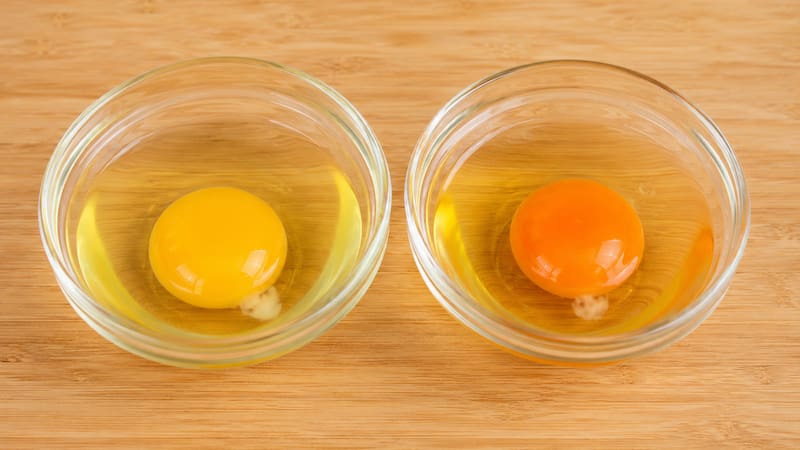
The University of Illinois, through its agricultural extension service, also notes that hens with access to green plants or fed foods such as corn and alfalfa can produce darker yolks.
So, egg yolk color is directly linked to the hen’s diet, but it does not by itself show that the bird was raised under better conditions.
Do eggs with orange yolks have more nutrients?
Not necessarily. While orange yolks may be linked to higher levels of certain pigments, that does not mean the egg is more nutritious in every respect.
According to Illinois Extension, both yellow-yolk and orange-yolk eggs provide protein, fat, vitamins and minerals. The difference is that a diet rich in carotenoids can increase the concentration of some natural pigments, such as lutein and zeaxanthin, which have antioxidant properties.
That means a darker yolk may contain higher amounts of certain pigments, but not necessarily more protein, vitamins or minerals.
Which egg yolk color is better for your health?
There is no yolk color that is universally better to eat every day. Both yellow-yolk and orange-yolk eggs can be part of a balanced diet.
When deciding which eggs to buy, it’s best to pay attention to freshness, handling, and storage conditions rather than relying solely on the intensity of the color.
The USDA also warns that yolk color does not tell you whether an egg is fresh or safe to eat. To reduce the risk of foodborne illness, it recommends proper storage and cook eggs until both the white and the yolk are firm.