
En esta noticia
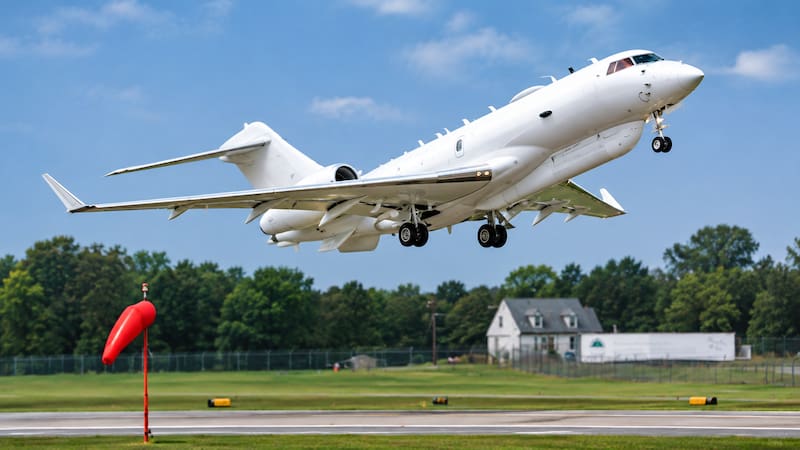
The U.S. Army announced that the prototype of its new HADES military aircraft completed its first flight on Sept. 11, 2026. The aircraft is designed to carry out intelligence, surveillance and reconnaissance missions at higher speeds, altitudes and distances than earlier models.
According to the U.S. Army on Oct. 30, the project seeks to improve the ability to detect threats from greater distances and gather information in complex military environments.
In addition, the technical requirements published for the program call for altitudes above 15,000 meters and speeds of at least 830km/h.
What is HADES, the new military aircraft tested by the United States?
HADES, short for High Accuracy Detection and Exploitation System, uses a commercial jet platform adapted for military missions.
According to a U.S. Army technical requirements document published in January 2026, aircraft assigned to the program must meet the following characteristics:
- Altitude: ability to operate between 41,000 and 51,000 feet, equivalent to approximately 12,500 to 15,545 meters.
- Speed: at least 450 knots, or about 833 km/h, at maximum operating altitude.
- Range: a minimum of 12 hours of flight without refueling, plus the required fuel reserve.
- Payload capacity: at least 14,000 pounds, or approximately 6,350 kilograms.
These figures correspond to the requirements set for the aircraft in the program.
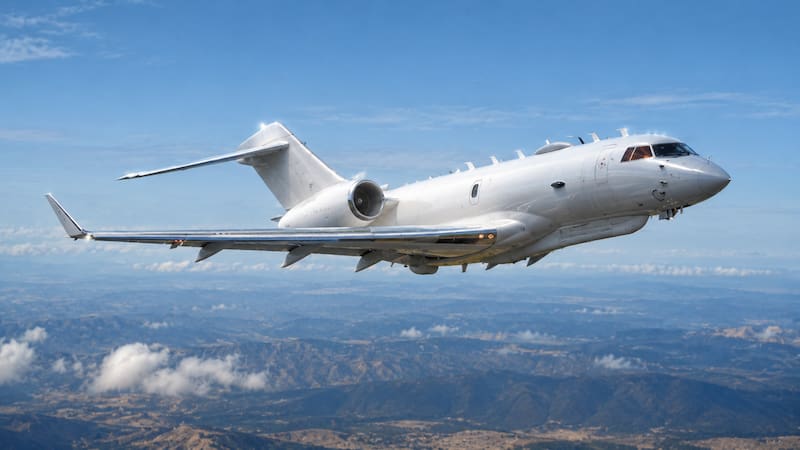
The goal is for HADES to allow military commanders to gather information from greater distances and make decisions more quickly.
What tests did the Army conduct with the new HADES aircraft?
The first flight was completed with the participation of the Army Fixed Wing Project Office and Sierra Nevada Corporation, following an aircraft readiness review.
To reach this stage, technical teams carried out structural modifications, integrated mission system components and conducted preliminary airworthiness checks.
After the test, the Army will move forward with integrating and evaluating the intelligence and surveillance systems.
The next tests will aim to verify detection capabilities in different operational areas and signals intelligence, as well as its effectiveness and readiness for future demonstrations.
For now, the first flight marks progress in the development of HADES, while the evaluations needed to verify its operational capabilities continue.