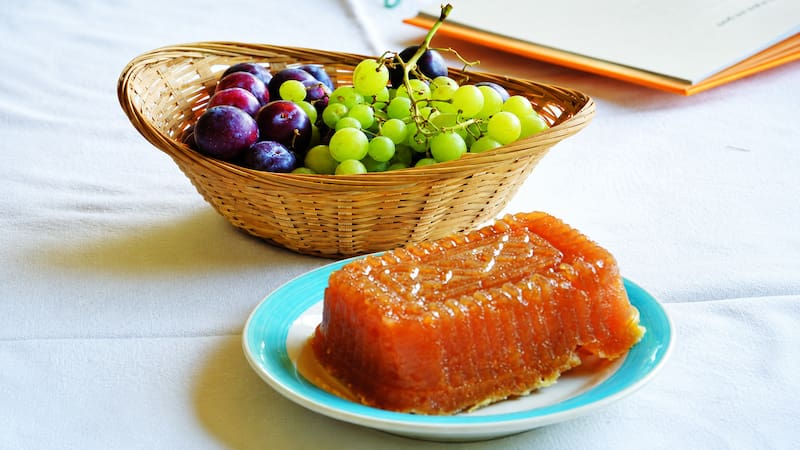

Quince cheese is a preserve made from the quince fruit (or Cydonia oblonga, to use its scientific name), a small tree native to the Caucasus and Persia.
However, this small fruit tree is also grown in Spain, which has even become the largest quince producer in Europe.
Against that backdrop, the harvest and peak-ripeness period for this fruit runs from September through November. Specifically, quinces reach peak ripeness and a golden color between the Indian summer of St. Michael’s Day (late September) and the Indian summer of St. Martin’s Day (mid-November).
It is therefore a good idea to take advantage of this fruit during the fall season to make quince cheese, a tasty preserve that is easy to prepare. In addition, this recipe is ideal for serving with toast or cheese, as well as for adding to other desserts and recipes.
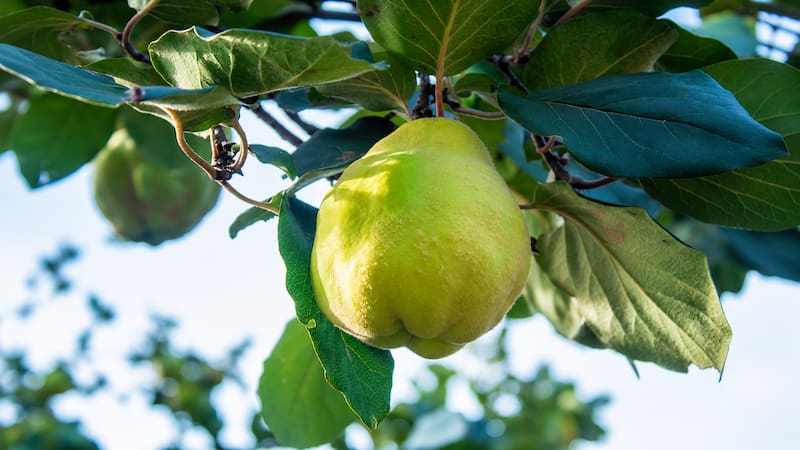
Ingredients for quince cheese
To make this sweet preserve from quince pulp with sugar, you only need a few easy-to-find ingredients:
- 2 kg of fresh quinces.
- Between 900 grams and 1 kg of sugar for each kilogram of pulp obtained.
- Enough water to cover the quinces during the first cooking.
- Juice of one lemon per kilogram of pulp.
You also need to follow a series of specific steps to achieve a firm, dense texture with intense sweetness that is not cloying.
Preparing the quinces
First, wash the quinces with water and gently rub the skin to remove the fuzz that covers the fruit. Although some traditional recipes call for peeling them, it is also possible to make quince cheese with the skin on.
Then cut the quinces into quarters and remove the core and seeds, that is, the small brown seeds found inside the quince fruit.
Cooking the quinces
Place the quince pieces in a pot with enough water to cover them and cook until tender. The time will depend on the size of the pieces and how ripe the fruit is.
Once cooked, drain the quinces, let them cool slightly and remove the seed core. Then blend the pulp with a blender or food processor until you have a smooth, even puree.
Cooking the quince cheese
Weigh the pulp to calculate how much sugar is needed. It is recommended to use between 900 grams and 1 kilogram of sugar for each kilogram of prepared pulp.
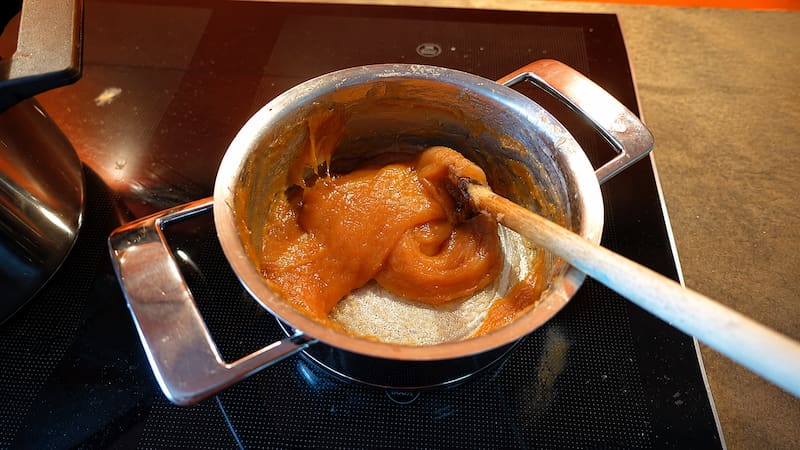
Place the puree in a pot, add the sugar and cook over medium-low or low heat, stirring frequently to keep it from sticking to the bottom.
As it cooks, the mixture will begin to thicken and take on a firmer consistency. The time needed may vary, so check that the cheese has reached the right point before removing it from the heat and spooning it into clean molds.
Pour into molds and let cool
After removing it from the heat, transfer the quince cheese to a large glass mold or several small molds.
Then, let the quince cheese cool at room temperature for several hours before carefully unmolding it and cutting it into pieces once it has set. Also, once it is cool, it is recommended to keep the cheese covered in the refrigerator.
Other tips for making quince cheese
To make this recipe, it is best to use quinces in season, which starts in late September and lasts through November.
When using them to make the cheese, they should be ripe but still firm. That is because the texture of the cheese could be affected if they are too soft. Likewise, it is recommended to remove the hard parts of the fruit to achieve a smooth cheese.
As for the sugar, it is recommended to use an amount equal to the quince. Although it is possible to slightly reduce the proportion for a less sweet result, this ingredient also acts as a preservative, so cutting back too much could shorten the shelf life of the preparation.