
En esta noticia
A Japanese organization developed a specific program to travel around the entire planet without paying the travel costs. The project already has more than 100 voyages around the world and remains active. That said, it is not a raffle or a pleasure trip without conditions: you have to work on board and meet certain requirements.

Who organizes the trip
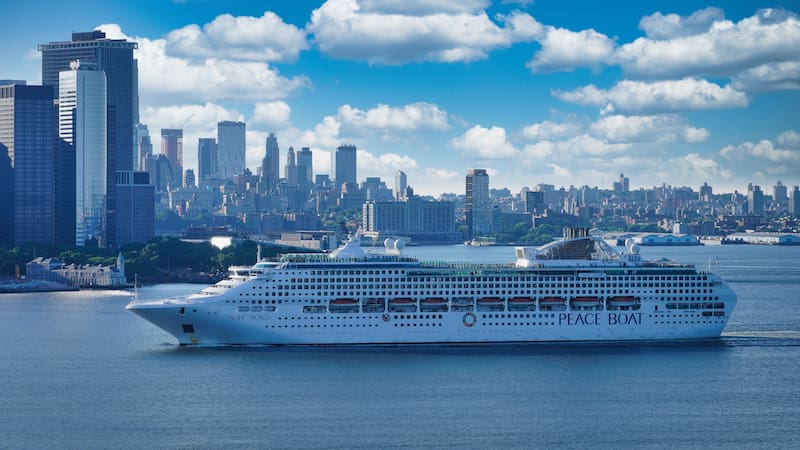
The organization is Peace Boat, a Japanese NGO founded in 1983 that organizes world cruises with a focus on peace, human rights, and cultural exchange. Each voyage visits numerous ports on different continents and generally lasts about three months.

The way to travel for free is its educational program GET (Global English/Spanish Training), which recruits volunteer English and Spanish teachers to give classes to passengers during the voyage.
The Japanese NGO: how long it lasts and where it goes
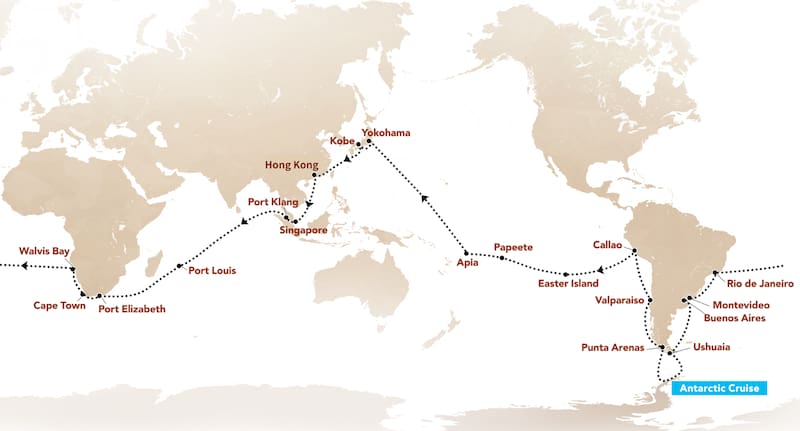
The organization’s next major cruise is the 125th Global Voyage, a trip around the world that also reaches Antarctica. These are its main details:
- Duration: around 106 days (about three and a half months)
- Departure: December 15, 2026 from Yokohama (Japan)
- Return: March 30, 2027, back to Japan
- Stops: around 20 ports on different continents
- Ship: the Pacific World, described as the largest ship in Peace Boat’s history
What expenses does the Japanese NGO cover?
In exchange for teaching on board, GET volunteers receive:
- Full passage on the trip
- Cabin (accommodation)
- All meals
- Visa costs and pre-boarding orientation
The only costs borne by the traveler are the flights to the embarkation port and back from the disembarkation port, travel insurance (mandatory), and vaccinations.
What requirements must meet the interested parties
To apply for the program, it is generally required:
- At least 18 months of full-time teaching experience teaching English and/or Spanish
- Being a very advanced speaker of the language (being a “native” speaker is not mandatory)
- A teaching certification (TEFL, CELTA, teaching degree, etc.) is valued, although not always mandatory
- Ability to design classes, work in a team, and handle several weeks of life on board
In addition, the selection is competitive: it includes several stages of evaluation and interviews.