
En esta noticia
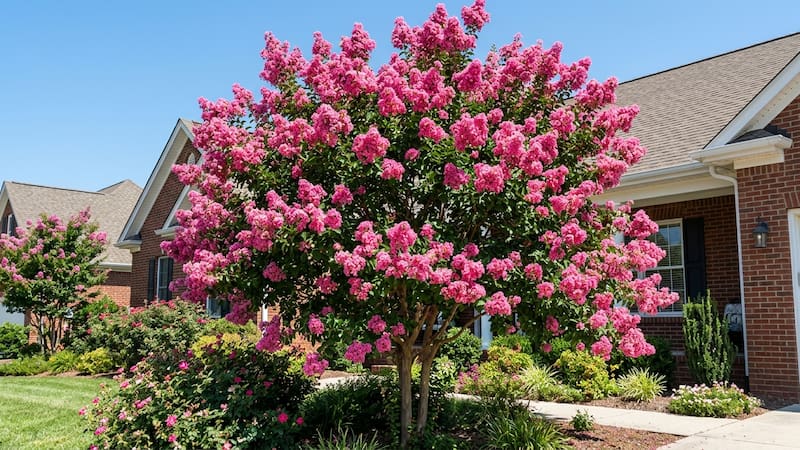
The crape myrtle is an ornamental tree that stands out for its brightly colored flowers and its ability to adapt to different urban spaces, which makes this species an alternative for those looking to add vegetation and color to the garden.
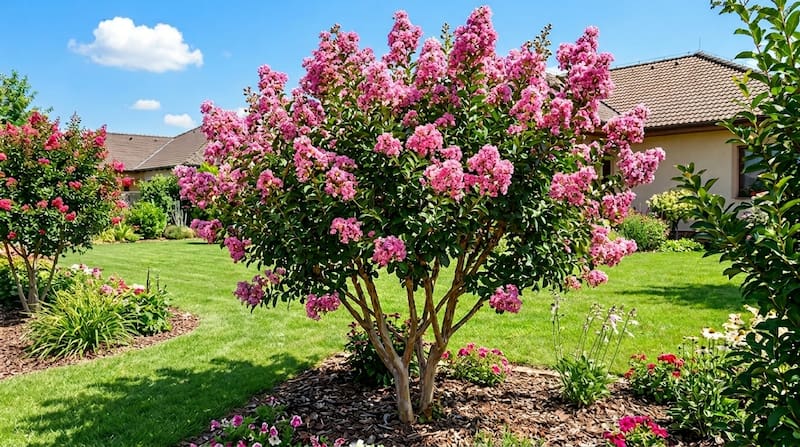
One of its most attractive characteristics is that there are varieties of different sizes, from small specimens to larger trees. This diversity makes it possible to choose options for patios and residential gardens, as long as one takes into account how much space the plant will occupy when it reaches maturity.
The University of Florida, through its Institute of Food and Agricultural Sciences (UF/IFAS), highlights its use in urban and suburban gardens, as well as its long blooming period and drought tolerance once established.


What crape myrtle is like and why it can provide shade in summer
The crape myrtle is an ornamental tree native to Asia that is characterized by its flower clusters, with shades that can range from white to pink, red, lavender, and purple. According to the University of Florida, blooming occurs from late spring through summer, although the exact period depends on the variety and weather conditions.
In addition to its flowers, this tree develops a canopy of varying shape, which can be more upright or spread out to the sides. The foliage of the crape myrtle can provide shade in the warm months, while its leaves change to yellow, orange, or reddish tones during autumn, which adds ornamental interest throughout the year.
One example of varieties for patios and small gardens is the “Tonto” crape myrtle, which reaches between 1.5 and 3 meters in height and produces red flowers during the summer, according to the University of Florida.
How much space crape myrtle needs and how to care for it in a small yard
To grow a crape myrtle in a small space, it is important to choose a compact variety and provide it with the right conditions. In this regard, the University of Florida offers recommendations that help determine where to plant it and how to maintain it:
- Choose a smaller variety: there are compact cultivars that adapt better to small yards than larger specimens.
- Look for a sunny spot: crape myrtle needs full sun to grow and bloom properly.
- Prioritize well-drained soil: it can grow in different types of soil, as long as water does not collect around the roots.
- Water during establishment: although it is drought tolerant once established, it needs watering while it adapts to the location and during extended dry periods.
- Avoid excessive pruning: cutting branches back drastically to control its size can damage the tree’s structure.