
En esta noticia
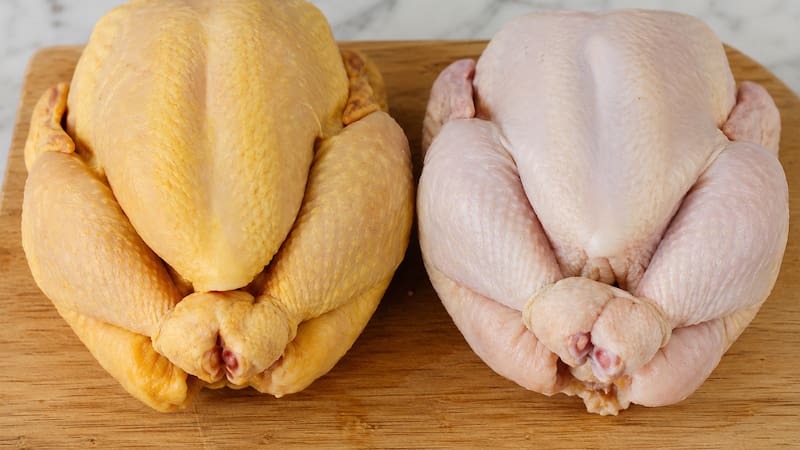
Differences in chicken skin color can be one of the most noticeable things when it comes time to shop. Some are sold with a whitish tint, while others have a more yellowish tone.
In that regard, the U.S. Food Safety and Inspection Service (FSIS) clears up questions about the visible differences in this type of meat and explains when color should be seen as a warning sign.


White-Skinned Chicken or Yellow-Skinned Chicken: What’s the Difference
“Raw poultry can vary from bluish white to yellow. All of these colors are normal and are a direct result of breed, exercise, age and/or diet,” the experts say.
It also explains that younger pasture-raised birds have less fat under the skin, which is why they have a bluish tint. Yellow skin, meanwhile, can be the result of marigolds - a flower rich in natural pigments - in their feed.
So chicken skin color does not really determine whether one is better than another, and there is no particular one that is recommended to buy based on this factor. The difference is closely tied to the amount of pigments in the animal’s diet.
When to Pay Attention to Chicken Color
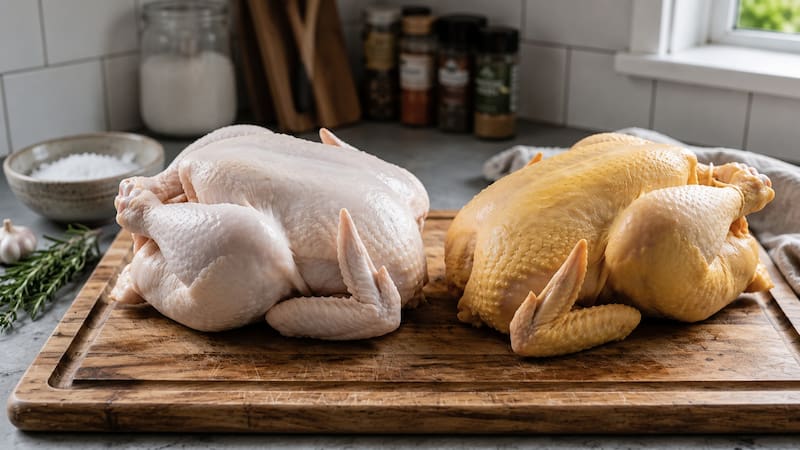
FSIS says a change in poultry color does not mean it has spoiled, although it can sometimes be considered a warning sign.
When meat is spoiled, the color will turn darker and the bird will also have a bad smell and feel sticky or slimy. “If the meat has developed these characteristics, it should not be used,” it says.
Also, if chicken is frozen for a long time, the meat may develop dry white spots that are freezer burn. While FSIS says the product can still be eaten in these conditions, it notes that the affected parts will not have any flavor, so they can be removed before cooking if desired.