
En esta noticia
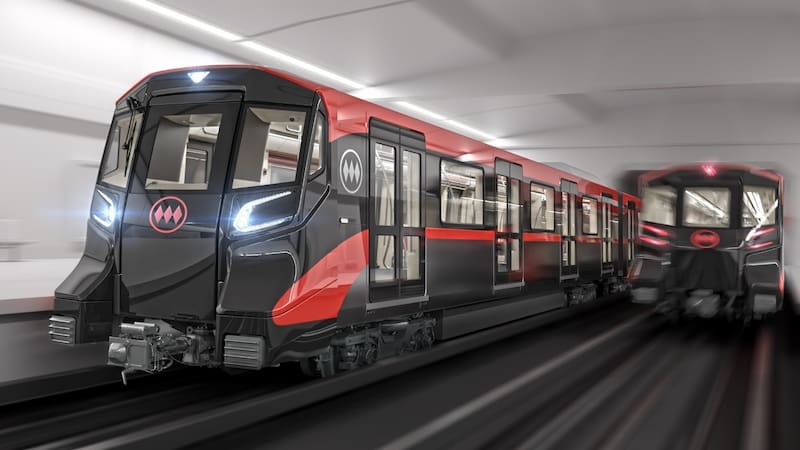
French company Alstom is moving ahead with the production of 37 Metropolis trains for the future Santiago Metro Line 7 in Chile. Although the company is French, the units are being built at its Taubaté plant in Brazil.

By September 2026, seven of the 37 trains had already been assembled, and the first had begun dynamic testing.
What the new Line 7 trains will be like
The trains will have five cars, measure 102 meters in length and be able to carry up to 1,247 passengers. They will also include air conditioning, security cameras, intercoms, and USB-C ports.
Each train will have two spaces for people with reduced mobility. In addition, it will feature an advanced information system to provide route and station updates.

When will they begin operating?
The first tests are being carried out in Brazil to check the traction, braking, signaling, and autonomous driving systems.
Jean-Michel Morvan, Alstom’s general manager for South America, said: “Today we already have seven trains assembled, and the first of them is successfully passing its dynamic tests.”
The company will also supply the Urbalis CBTC system, which will allow the trains to run without a driver. The first unit was expected to arrive in Santiago in early 2027, while the Metro is projected to begin operations in 2028.
Where the 37 trains are being built
Although Alstom is a French company, the 37 units are being built at its industrial plant in Taubaté, in the state of São Paulo, Brazil. From there, the trains for the Santiago Metro are being developed as part of a partnership that has already lasted more than 50 years.
The contract also includes 20 years of maintenance and the supply of rail infrastructure, tracks, catenary, and electrical systems.
Which stations will the new Line 7 connect?
The project will stretch 26 kilometers and include 19 stations. It will cross seven municipalities: Renca, Cerro Navia, Quinta Normal, Santiago, Providencia, Vitacura, and Las Condes.
The infrastructure will benefit about 1.6 million people and will cut travel times between the terminal stations to about 37 minutes.
According to Metro de Santiago, this link will also help ease congestion on Line 1 and expand public transportation options in the Chilean capital.