
En esta noticia
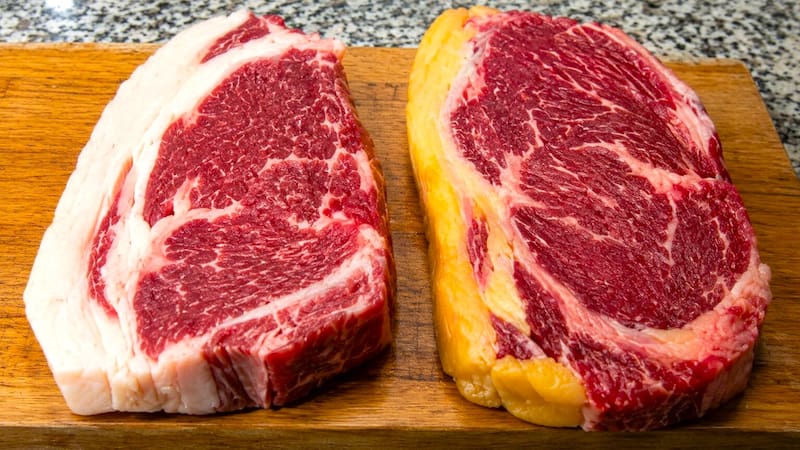
When choosing a cut of beef, whether at the butcher or the supermarket, it is common to notice that some pieces have white fat, while others have yellow fat.
When buying, this factor can be decisive, since yellowish fat often raises concerns and may lead buyers to question the quality of the product.
In this regard, the Institute of Agriculture and Natural Resources at the University of Nebraska-Lincoln explains what causes the difference in beef fat color and what it means in terms of safety.
Beef With White Fat or Beef With Yellow Fat: What’s the Difference
The institution explains that the difference in beef fat color is mainly due to the levels of beta-carotene -an orange-red organic pigment found in plants- in the animal’s diet.
For this reason, because of the amount of grasses eaten by cattle fed on forage, they are the ones that have yellow fat.

“This is not a safety issue; however, it may not be as visually appealing to some consumers,” the experts say.
Fat color is therefore not a deciding factor when buying, and neither type is recommended over the other, since it is tied to the animal’s feed, not the quality of the meat.
When the Color of Meat Should Be a Warning Sign
The U.S. Food Safety and Inspection Service (FSIS) explains that a change in meat color, when it is not accompanied by other factors, does not necessarily mean it has gone bad.
In fact, when stored in the refrigerator meat can darken because of chemical changes in myoglobin caused by changes in oxygen. “This is a normal change,” it says.
However, if the meat changes color and has an unusual odor, becomes sticky to the touch or turns slimy, these are bad signs and should not be used.