

En esta noticia
The asteroid Apophis, one of the most studied near-Earth objects, will make an extraordinary approach in a few years.
According to the National Aeronautics and Space Administration, better known as NASA, it will pass about 32,000 kilometers from our planet on April 13, 2029, a distance even closer than communications satellites.
According to the space agency, the rocky body has a diameter of 340 meters and will travel through a region of space closer to Earth than the orbit of many other asteroids.

Apophis: What the asteroid’s approach to Earth will look like in 2029
NASA is focusing on the asteroid’s distance because most geostationary satellites orbit at about 36,000 kilometers above Earth.
That means Apophis will pass closer to Earth than many of the satellites we use for communications and other technology services.
According to the U.S. agency, it will be the closest known approach of an asteroid of this size predicted in advance by scientists.
The object, officially identified as 99942 Apophis, was discovered on June 19, 2004. Since then, astronomers have studied its path and physical characteristics to determine precisely how it will travel around our planet.
How and where to see the asteroid Apophis
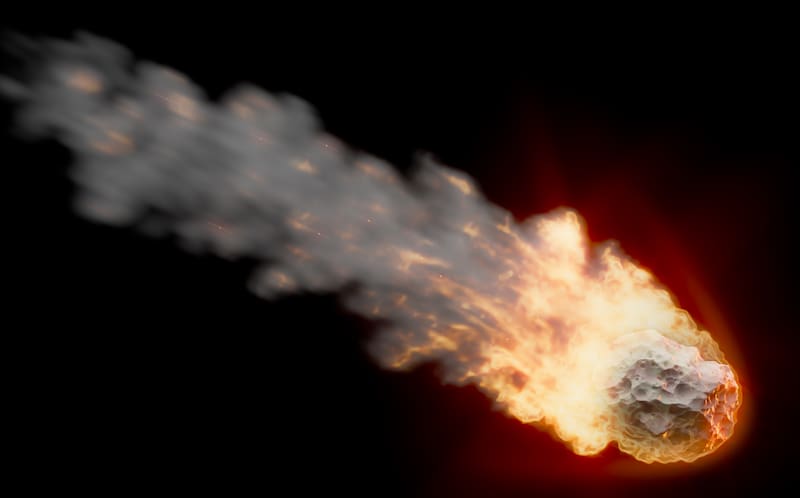
One of the most striking aspects of the event will be its visibility.
According to NASA, the asteroid will be visible without telescopes or binoculars from some parts of the Eastern Hemisphere, weather permitting.
The best viewing areas will include parts of Europe, Africa and Asia. During its approach, Apophis will appear as a bright point moving across the night sky.
The chance to observe it directly from Earth makes the phenomenon an exceptional opportunity for astronomy enthusiasts and researchers.
Unlike other space objects that can only be detected with special instruments, Apophis will be bright enough to be seen with the naked eye from certain locations.

Why NASA considers the asteroid Apophis’ flyby historic
The 2029 flyby will allow scientists to observe a large space object, but it will also be a unique scientific opportunity.
At the same time, NASA’s OSIRIS-APEX mission is set to rendezvous with Apophis after its approach to study its composition, its surface and the effects of the gravitational encounter.
Meanwhile, the European Space Agency (ESA) is also preparing the RAMSES mission, which aims to accompany the asteroid during its close pass by Earth and analyze any changes that may occur.
These projects will provide valuable information about asteroid composition and improve scientific understanding of objects traveling near our planet.