
En esta noticia
An archaeological discovery in China has brought to light a singular burial ritual dating to the beginning of the Bronze Age. Researchers found six nearly 4,000-year-old tombs that reveal major differences in how the bodies of men and women were treated.
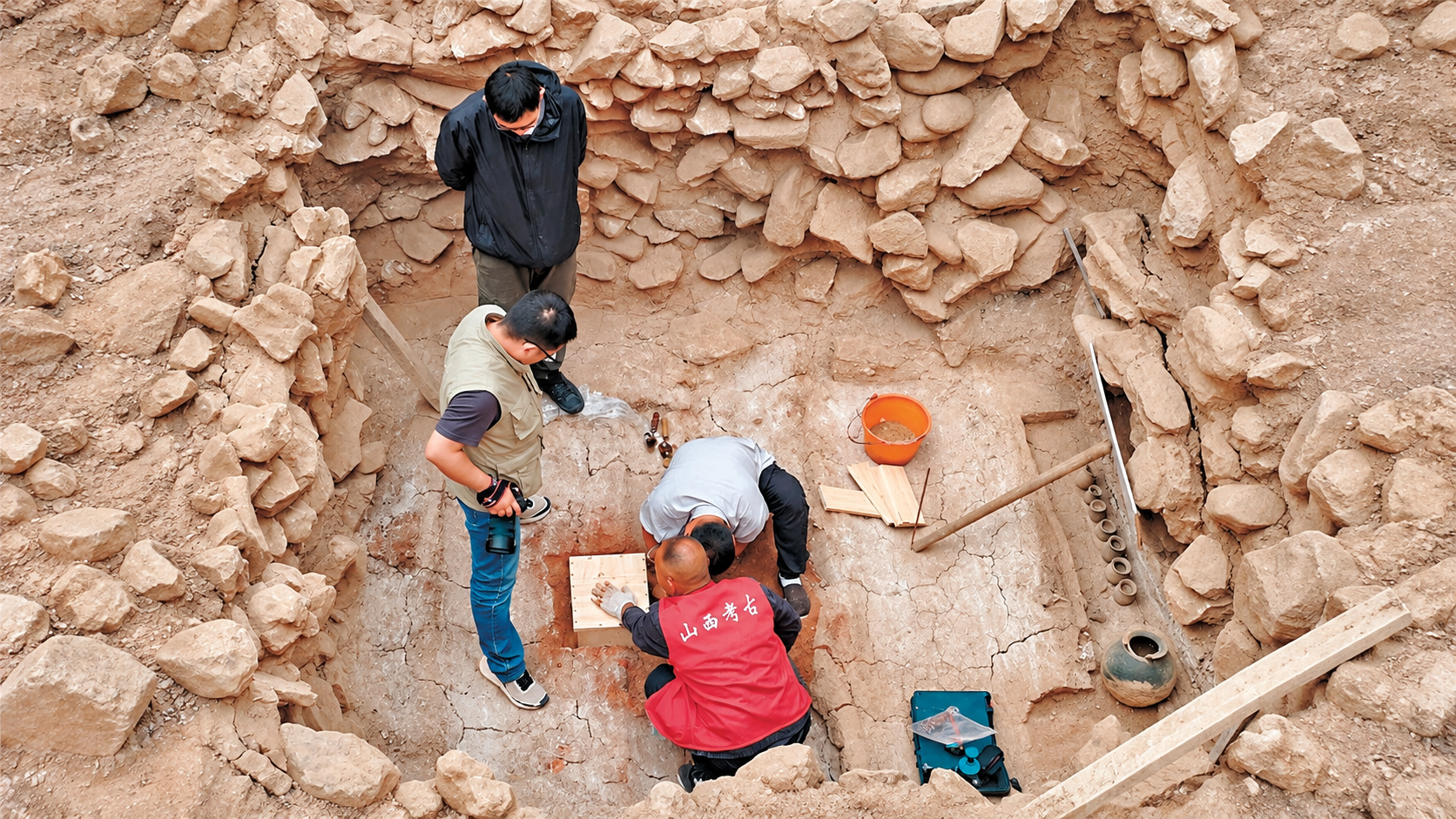
The find was made at the Zhongcun site in Xiyang County, in Shanxi province. The burials date to between 1880 and 1450 B.C., a period traditionally associated with the Xia dynasty, the first to appear in Chinese historical records.
Details of the discovery appear in an article published Oct. 21, 2026, in the scientific journal Antiquity by Cambridge University Press, which highlights the 10 most significant archaeological finds in China in 2025.


Why bodies of men were covered with a red mineral nearly 4,000 years ago
Experts identified traces of cinnabar, a mineral made of mercury sulfide, known for its deep red color and historically used as a pigment in various civilizations.
Its distribution revealed a striking difference: the male bodies were extensively covered with the material, while the female bodies received only partial applications. In addition, nearly all of the male burials featured shell decorations over the head.
These differences point to a burial tradition tied to the sex of the deceased. The mineral’s exact symbolic meaning has yet to be determined, although researchers believe it likely came from mercury deposits in the Hunan and Guizhou regions.
What DNA analyses of the bodies buried in China revealed
Genetic testing established a family relationship between the main male individuals in tombs M9 and M10: they were father and son. The finding supports the theory that the cemetery belonged to an elite family that passed down its social standing through the paternal line.
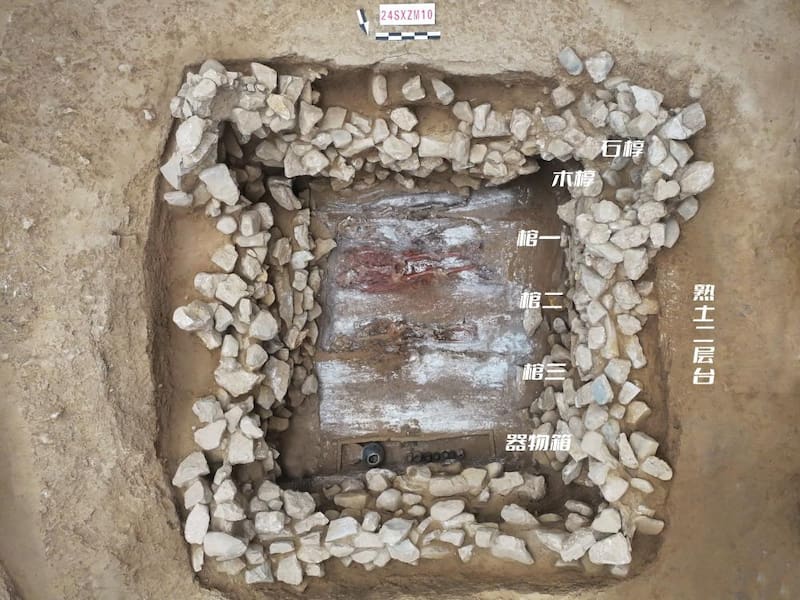
The larger tomb, known as M10, covers about 46 square meters and contains three coffins inside a structure with stone and wood chambers.
Archaeologists also identified turquoise from a mining area located about 500 kilometers from the site. The discovery provides new evidence of the trade networks, social hierarchies and burial customs that existed during the rise of China’s earliest dynasties.