
En esta noticia
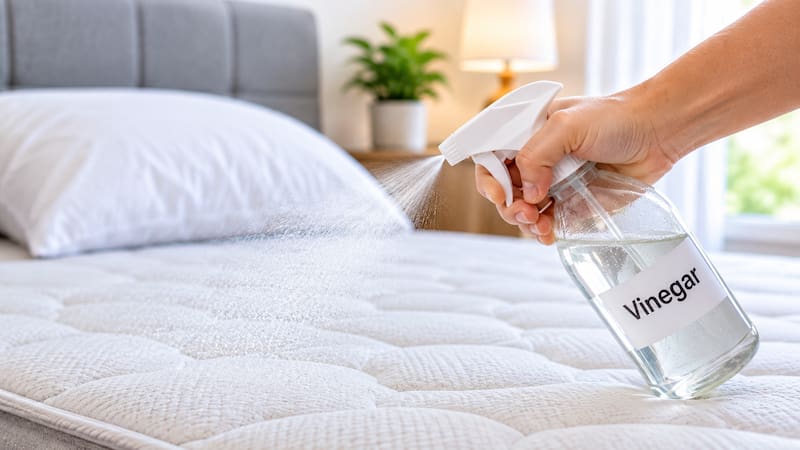
White vinegar is a common household cleaning product that can help combat surface residue and certain odors, such as those found on mattresses.
Its acetic acid content gives vinegar properties that can make it useful for certain cleaning tasks. However, it is important to note that it is not a registered disinfectant.
What is spraying vinegar on a mattress for?
White vinegar contains acetic acid, a compound that gives it its characteristic smell and acidic properties. In household cleaning, it can help address some unpleasant odors and loosen certain types of surface residue.
This is why some people use diluted vinegar as a way to freshen up mattresses. However, it should not be considered a substitute for products specifically designed to clean or disinfect bedding materials.
The American Cleaning Institute that vinegar can help neutralize certain odors and serve as a homemade cleaning method. The institute also clarifies that using it should not be equated with disinfection or the elimination of potentially harmful microorganisms.
How to apply vinegar to a mattress correctly
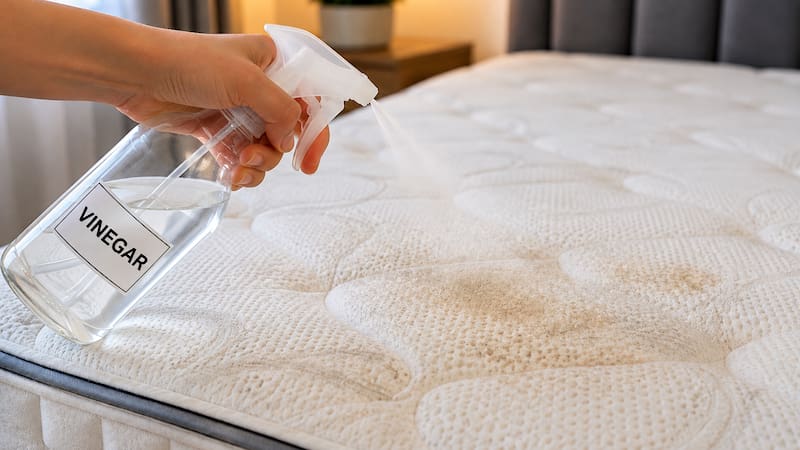
If you want to try vinegar to address a surface odor or light residue, use it sparingly and avoid soaking the material.
Follow these steps:
- Remove the bedding: Take off the sheets, pillowcases, and mattress protector before cleaning.
- Vacuum the surface: Remove dust, hair, and loose particles with a vacuum cleaner.
- Test a small area: Mix a little white vinegar with water and apply a small amount to an inconspicuous spot. Check for discoloration or damage before proceeding.
- Use a lightly damp cloth: Rather than spraying large amounts directly onto the mattress, gently dab the affected area with a cloth lightly moistened with the diluted solution.
- Allow it to dry completely: Ventilate the room and wait until the mattress is entirely dry before putting the bedding back on.
Always follow the manufacturer’s cleaning instructions, especially if the mattress is made of memory foam or other materials that should not get wet.