

En esta noticia
Social Security checks could be cut 17% or more if Congress doesn’t act before reserves run out, the program’s trustees project. Under current law, retirees and survivors would face a 22% cut in late 2032. Control of Congress is on the Nov. 3 ballot.
The projections come from the 2026 annual report of the Social Security Board of Trustees, released in June. The trustees oversee the program’s trust funds, the reserve accounts that cover benefits when payroll tax revenue falls short.
Social Security has spent more than it collects every year since 2021. The report projects that costs will stay above income through 2100, the end of its forecast period.
These midterm elections, all 435 House seats and 35 of the Senate’s 100 seats are on the ballot. Senators elected this year serve six-year terms, so they will still be in office when the first cut is projected to hit.


What are the 2 Social Security deadlines, and how much could checks be cut?
The trustees’ report sets two projected deadlines, each tied to a different cut:
- Fourth quarter of 2032: The Old-Age and Survivors Insurance Trust Fund, which pays retirement and survivor benefits, runs out. Payments would drop to 78% of scheduled benefits, a 22% cut.
- Third quarter of 2034: The combined retirement and disability funds run out. Payments would drop to 83%, a 17% cut. This applies only if Congress changes the law to let the two funds share money.
Running out of reserves doesn’t mean benefits stop. Payroll taxes would keep coming in, but they would cover only part of what beneficiaries are scheduled to receive.
Disability benefits aren’t part of the 2032 cut. The disability fund has enough reserves to pay full benefits through 2100, according to the report.
Neither cut would hold steady. Without changes, the share of benefits Social Security can pay keeps shrinking. By 2100 it falls to 62% for retirement and survivor benefits and 65% for the combined program.
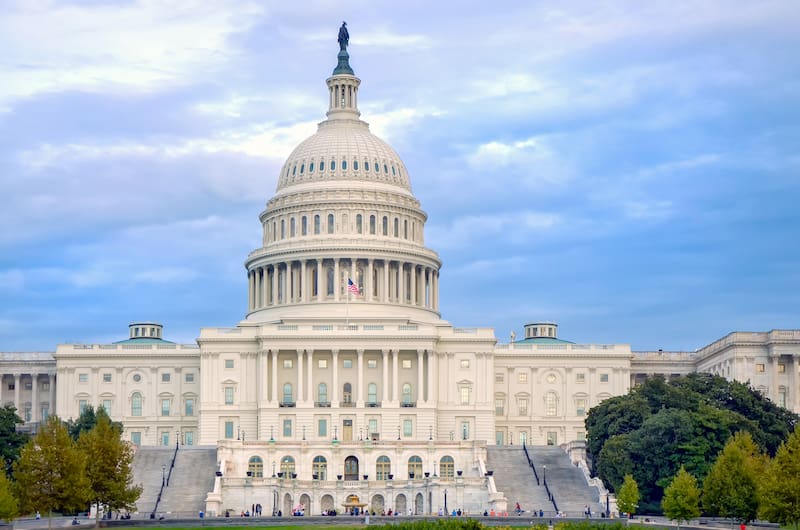
What could Congress do to prevent the Social Security cut?
The trustees say Congress will need to pass legislation to keep the retirement and survivors fund from running out. Their report estimates how large the changes would need to be to keep the whole program fully funded through 2100.
The report calculates that if changes had taken effect at the start of 2026, options would include raising the payroll tax from 12.4% to 16.65%, or cutting all current and future benefits by 25.2%. Lawmakers could also combine the two approaches. Workers and employers split the payroll tax.
Another scenario in the report would cut benefits by 30.3%, but only for people who become eligible in 2026 or later. Current beneficiaries would keep their scheduled amounts.
Waiting makes the changes larger. If Congress holds off until 2034, the report estimates the payroll tax would need to rise to 17.3%, or benefits would need to fall 28.5% for everyone.

How could the Nov. 3 vote affect Social Security?
Republicans control both chambers, with 53 of the Senate’s 100 seats and 218 of 435 House seats. Democrats hold 214 House seats, with one independent and two vacancies.
Midterm turnout skews older. In 2022, 68% of U.S. citizens ages 65 to 74 and 65.2% of those 75 and older reported voting. That compares with 27.6% of those ages 18 to 24, according to the Census Bureau.
Overall, 52.2% of voting-age citizens reported casting a ballot in 2022. The Census figures are self-reported, collected through the bureau’s Current Population Survey.
Because older Americans are the most reliable midterm voters, the party that wins control on Nov. 3 will face immense pressure to protect benefits. However, the razor-thin margins in Congress mean that whichever party prevails will likely need bipartisan cooperation to pass any of the major tax increases or benefit cuts required to fix the looming 2032 deadline.