
En esta noticia
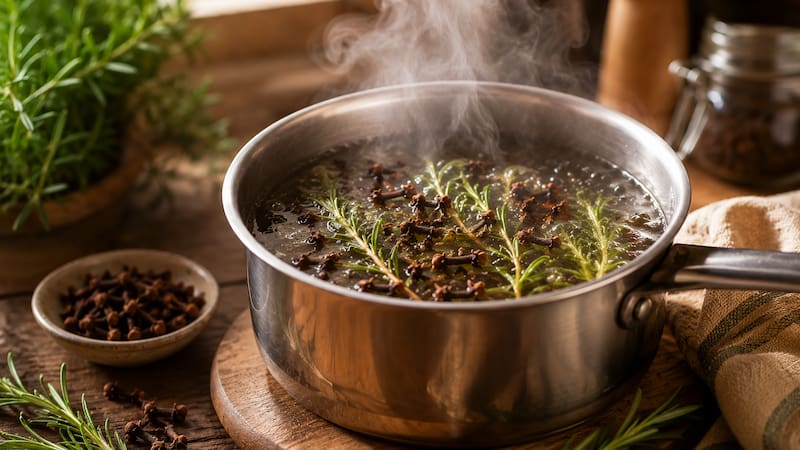
Boiling rosemary and cloves in water is a simple home remedy for adding a pleasant aroma to indoor spaces, especially after cooking foods with strong smells. Both ingredients contain aromatic compounds that are released when heated, creating a distinctive herbal and spicy fragrance that can temporarily change the smell of a room.
Although the combination is often discussed as a natural alternative to commercial air fresheners, its main practical use is freshening the air with fragrance, not disinfecting a home or treating health conditions. Understanding what the mixture can and cannot do is important before incorporating it into a household routine.


What is boiling rosemary with cloves used for?
The combination of rosemary and cloves can be useful when lingering cooking odors make a kitchen or dining room smell unpleasant. Fish, fried foods and other strongly scented meals can leave persistent odors, and simmering aromatic ingredients in water offers a simple way to introduce a different fragrance.
Rosemary has a fresh, herbal scent, while cloves provide a warm, spicy aroma. When heated in water, volatile compounds from both ingredients are released into the surrounding air, temporarily changing the room’s smell.
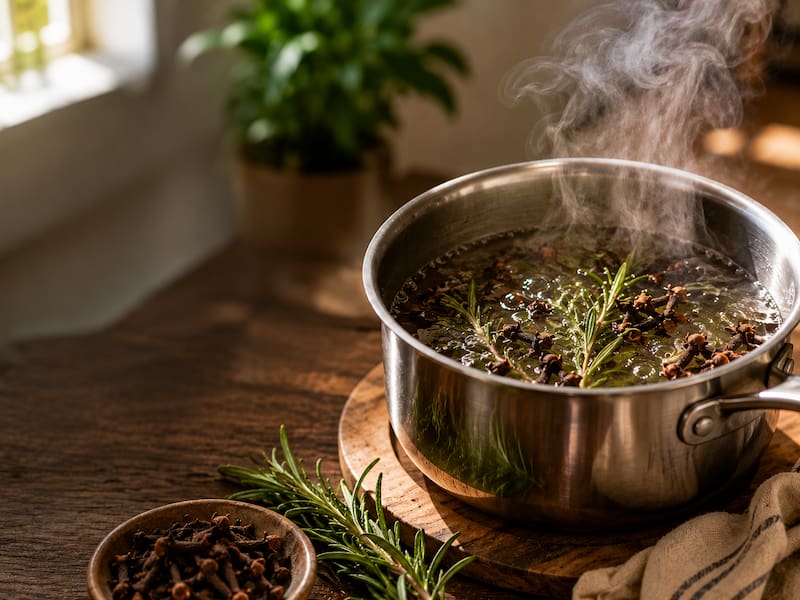
The mixture may be particularly appealing to people who prefer the fragrance of herbs and spices over some commercial air fresheners. However, its effect is limited. The aroma gradually fades after the pot is removed from the heat, and the preparation does not eliminate the underlying source of an unpleasant smell.
Boiling rosemary and cloves may be used in several situations around the home:
- After cooking: to introduce a herbal and spicy fragrance after preparing fish, fried foods or other meals with persistent odors.
- Before visitors arrive: to create a more pleasant-smelling kitchen or dining area.
- As an occasional home fragrance: to add a natural aroma without relying exclusively on commercially manufactured scented products.
There is an important distinction between improving how a room smells and improving its air quality. This preparation does not replace proper ventilation, cleaning or the removal of odor sources.
Why do rosemary and cloves release such a strong aroma?
Both ingredients contain naturally occurring aromatic compounds. Cloves are known for their eugenol content, while rosemary contains several volatile substances, including cineole, camphor and pinene compounds.
Research has examined the antimicrobial properties of certain compounds and essential oils derived from these plants under laboratory conditions. However, concentrated essential oils are different from a homemade mixture of rosemary, cloves and water.
Consequently, laboratory findings do not establish that boiling these ingredients will disinfect indoor air, eliminate bacteria throughout a room or prevent illness. There is also insufficient evidence to conclude that the homemade preparation provides specific medical benefits simply because it contains these plants.
Its most reasonable use is as an occasional natural fragrance for the home, rather than as a substitute for cleaning products, air filtration or medical treatments.


How to prepare rosemary and cloves at home
Preparing the mixture requires only a few common kitchen ingredients. The amount can be adjusted according to the desired fragrance, although more ingredients do not necessarily mean better results.
- Fill a small pot with water.
- Add several whole cloves and a few sprigs of rosemary.
- Bring the water to a boil, then reduce the heat to a gentle simmer.
- Allow the ingredients to release their aroma for a few minutes while monitoring the pot.
- Turn off the heat when finished and let the mixture cool before handling it.
Keep the pot under supervision throughout the process and ensure there is enough water to prevent it from boiling dry. Hot water and steam can cause burns, so the pot should remain out of reach of children and pets.
If you intend to keep the cooled liquid for later use as a home fragrance, strain it into a clean container and store it carefully. Discard the mixture if its smell or appearance changes.
What precautions should you take?
Even though rosemary and cloves are commonly used in cooking, a homemade aromatic preparation should not automatically be considered risk-free in every situation. Strong fragrances may bother people with sensitivities, and adequate ventilation remains important when heating aromatic ingredients indoors.
The mixture should not be used to mask persistent odors caused by mold, dampness, sewage or inadequate ventilation. Those problems require identifying and addressing their underlying causes.
It is also important not to confuse the aroma of a homemade infusion with the concentrated properties of essential oils. Research involving concentrated plant extracts cannot be directly applied to a pot of water containing fresh rosemary and whole cloves.