
En esta noticia
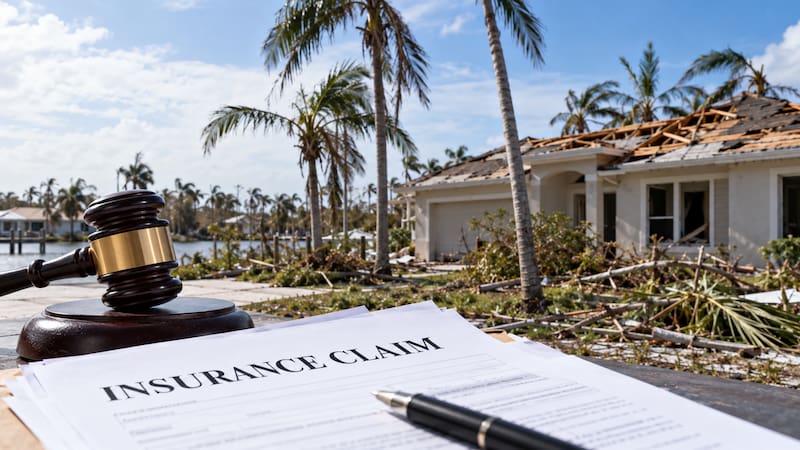
A Florida appeals court ruled Oct. 16 that two Lee County homeowners must cover their own legal fees in a Hurricane Ian claim against Citizens Property Insurance Corp. The insurer first paid them $11,101, while their contractor put the repairs at $157,727.
The unanimous decision from Florida’s Sixth District Court of Appeal upheld a ruling by Lee County Circuit Judge Kyle Cohen. Homeowners Susan Reed and Kent Lonngren had reported storm damage to Citizens, the state-backed insurer, on Oct. 4, 2022.
The ruling also clarifies how property claim appraisals work in Florida, including what a 90-day legal window does and doesn’t guarantee.


Why did the Florida court leave the Hurricane Ian homeowners with the legal bill?
After several rounds of payments, the homeowners gave notice in June 2023 that they planned to sue. Citizens answered by demanding an appraisal. When that stalled over choosing a neutral umpire, the homeowners filed a lawsuit on Sept. 26, 2023.
The court paused the case until the umpire was chosen. The appraisal award went the homeowners’ way, and Citizens paid it within the policy’s 60-day deadline. The homeowners then claimed that payment was a “confession of judgment,” a Florida doctrine that can make insurers pay attorney fees.
Judge Meredith L. Stargel wrote that the doctrine doesn’t apply when the claims process hasn’t broken down and the homeowners didn’t need to sue to get paid. The panel found the lawsuit was a “race to the courthouse” and not what got the claim resolved.
As it stands, the homeowners keep the full appraisal award Citizens already paid, but the insurer owes them nothing more. The appeals court left Cohen’s judgment for Citizens in place, which also rules out interest on the claim for the period before judgment.
The decision isn’t final until the deadline to ask for a rehearing passes.

What should Florida homeowners know if their insurer demands an appraisal?
It’s the second time this month the court has ruled this way. On Oct. 2, it rejected a similar claim from a homeowner who sued a different insurer, Safepoint Insurance Co., while an appraisal was still underway.
The ruling spells out several points that apply when a damage dispute moves to appraisal:
- Appraisal decides the amount. Under the Citizens policy in this case, each side had 20 days to name an appraiser. If the appraisers couldn’t agree on an umpire within 15 days, either side could ask a local judge to pick one. Any two of the three set the final amount.
- The 90-day rule isn’t a deadline for the appraisal. Florida law lets a policyholder sue if the appraisal hasn’t concluded within 90 days after the 10-day notice-of-intent period ends. It doesn’t require the appraisal to be finished by then.
- Suing early may not shift legal costs. If the claims process is working and the insurer pays on time, paying the award doesn’t count as admitting it lost.
- Payment deadlines come from the policy. Citizens’ contract gave it 60 days to pay the award, and meeting that deadline helped its case.