
En esta noticia
Kitchen drawers collect crumbs, grease residue, dust and occasional spills from utensils and food packaging. Over time, this buildup can make the surfaces harder to clean, particularly when the drawer has a wooden or laminated interior.
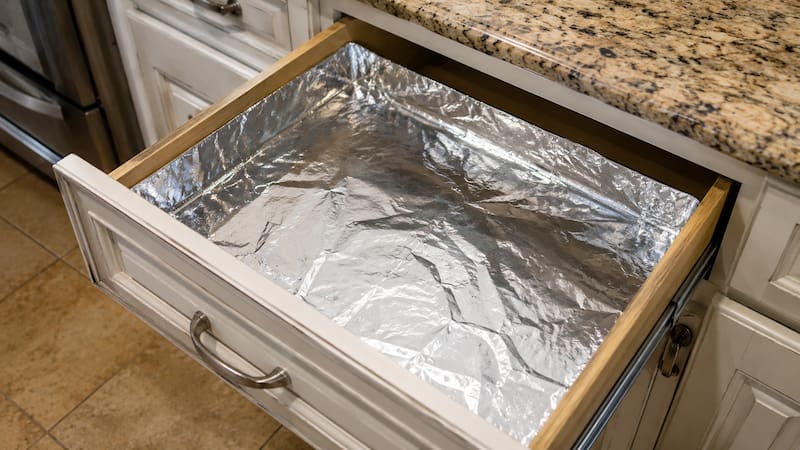
One inexpensive alternative is to place a sheet of aluminum foil at the bottom of the drawer. The idea is to create a removable layer that can be taken out and replaced when it becomes dirty, instead of having to scrub the entire surface every time a small mess occurs.

What putting aluminum foil in kitchen drawers is for
The main purpose of lining a drawer with aluminum foil is to make everyday maintenance easier. Depending on how the drawer is used, it may offer several practical advantages.
- Easier cleanup: Crumbs and certain food residues can be removed along with the foil, reducing the need to scrub the drawer itself.
- A barrier against spills: The material can help keep small spills from immediately contacting the drawer’s base, provided the foil remains intact and is removed promptly after a spill.
- Protection against stains: A removable layer may help limit direct contact between the drawer surface and grease or food residue.
- Low cost: Aluminum foil is inexpensive and easy to cut to fit different drawer sizes.
- Simple replacement: When the sheet becomes dirty, torn or wrinkled, it can be discarded and replaced.
These benefits are most relevant in drawers used to store dry utensils, measuring spoons, kitchen tools or other items that may leave crumbs and residue behind.
However, aluminum foil does not absorb moisture. If water becomes trapped beneath it, the drawer’s surface may remain damp, potentially damaging wood or laminate over time. For that reason, it is important to keep the drawer dry and inspect the area underneath the foil regularly.
How to put aluminum foil in kitchen drawers
The process requires only a few basic steps and does not involve special tools.
- Empty the drawer. Remove cutlery, utensils, organizers and any other stored items.
- Clean the surface. Remove crumbs, dust and grease using a cloth and a suitable mild cleaning solution.
- Dry it completely. Before adding the foil, make sure the drawer has no visible moisture.
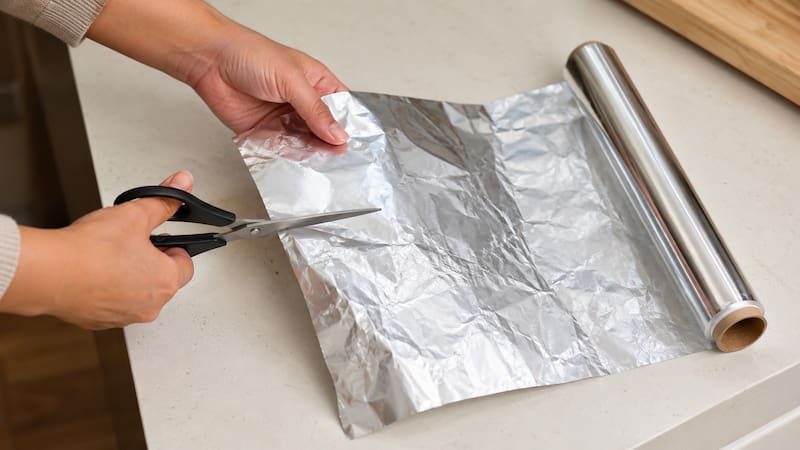
- Measure the base. Cut a sheet of aluminum foil to fit the bottom of the drawer without interfering with its opening and closing.
- Lay the foil flat. Smooth it gently so that it covers the intended area without large folds or loose edges.
- Return the items. Put the utensils and organizers back once the foil is in place.


How often should aluminum foil be replaced?
There is no universal replacement schedule for aluminum foil used in drawers. The frequency depends on how often the drawer is used and whether food residue, grease or moisture reaches the lining.
Check it periodically and replace it when it becomes dirty, torn or damp. If moisture appears underneath, remove the foil, dry the drawer completely and investigate the source before putting a new sheet in place.
The key is to use aluminum foil as a simple aid for collecting everyday dirt, not as a substitute for proper kitchen hygiene or routine cabinet maintenance.