
En esta noticia
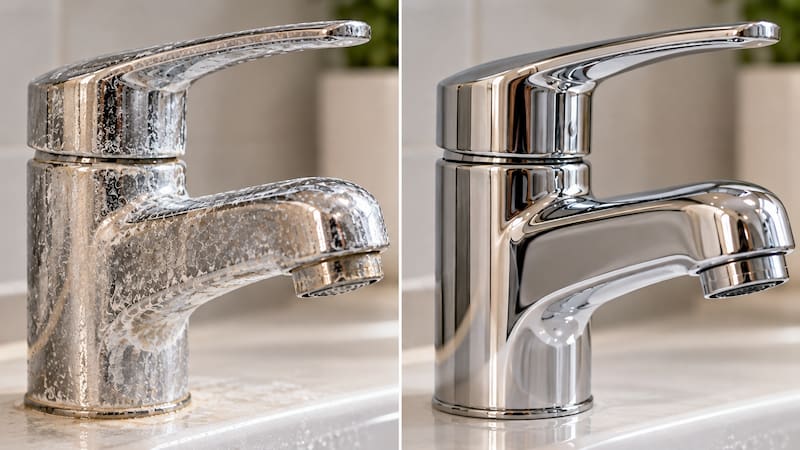
With everyday use, faucets can accumulate stains and whitish mineral deposits that are difficult to remove with regular cleaning. These marks usually appear due to constant contact with water and can affect the appearance of the faucets.
To address this problem, the University of Georgia in the United States shares a cleaning method with vinegar and absorbent paper that allows you to act directly on the areas where hard water stains accumulate.
Why do they recommend placing a paper towel with vinegar on faucets?
According to the Healthy Indoor Environments publication from the University of Georgia, this procedure is intended to remove hard water stains that appear on faucets.
Hard water contains dissolved minerals that can leave deposits on different surfaces as it evaporates. Over time, these accumulations can form whitish stains on the faucets.
The method consists of keeping the vinegar in contact with the affected surface for about an hour, instead of applying it and removing it immediately.
How to use a paper towel and vinegar to remove hard water stains?
The University of Georgia recommends following these steps:
- Dampen a sheet of paper towel or a cotton cloth with distilled white vinegar.
- Wrap the area of the faucet that has hard water stains with the damp material.
- Let it sit for about an hour.
- Use an old toothbrush to clean hard-to-reach areas around the faucet.
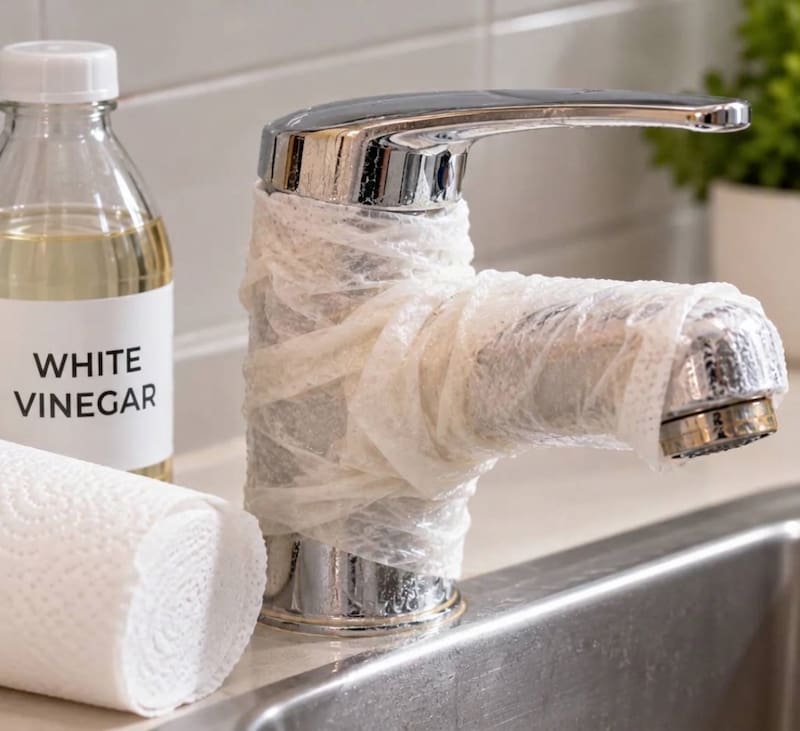
This way, the vinegar remains on the stains for the indicated time, while the brush allows you to reach small spaces where residue can build up.
What precautions should be taken before using vinegar on faucets?
Although the method can be useful for removing hard water stains, not all faucet surfaces and finishes are compatible with acidic products.
Therefore, before applying it, it is important to check the manufacturer’s cleaning instructions, especially when it comes to faucets with special coatings or delicate finishes.