
En esta noticia
An 18-kilometer tunnel under the Baltic Sea aims to transform the link between Denmark and Germany. The megaproject, known as the Fehmarnbelt tunnel, will connect the Danish island of Lolland with the German island of Fehmarn and will allow travel between the two countries by car and by train.
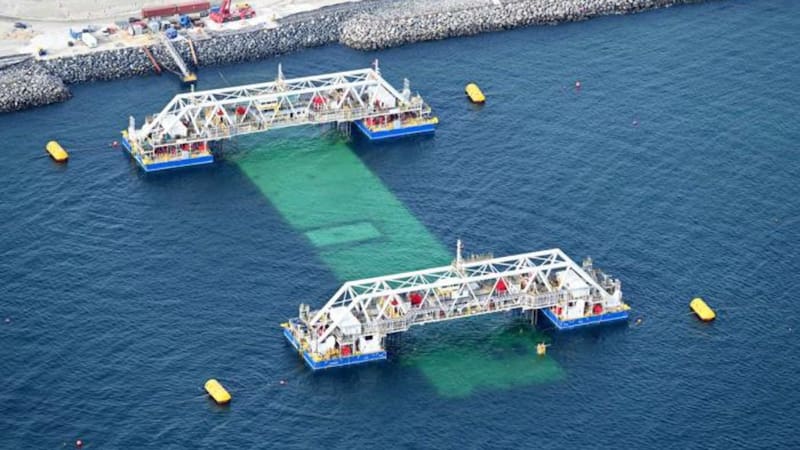
The project calls for the installation of 89 giant reinforced concrete modules, built on land and sunk into a trench prepared on the seabed. Each standard piece is 217 meters long and weighs about 73,500 tons. When finished, the infrastructure will have four vehicle lanes and two electrified rail tracks.
Construction is continuing, with the elements being installed progressively. According to the Danish state-owned company Femern A/S, by the end of September 2026, four modules had already been placed, totaling nearly 900 meters of tunnel that will cut travel times and create a direct road and rail connection between the two countries, although the opening date still must be confirmed with the updated official schedule.
What the 18-Kilometer Tunnel Linking Denmark and Germany Will Look Like
The Fehmarnbelt tunnel will be a fixed connection under the Baltic Sea between the Danish island of Lolland and the German island of Fehmarn. The project will stretch 18 kilometers and will be part of a transport corridor designed to improve connections between Scandinavia and Central Europe. According to the Danish state-owned company Femern A/S, it will be the world’s longest immersed tunnel.
Unlike tunnels excavated directly into rock, this infrastructure is being built with large prefabricated modules that are placed in a trench on the seabed and joined together. Once completed, it will be able to handle vehicle traffic and electric trains.
The design includes:
- A four-lane highway, two lanes in each direction.
- Two electrified rail tracks for trains.
- Technical facilities and service areas are needed to operate and maintain the tunnel.
According to official project information, the trip through the tunnel will take about 10 minutes by car and 7 minutes by train.
How the Tunnel Under the Baltic Sea Is Being Built With 89 Giant Concrete Modules
The structure will be made up of 89 reinforced concrete modules, built on land and transported by sea to the site where they will be installed. Not all are the same: 79 are standard elements and the other 10 are special pieces that include a lower level to house equipment and technical installations.
The dimensions of the standard modules underscore the scale of the project: each one measures 217 meters long, 42 meters wide and 9 meters high, and weighs 73,500 tons. The special elements are shorter, at about 39 meters long, but they reach 45 meters wide and 13 meters high.
- Onshore fabrication: the modules are produced in a factory specially built in Rødbyhavn, on the Danish island of Lolland.
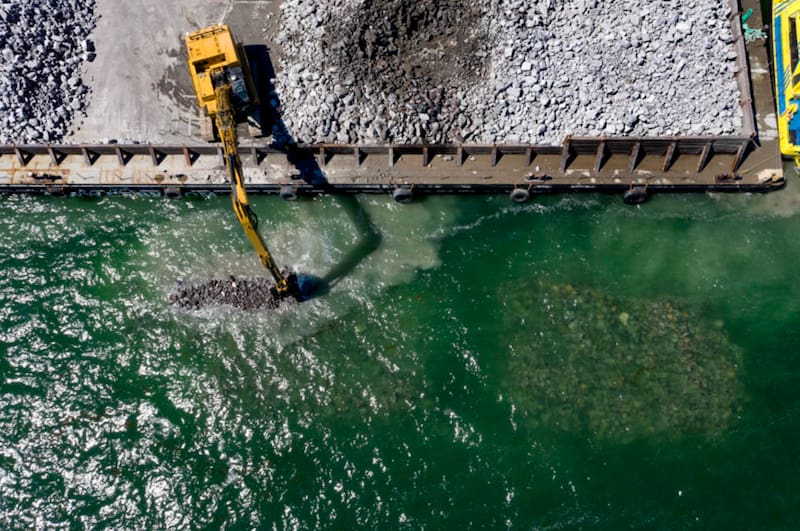
- Seabed preparation: a trench about 18 kilometers long was dug to receive the tunnel elements.
- Transport and immersion: once ready, the modules are carried by special vessels to the installation site and carefully lowered to the seabed.
- Joining and protection: each element is connected to the section already installed. Then stones and gravel are placed around and over the structure to secure and protect it.
The operation requires extreme precision because of the size and weight of the pieces. The first module was placed in May 2026 and connected to the tunnel portal on the Danish side.
When It Will Be Finished and How Travel by Car and Train Between the Two Countries Will Work
Construction is continuing, with modules being installed progressively. In an update published Sept. 28, 2026, Femern A/S said the fourth element had already been sunk and that the first nearly 900 meters of the tunnel were in place on the bottom of the Baltic Sea.
The same update said module production was still under way at the Rødbyhavn factory and that the next step was to install the first special element, which has a lower level intended for the tunnel’s technical systems.
Once the infrastructure is operational, it will allow travel between Denmark and Germany without relying on the ferry for that route, speeding passenger and freight movement. The opening date still must be confirmed with the updated official schedule.