
En esta noticia
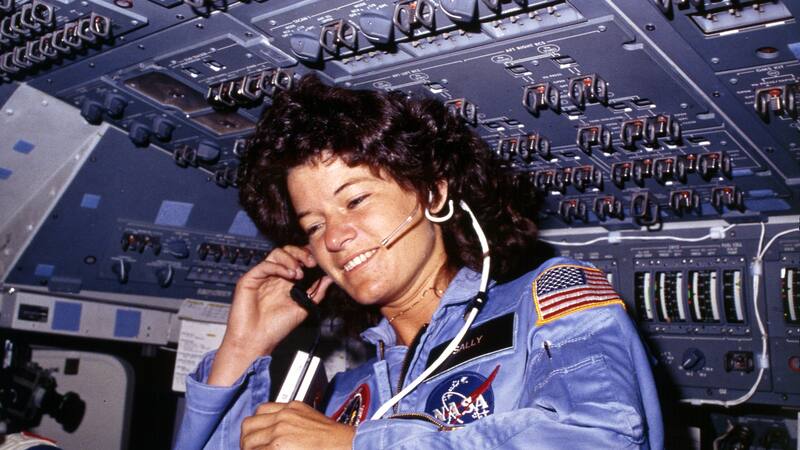
Sally Ride, NASA astronaut, recalled the image that startled her when she saw the planet from space during her first trip on the space shuttle. From one of the spacecraft’s windows, she spotted a very thin blue line around the horizon that, as she described it, looked as if it had been drawn with a pencil.
The astronaut then understood that band was Earth’s atmosphere. The experience let her see at a glance how thin and delicate that layer surrounding Earth and essential to life really is.
Sally Ride died on July 23, 2012, at age 61, after battling pancreatic cancer for 17 months. NASA confirmed her death and remembered her legacy as a pioneer of space exploration and a role model for new generations of women interested in science. Her account was preserved by the agency in an interview about her career and her experiences in space.
The blue line Sally Ride first saw when she looked at Earth from space
In the recollection published by NASA, Ride said she floated to a window in the spacecraft and looked out at the horizon. There she saw a very thin blue line stretching from one end to the other. Upon realizing it was the atmosphere, she described the scene with a phrase that sums up the impact it had on her: “It looked as if someone had taken a royal blue crayon and just traced along Earth’s horizon.”
The astronaut also explained why that image was so meaningful to her. “It was memorable because it was then obvious how fragile and delicate our atmosphere is: there isn’t much of it, but it is certainly very important,” she said. The observation gave her a sense of the thin gaseous layer surrounding the planet and its importance.
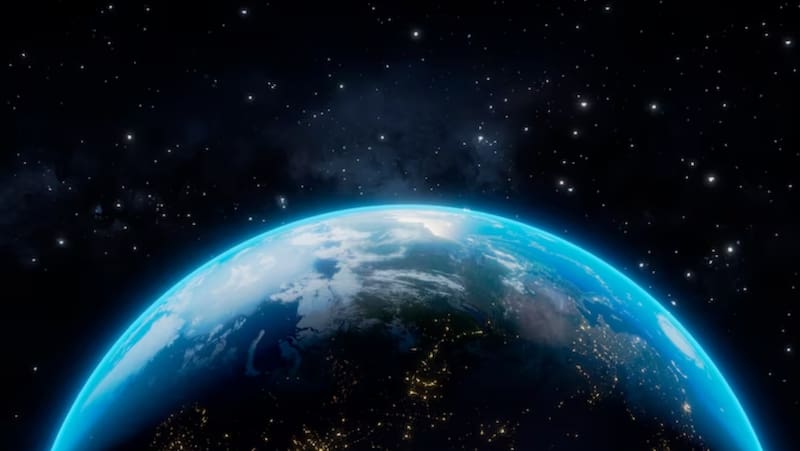
Sally Ride was the first American woman to travel into space
Ride made history on June 18, 1983, when she lifted off aboard the space shuttle Challenger on mission STS-7. That flight made her the first American woman to travel into space. She was part of a five-person crew and took part in a mission that deployed satellites and carried out various scientific activities.
Before joining NASA, Sally Ride had studied physics at Stanford University, where she earned a bachelor’s degree, a master’s and a doctorate. She was selected as an astronaut in 1978 and, after her first flight, returned to space in 1984, also aboard Challenger, during mission STS-41-G.
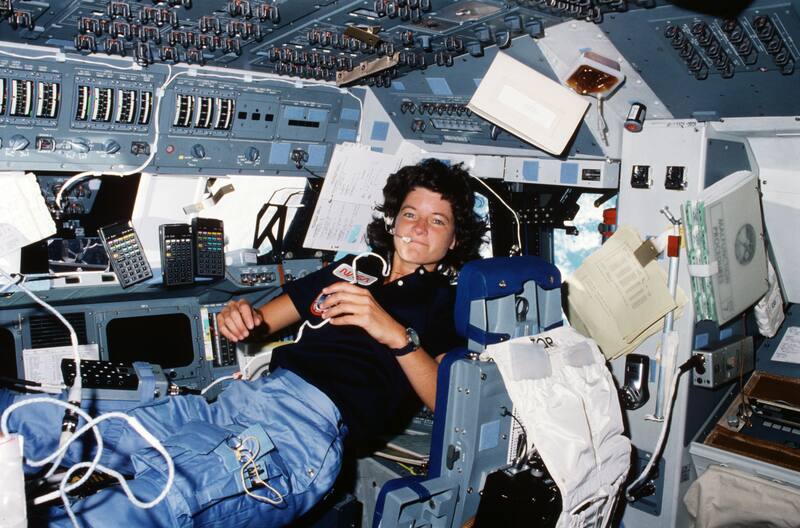
Why Earth’s atmosphere appears as a blue band from space
The atmosphere is the layer of gases that surrounds Earth. Although it extends hundreds of miles, most of its mass is concentrated in the layers closest to the surface. Seen from space, its thickness can seem very small compared with the size of the planet, helping explain the impression Ride described.
NASA says the atmosphere performs essential functions: It provides the air we breathe, helps regulate temperature and protects the surface from some solar radiation and from small objects entering from space. The image that surprised the astronaut offered a rare view of that layer and a visual sense of its fragility.