
En esta noticia
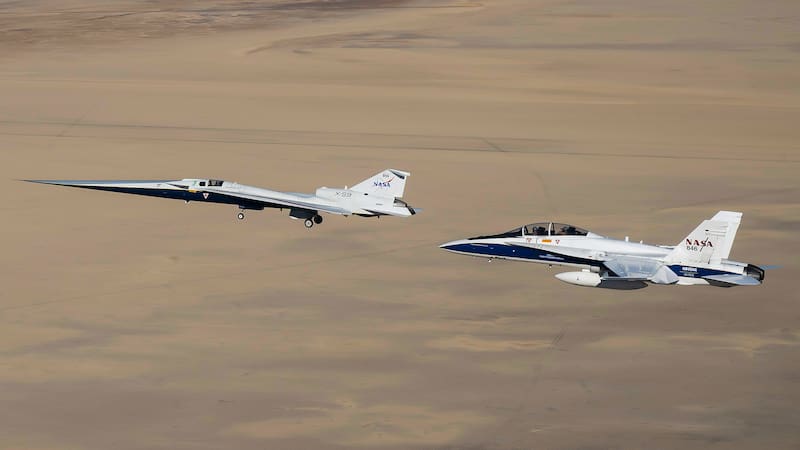
NASA is moving ahead with tests of its experimental X-59 aircraft, a plane designed to fly faster than the speed of sound without generating the loud booms that traditionally accompany such flights.
On its Oct. 21, 2026 flight from the Armstrong Flight Research Center in Edwards, California, pilot Mike Lippert reached Mach 1.4 and an altitude of 55,000 feet (16,764 meters), a historic step in the U.S. project’s development.
The X-59 took off, completed the planned maneuvers and landed about an hour later, after the technical team verified that its systems were working properly.

How fast did NASA’s X-59 fly?
The X-59 reached a top speed of Mach 1.53 during other flight tests carried out in September 2026, the equivalent of about 1,625 kilometers per hour. It also climbed above 56,000 feet, or about 17,068 meters. The figure marks progress from its planned cruise speed of Mach 1.4.
The speed record came during a week of intense activity, when the X-59 completed six flights between Sept. 22 and 25. It was the first time the team managed to carry out six tests in a single week.
What is NASA’s supersonic X-59 for?
The X-59’s main goal is to show that an aircraft can break the sound barrier without producing the characteristic boom of traditional supersonic planes.
The project is part of NASA’s Quesst mission, which aims to change how these flights are perceived from the ground. To do that, the plane has a particular aerodynamic design that allows it to spread out shock waves and reduce noise intensity.
The difference matters: When an aircraft exceeds the speed of sound, it creates pressure waves that can combine and produce a loud sonic boom. NASA wants to replace that boom with a much softer sound, similar to a light thud.
When will commercial supersonic flights begin?
There is still no confirmed date for the arrival of commercial aircraft based on this technology. The X-59 is an experimental aircraft and its current role is to validate that the design can effectively reduce supersonic noise.
The program still has to complete several evaluation stages, including acoustic validation, in which the sound the plane produces in flight will be studied.
NASA says the results will provide technical information to aircraft manufacturers and to the authorities responsible for setting regulations.