
En esta noticia
The Virginia Code sets out the requirements all drivers of converted electric vehicles, meaning vehicles adapted to run on electricity must meet in order to complete the registration process.

If the rules are not met, the vehicle cannot be registered, a key step for driving legally in the state.
What the law requires of vehicles that are now electric in Virginia
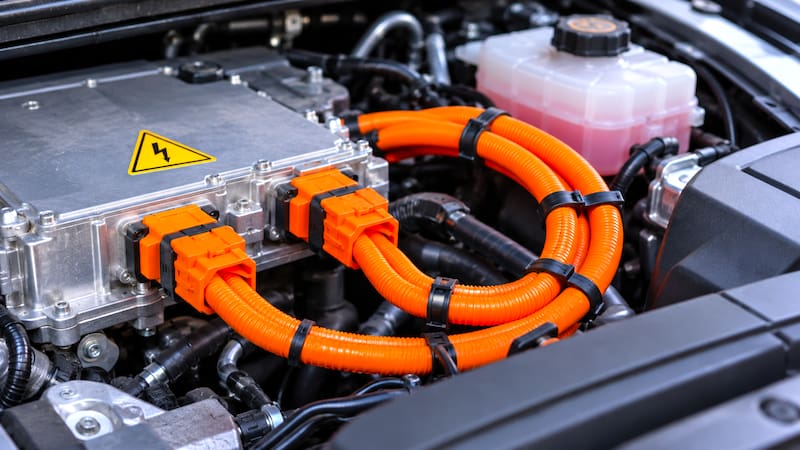
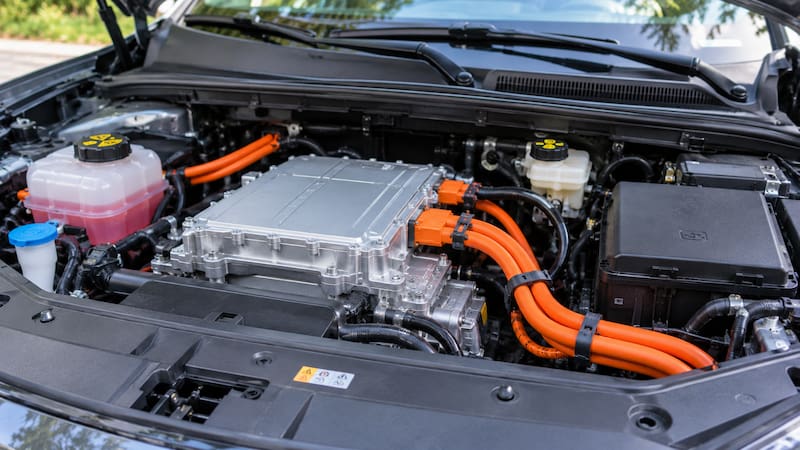
To register the vehicle, under Virginia Code section 46.2-1001.1, converted electric vehicles must use orange high-voltage cables to carry the high-voltage electricity. All conduits carrying these cables must also be marked clearly to show they carry high voltage.
“High-voltage cables cannot be connected to the vehicle chassis in a way that uses the chassis to ground the electrical current,” the law says.
Other requirements electric vehicles must meet to be registered in Virginia
In addition to the orange cables, they must have a high-voltage switch or fuse capable of interrupting the system’s maximum output. An external switch is also required to cut the high-voltage circuit in an emergency.
The batteries must be in secure, electrically isolated compartments, and if any battery other than lead-acid is used, a temperature monitoring system is required. “That system must warn the driver if the battery temperature is rising rapidly or exceeds safe levels,” the text says.
Meanwhile, high-voltage cables that run under or outside the vehicle must be enclosed in a metal conduit. A vacuum brake system is also required.
As a final requirement, the vehicle must be identified on three sides as “converted electric.” All labels must be at least 15.24 cm and have letters 7.62 cm tall.