
En esta noticia
A researcher discovered dinosaur footprints from a nearly unknown period of the Cretaceous near Tumbler Ridge, in northeastern British Columbia, Canada.
In 1988, he was able to observe them for the first time, although the remote conditions of the site meant that his study would have to wait until 2022 to be completed.
The footprints belong to the Coniacian, a stage that developed approximately 89.75 to 86.5 million years ago, and, according to experts, are one of the first dinosaur footprints of this age found in Canada.

The discovery of these dinosaur footprints began in 1988
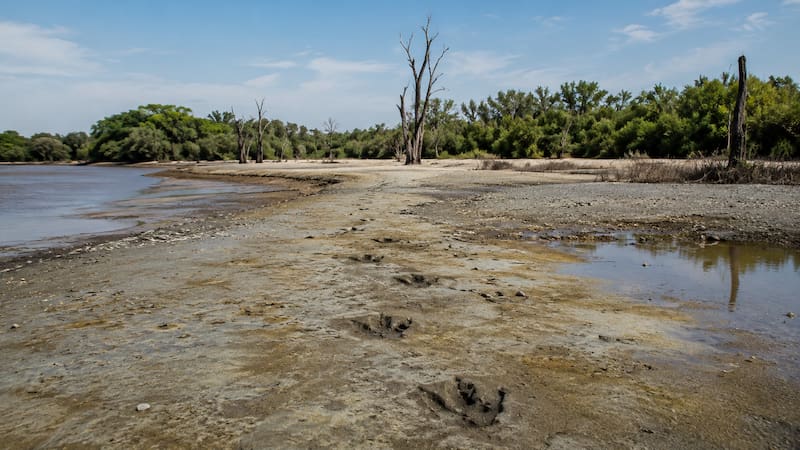
Guy Plint was the one who first observed these footprints 34 years before the research began. However, the site - which was then a delta - is in a remote area that can only be reached by helicopter.
In 2022, together with Charles Helm, he began a more exhaustive study, whose results were published in the journal Historical Biology.
What the place where the dinosaur footprints were found was like
During the middle Cretaceous, a large part of today’s Great Plains of North America was covered by a broad, shallow sea.
In the Tumbler Ridge area, a river system formed a delta that advanced toward the sea. The deposits of that ancient delta are called the Marshybank Formation, which contains terrestrial fragments where the footprints were immortalized.
What was specifically discovered about the footprints
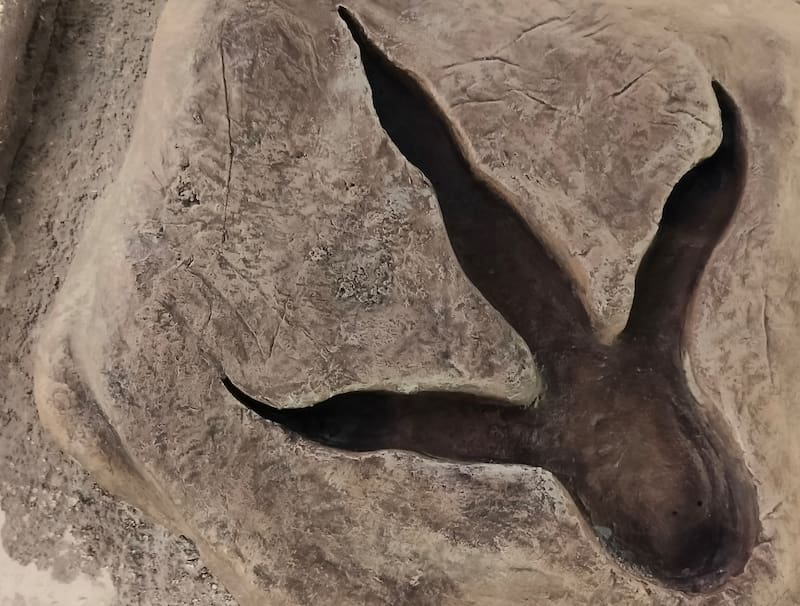
The most common footprints found have three broad, blunt toes and measure between 30 and 50 centimeters wide.
Scientists identified them as ornithopod footprints, known as “duck-billed” dinosaurs. These large herbivores could move on their hind legs or walk on all fours.
The second most common type of footprint has three narrower, elongated toes, with claw impressions. The researchers consider that they belong to carnivorous theropod dinosaurs.
Since flowering plants were abundant at the site, the experts link the proliferation of herbivorous Coniacian dinosaurs - particularly ornithopods - with the variety and extent of flowering plants.