
En esta noticia
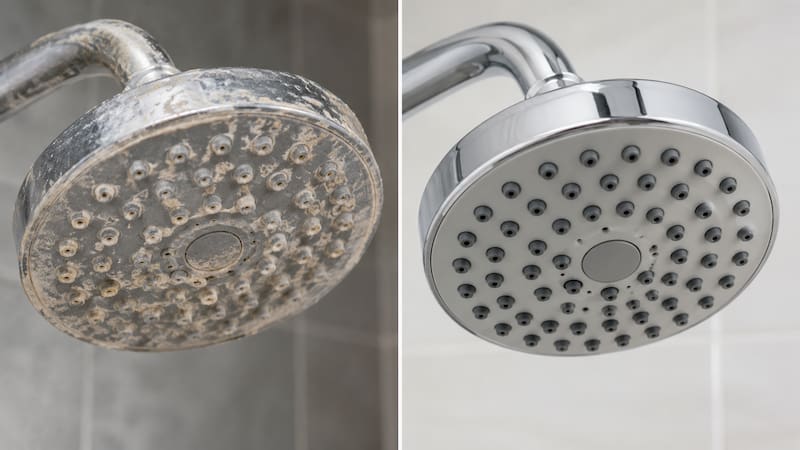
A showerhead that sprays unevenly or seems to have lost pressure may be dealing with mineral buildup rather than a plumbing problem. Over time, deposits from hard water can accumulate around the small nozzles, restricting the flow and making routine cleaning less effective.
While white vinegar is a commonly recommended option for removing these deposits, citric acid is an ideal ingredient for treating mineral deposits. Understanding how it works, and which precautions to take, can help you choose the right cleaning method for your showerhead.
Why citric acid can help remove limescale from showerheads
When water evaporates, it can leave behind minerals that gradually accumulate around showerhead nozzles. This chalky residue, commonly associated with hard water, can partially block the openings and cause water to spray unevenly or reduce the perceived pressure.
Citric acid is an acidic compound found naturally in citrus fruits and used in some household cleaning products. According to the University of Missouri’s explanation of acids and bases in cleaning products, acidic cleaners can dissolve mineral deposits that ordinary scrubbing may not remove easily.
The chemistry explains why. Limescale often contains calcium carbonate, a mineral that reacts with acids. The acid helps break down the deposit, allowing loosened material to be rinsed away with water.
Baking soda, by contrast, is mildly alkaline and is commonly used for gentle scrubbing and removing certain types of residue. It is not the same kind of targeted treatment for mineral buildup as an acidic descaler.
Citric acid can therefore be an alternative to consider when dealing with limescale. However, the best choice depends on the showerhead’s material, finish and manufacturer’s cleaning instructions.
How to clean showerhead nozzles with citric acid
Citric acid can help dissolve mineral deposits, but the cleaning method should be compatible with the showerhead’s material and finish. Before starting, check the manufacturer’s instructions to make sure an acidic cleaner is safe to use.
- Prepare the cleaning solution: Follow the dilution instructions on the label of a citric-acid descaler suitable for showerheads. Avoid guessing the concentration or combining the product with other cleaners.
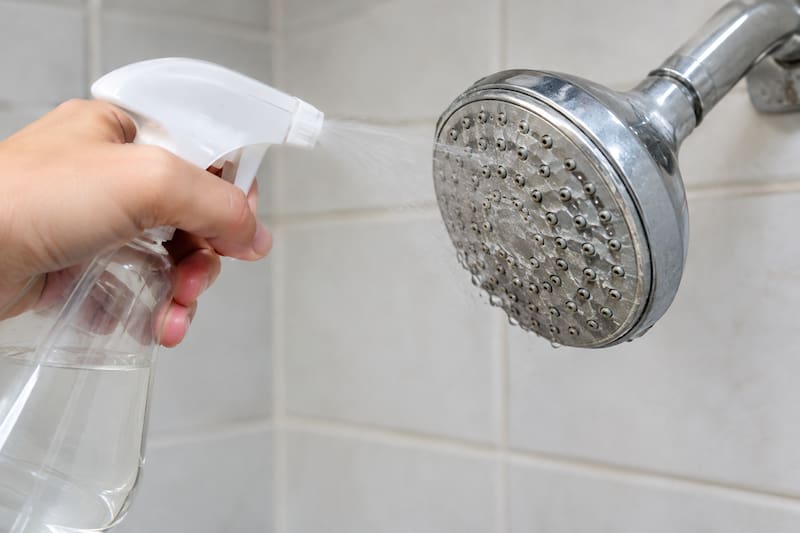
- Apply the solution: If the manufacturer permits soaking, remove the showerhead and place it in a container with the prepared solution, ensuring that the affected nozzles are covered. If the fixture cannot be removed, follow the product manufacturer’s instructions for applying the cleaner in place.
- Follow the recommended contact time: Leave the solution on the deposits only for the period specified on the product label. Do not assume that a longer soak will improve the results, since prolonged exposure may damage certain finishes or materials.
- Clean the nozzles gently: After treatment, use a soft toothbrush or cloth to remove any loosened residue. Avoid needles, metal tools or abrasive pads that could damage the openings.
- Rinse and test the flow: Rinse the showerhead thoroughly with clean water, reinstall it if necessary and run the shower to check whether the spray pattern has improved.
Important: Do not use citric acid on a showerhead unless the manufacturer confirms that it is compatible with the fixture. If the finish changes, the surface becomes dull or other damage appears, stop the cleaning process. Never mix citric acid with bleach or other cleaning products.