
By Sofía Renó
En esta noticia
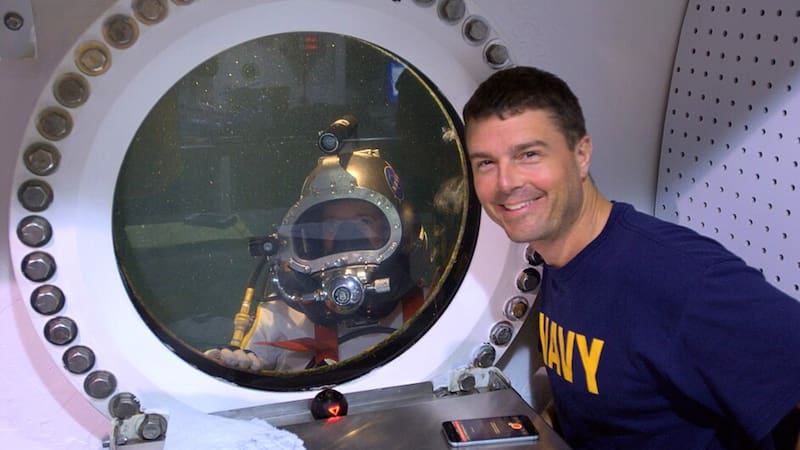
The commander of the Artemis II mission, Reid Wiseman, left a message about the future of humanity when he received the Stephen Hawking Medal from the Starmus Festival this Saturday. “When you come back you realize that our choice as individuals is to make tomorrow worse or better: let’s make it better!,” he said after recalling the experience of looking at Earth from the Moon.
Wiseman collected the award alongside pilot Victor Glover and mission specialist Jeremy Hansen, with whom he flew over the Moon for ten days in April. The astronauts shared their impressions of space exploration and explained how observing the planet from that perspective led them to reflect on peace, hope, and people’s responsibility, the EFE news agency reported.

What the astronauts felt when contemplating Earth from the Moon
The Artemis II commander highlighted the impact of observing Earth from space, where the planet looks as small as a thumb. That image, he said, awakens the need to call for “love, peace, hope and unity”.
For his part, Jeremy Hansen explained that contemplating Earth from its satellite made him wonder “what are we doing on that blue dot?” However, he clarified that there is no reason for despair, because on the planet “we have a lot of good around us”.
In this sense, the mission specialist stressed that “Humanity needs positivity, and you can give it a voice”.

Victor Glover highlights the importance of vision for the future of humanity
Pilot Victor Glover conveyed a message of gratitude from Christina Koch, the fourth member of the crew, who could not travel to Tenerife. Koch will take up the post of acting deputy director of engineering at NASA on November 1.
Glover also expressed his recognition of “the visionaries” who drove the Starmus Festival and recalled a phrase that appears in the Parliament of Ottawa: “Where there is no vision, humanity perishes”.
One of those visionaries is Garik Israelian, astrophysicist and founder of the festival. Israelian acknowledged that, when he began the event 15 years ago with the participation of space-race pioneers such as Neil Amstrong and Alexei Leonov, he could not imagine that humanity would return to the Moon three lustra later.
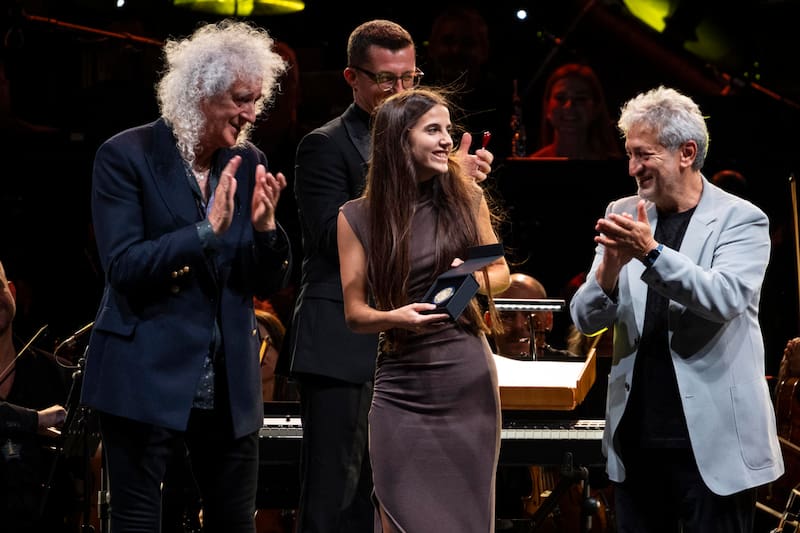
The Starmus Festival brings together science, music and international figures in Tenerife
The eighth edition of the Starmus Festival began in the port of Santa Cruz de Tenerife under the slogan “The search for truth”. During the opening ceremony, the first Jane Goodall Earth Medal was awarded to Christiana Figueres, a Costa Rican anthropologist, economist and analyst, for her pioneering work related to climate change.
Figueres received the award from family members of Jane Goodall and expressed her gratitude by imitating a chimpanzee greeting in honor of the late primatologist. A second Jane Goodall Earth Medal, which had not previously been announced, was also awarded to astrophysicist and Queen guitarist Brian May, for his participation in projects to “give wild animals a voice” and offer a second chance to animals rescued in shelters in Great Britain.
The festival had already awarded filmmaker Ridley Scott and physicist Brian Cox. In its “junior” edition, the awards went to the young science communicators Valeria Corrales and Aneeshwar Kunchala.
The opening ceremony, hosted by Canadian astronaut Chris Hadfield, combined science and music with a concert featuring former Yes member Rik Wakeman, tenor Andrea Bocelli, soprano Sarah Brightman and Brian May, accompanied by the Las Palmas de Gran Canaria Symphony Orchestra.
For six days, Tenerife and La Palma will welcome Nobel Prize winners, astronauts and artists of world renown to celebrate science, space exploration, music and human creativity.