
En esta noticia
Orange peels that usually end up in the trash can have a second use at home if combined with white vinegar. This homemade preparation is used as an alternative for cleaning certain surfaces and makes use of inexpensive ingredients that many people already have in the kitchen.
Interest in this mixture is due to the properties of its components, since vinegar contains acetic acid, while orange peel provides aromatic compounds typical of citrus fruits. The University of Florida, through its Institute of Food and Agricultural Sciences (UF/IFAS), includes a recipe of this kind in its household cleaning recommendations, with a resting time of one week before using it.
Although it is easy to prepare, there are some precautions worth keeping in mind to avoid damage. For that reason, it is important to know what mixing orange peel with white vinegar is used for, how to prepare the cleaner at home, and what care to take when applying it.
What is mixing orange peels with white vinegar used for and why is it recommended?
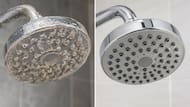
Mixing orange peels with white vinegar makes it possible to prepare a homemade cleaner for certain household tasks. UF/IFAS recommends this mixture to make use of a kitchen waste product and an inexpensive household ingredient such as vinegar, which helps remove certain mineral deposits.
However, this preparation should never be mixed with bleach, since the combination can release toxic gases, according to UF/IFAS.

How do you prepare the homemade cleaner with orange peels and white vinegar?
According to the recipe published by UF/IFAS, the ingredients are:
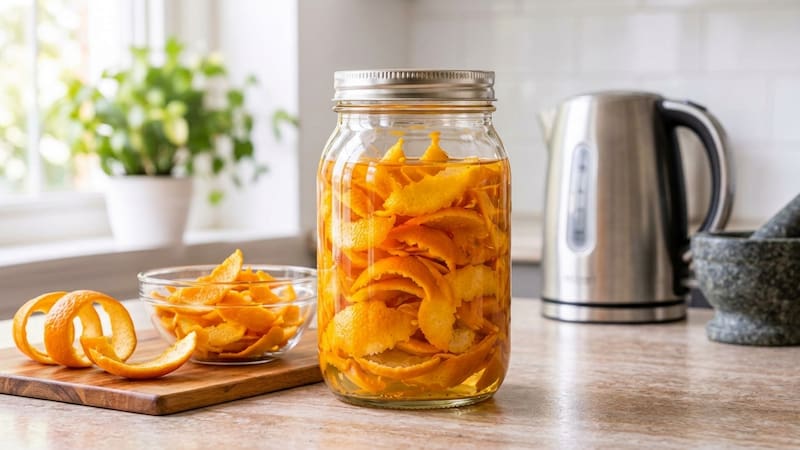
- Peels from four oranges.
- Enough white vinegar to fill a jar of about one liter.
- A clean jar with a lid.
- A strainer and a spray bottle for later application.
The step-by-step instructions to prepare the mixture according to UF/IFAS are:
- Place the peels in the jar: remove any remaining pulp and place the peels from four oranges inside the container.
- Add the white vinegar: fill the jar until the peels are covered and close it.
- Let the preparation rest for a week: the UF/IFAS recipe sets that time before using the product.
- Strain the liquid: once the week has passed, remove the peels with a strainer and transfer the liquid to a spray bottle.
- Test the mixture before cleaning: apply a small amount of the mixture to a discreet area of a surface to make sure it does not cause damage, and then use a cloth to clean.
The University of Florida guide recommends labeling homemade preparations, keeping them out of the reach of children, and not storing them in containers that could be mistaken for food or drink containers.