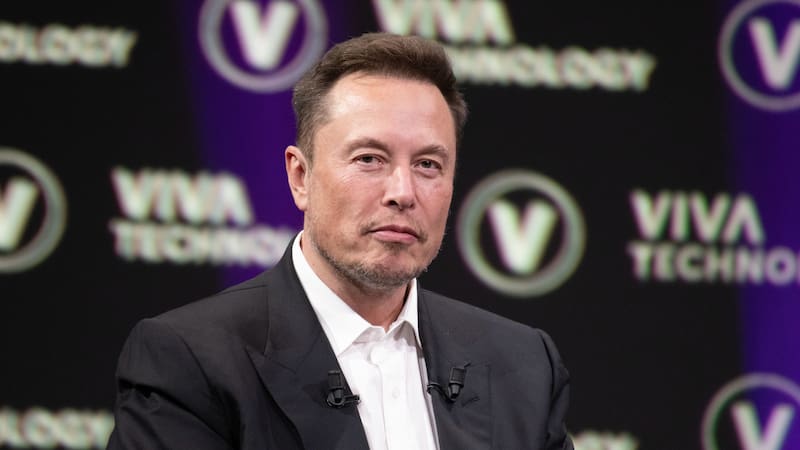
Elon Musk said superintelligence has already arrived and said the world has entered the so-called singularity. The entrepreneur posted the message on Nov. 22, 2026, on X, in response to a post by Liv Boeree about the Riemann hypothesis.

“Undeniable superintelligence has arrived. Welcome to the singularity,” Musk wrote on his account at 11:26 UTC in a message directed at Boeree. Hours later, the post drew a response from Yann LeCun, who questioned the claim.
Note: what Elon Musk said about superintelligence
Musk was replying to Liv Boeree, who had posted a comment about the Riemann hypothesis. The commentator jokingly referred to the 19th-century mathematical question about where the zeros of a function are and noted that this question now affects the valuation of a trillion-dollar AI company.
The exchange came after Levent Alpöge, an Anthropic researcher, announced on Nov. 20 that he had proved the Riemann hypothesis together with the AI Claude. A day before his reply to Boeree, Musk had called that proof “Accept new mind-blowing feat achieved by superintelligence.”
In that context, Musk said undeniable superintelligence had arrived and welcomed the singularity. The singularity is a concept used to describe a hypothetical scenario in which artificial intelligence far surpasses human capabilities and accelerates technological development.
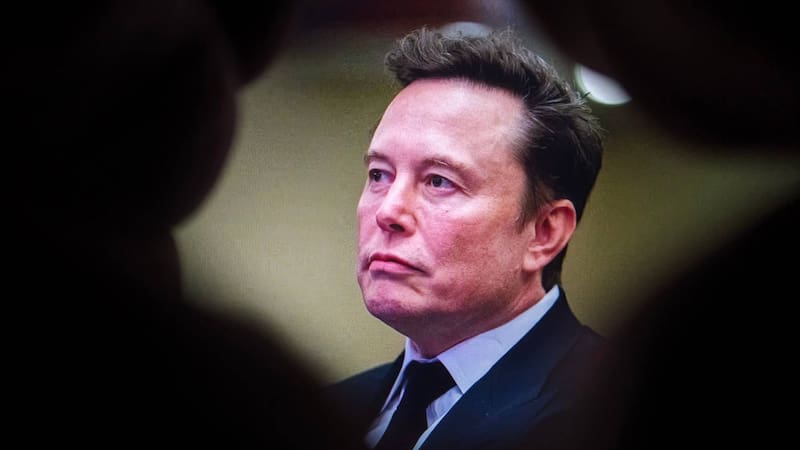
Yann LeCun questioned Musk’s claim.
The post drew a response from Yann LeCun, who cast doubt on whether one can speak of superintelligence while AI systems still have limitations in physical-world tasks.
“I just learned today that we have superintelligence, but we still don’t have level 5 self-driving,” LeCun wrote. The reference points to the fact that level 5 autonomous driving does not yet exist, meaning a system capable of driving without human intervention in all conditions and situations. LeCun added that most 17-year-olds learn to drive in about 20 hours of practice.
LeCun also pointed to robots’ limitations compared with abilities children develop. Among his examples, he said robots still cannot match what a 8-year-old child with no prior training can do.
The debate over what superintelligence means
The exchange between Musk and LeCun puts the spotlight once again on a central question in the AI debate: what conditions a system must meet to be considered superintelligent.
Musk did not identify the model he said had reached that level, nor did he present specific evidence in the post. LeCun, by contrast, used the current limits of self-driving and robotics to question whether artificial intelligence has reached that point.