
By Pedro Bianco
En esta noticia
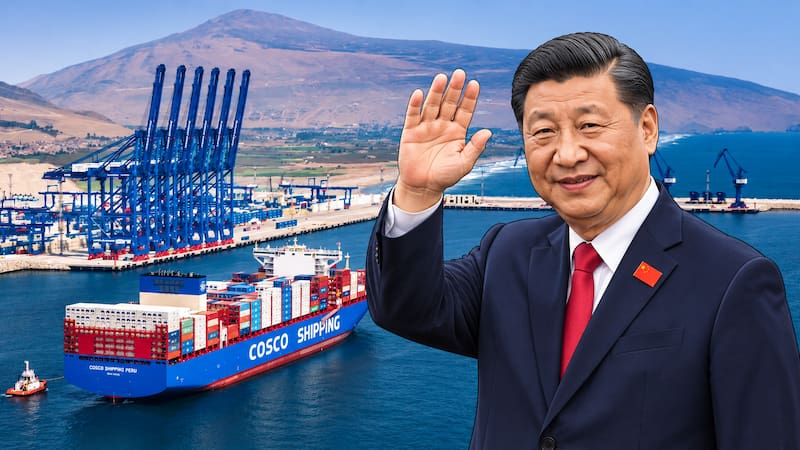
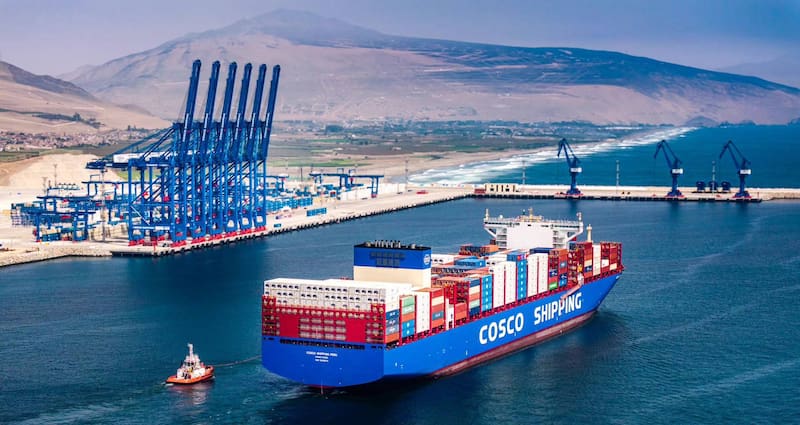
China is doubling down on one of Latin America’s most strategic projects: the Chancay megaport in Peru. After completing the first phase, which is already operating, Chinese state shipping company COSCO is preparing a second phase with an investment of more than US$1.3 billion that will expand the terminal from 4 to 15 berths. The goal is to cement Chancay as the main gateway for trade between South America and Asia.
What the Chancay megaport is
Chancay is a megaport north of Lima on Peru’s Pacific coast, financed and operated by Chinese state shipping company COSCO Shipping. It is not an old port that has been renovated, but a new, large-scale project designed as a hub to connect South America with Asia. It is also one of China’s most emblematic investments in the region.


The first phase is already operating
The project is not a promise for the future: its first phase, which cost about $1.315 billion, is already finished and the port began operating in 2025. During its first period of activity, it moved hundreds of thousands of containers and more than 1 million tons of cargo, and projections point to further growth. In other words, Chancay is already up and running, not just on paper.
The second phase: 4 to 15 berths and more than $1.3 billion in investment
The new announcement points to the next leap. The second phase, planned to begin in 2027, will involve an investment of more than $1.3 billion and significantly expand the terminal’s capacity: it will add 11 berths to go from the current four to 15.
That expansion would kick in as the port reaches higher cargo volumes, around 1 million containers. Combined, the two phases bring the project’s total investment to more than $3.4 billion.
Why it is called a gateway to Asia
Chancay is designed to receive large vessels and sharply cut shipping times between South America and Asia: the trip, which through other routes can take 35 to 40 days, would be reduced to about 23.
That makes the port a maritime shortcut for the region’s trade with China and the rest of Asia, with an impact on exports such as minerals and agricultural products and on the arrival of Asian goods.
The China-U.S. battle for influence in the region
The megaport cannot be understood only in commercial terms. China’s strong presence in a project of this size, just miles from Lima, drew the attention of the United States, which views with concern China’s economic and potentially strategic advance in Latin America.
Chancay has thus become a symbol of the competition between the two powers for influence in the region, a dispute increasingly being fought through ports, infrastructure and trade routes.