
En esta noticia
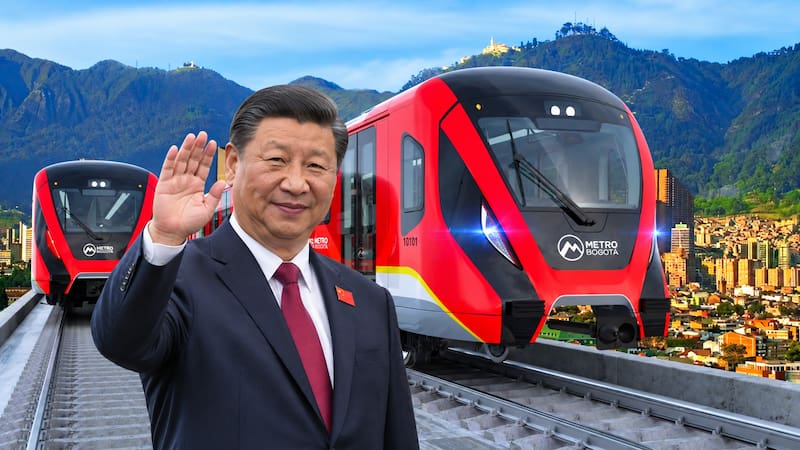
China is moving ahead with its role in one of Latin America’s most important transportation projects. It is the first line of the Bogota Metro in Colombia, which will have 30 electric trains built in China and designed to carry 1,800 passengers.

The train sets have six cars, operate automatically and were built by CRRC Corporation Limited, a Chinese company owned by the Chinese government through CRRC Group, which specializes in rail equipment and unveiled the first units in June 2025.
The trains began arriving in Colombia in September 2025 and, although technical tests are already under way, they are not yet ready to carry passengers.
What the 30 trains China built for the Bogota Metro are like
The trains for the first line of the Bogota Metro were designed to carry 1,800 passengers per train. Each unit is 440 feet (134 meters) long and made up of six cars, with room for 300 people in each one. The train sets also include spaces for wheelchair users and reserved seats for priority passengers, such as older adults and pregnant women.
One of their main features is that they run on electricity and have an automatic driving system that does not require a driver. They also include rail signaling and control technology that helps coordinate train movements. The system will connect the Bosa sector with Caracas Avenue and 72nd Street in 27 minutes, a trip that can currently take up to two hours.
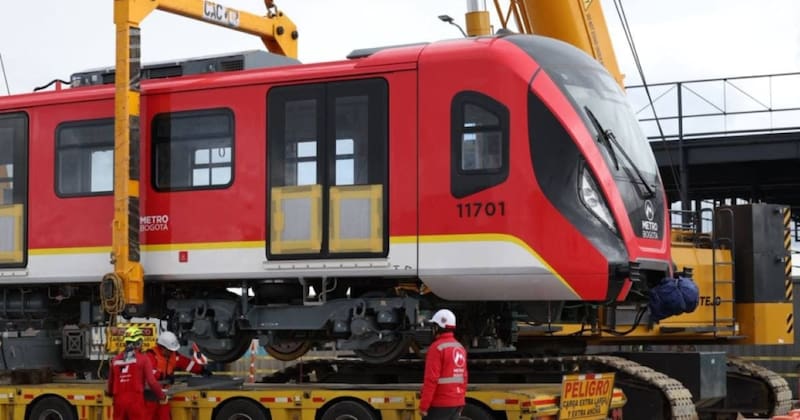
Where the trains were built and when they will begin operating in Colombia
The 30 train sets were built in Changchun, a city in northeastern China, by the state-owned Chinese company CRRC Corporation Limited, which specializes in rail equipment. Production of the first train began in mid-2024 and took about 10 months. On June 24, 2025, the first two units were officially unveiled at the Chinese factory. Afterward, the cars were moved to the port of Qingdao to begin their sea voyage to Colombia.
The first train arrived at the port of Cartagena on Sept. 2, 2025, and was then taken to the Bosa maintenance yard in Bogota, where assembly work and technical testing began. Deliveries continued through 2026, as the Bogota mayor’s office reported on Nov. 25 of that year that 24 of the 30 planned train sets had already arrived, with the six remaining trains set to be shipped from China before Dec. 31 and commercial service on the first line scheduled to open in March 2028.