
En esta noticia
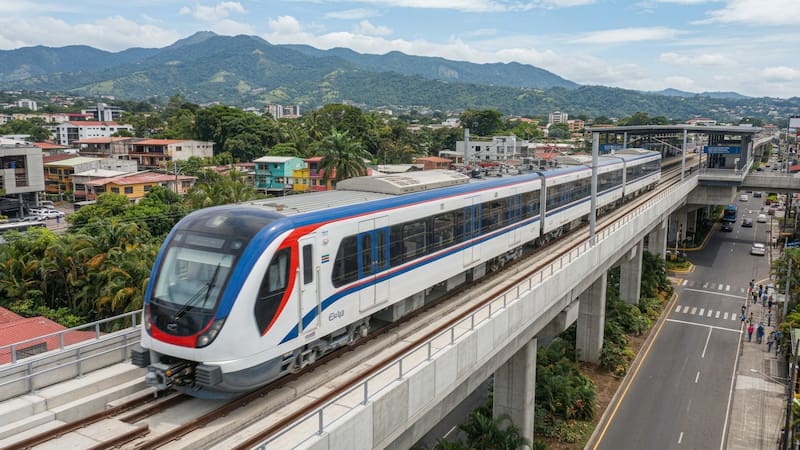
Costa Rica is moving ahead with a rail project aimed at transforming public transit and improving connections among its main cities. The initiative calls for an electric train with new cars, stations and upgraded tracks to make daily travel easier for thousands of passengers.
To carry out the work, it will have support from international organizations, including the European Investment Bank (EIB), the public bank of the European Union and its main project-financing arm, which will provide $250 million through a loan.
The proposal includes 28 new trainsets, 30 stations and two rail lines covering more than 51 kilometers.

Costa Rica will have a new electric train with European Union support
Costa Rica will move ahead with construction of a new electric train system to modernize public transit in the Greater San Jose Metropolitan Area. The project includes renovating and electrifying the existing rail infrastructure, as well as adding new cars to connect different parts of the metro area. According to the Costa Rican Railway Institute (INCOFER), the initiative aims to improve mobility for more than 3 million residents and provide service capable of carrying more than 100,000 passengers a day.
The initiative has backing from the European Union through its Global Gateway strategy, aimed at boosting investment in sustainable infrastructure. One of the main European contributions comes from the European Investment Bank (EIB), which signed a $250 million loan to support the construction of the rail system on March 21, 2025. The project will be carried out by INCOFER, the public agency in charge of managing Costa Rica’s railroads.
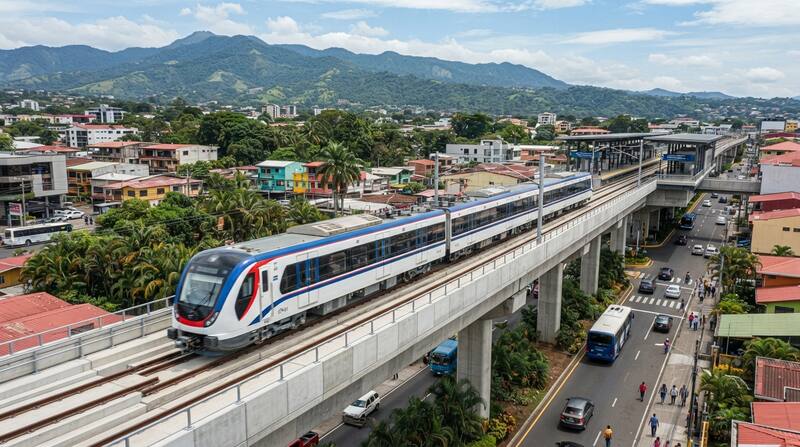
What Costa Rica’s new electric train will be like and what features it will have
The project includes two rail lines totaling more than 51 kilometers of double track. One will connect Paraíso, in the province of Cartago, with San Jose, while the other will link the capital with downtown Alajuela. To get both routes up and running, the plan calls for 28 new electric trains and the construction of 30 stations, plus two terminals and nine grade-separated crossings.
The system will run about every 10 minutes and operate every day of the week. According to information released by the European Investment Bank, the service is expected to directly benefit more than 100,000 passengers a day by making commutes to work and school easier. Electrification also aims to reduce transportation-related pollution and improve the efficiency of urban mobility.

How much international organizations will invest and when work will begin
The project has an $800 million financing package. Of that total, $250 million comes from the loan signed by the European Investment Bank, while the remaining $550 million will come through the Central American Bank for Economic Integration (CABEI), with participation from the Green Climate Fund. The latter includes $178.7 million in co-financing and another $21.3 million as part of broader international financing.
The Costa Rican Legislative Assembly approved the loan contracts in May 2026, allowing the project to move ahead. On Nov. 10, 2026, INCOFER published the tender to hire a Project Management Office, which will be responsible for planning, coordinating and overseeing the different phases.