

En esta noticia
Carlos Slim, Mexico’s richest man, turned an open-air dump in the municipality of Nezahualcoyotl, State of Mexico, into a shopping center that includes health care, sports, and educational spaces. Today, Ciudad Jardín Bicentenario stands out as a project that combines business, investment, urban renewal, and government participation.

What for decades was one of the largest dumps in the State of Mexico is now home to a commercial, sports, educational, and health complex. Thousands of tons of waste were buried under an urban project that transformed the landscape in the east of the Valley of Mexico.
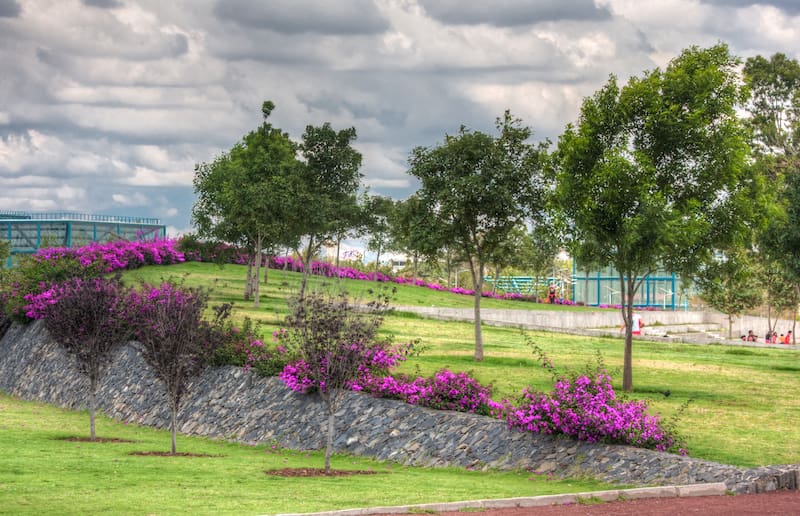
It was Carlos Slim, along with companies from his group, foundations and government authorities, behind the initiative. It was inaugurated on May 22, 2009.
The Transformation of Ciudad Jardín Bicentenario
The story of this project began before its stores were built. For more than three decades, the land now occupied by Ciudad Jardín Bicentenario served as an open-air dump known as Bordo de Xochiaca.
Since 1975, the site received trash from different parts of the Valley of Mexico. Before it was shut down in 2006, it had accumulated between 10 million and 12 million tons of waste, according to information from the Carlos Slim Foundation.
The buildup of waste caused:
- Bad odors
- The spread of pests
- Gases from decomposition
With the dump’s closure, a new stage began for the site. The land went through a cleanup process that included:
- Compacting and sealing the waste
- Installing systems to capture biogas
The cleanup laid the groundwork for developing a space for commercial activity, public and private services, education, and recreation.
Carlos Slim’s Role in the Transformation of Bordo de Xochiaca
Carlos Slim’s involvement grew out of a proposal driven by:
- State of Mexico authorities
- Nezahualcoyotl municipal government
- Gucahe Development Company
The businessman saw the initiative as a chance to develop a large-scale real estate project but also as an opportunity to create infrastructure and services for an area that had lived alongside a dump for years.
As part of the first steps, 46 hectares were purchased from the state government for about 250 million pesos ($13.4 million dollars). These funds helped finance the initial environmental restoration work.
Companies linked to the businessman, such as Constructora IDEAL and Promotora Sanborns, took part in about 70% of the private investment, estimated at about $200 million dollars.
Plaza Ciudad Jardín: More Than 150 Stores, Restaurants, and Movie Theaters
One of the development’s main draws is Plaza Ciudad Jardín, the shopping center that opened in late 2008 and became a major meeting place for residents of Nezahualcoyotl and nearby municipalities.
The complex includes between 165 and 194 retail spaces, according to different reference profiles for the development. Among the main stores are:
- Sears
- Liverpool
- Sanborns
- Suburbia
- Adidas
- Puma
- Telcel
- Mixup
The project also includes restaurants, banks, entertainment venues, and services for the whole family. Among its main draws are Cinépolis and Recórcholis, which round out the shopping and dining options.
According to the Plaza Ciudad Jardín listing published by Inmuebles Carso, the complex is part of the commercial developments tied to the business group.