

En esta noticia
Carlos Slim, one of Mexico’s best-known businessmen, said periods of economic crisis can become good times to invest.
In an interview published Dec. 2, 2007, in Washington, the founder of Grupo Carso explained that financial hardship can reveal companies for sale at low prices and buying opportunities that do not usually come up during times of growth.
At the time, the Mexican tycoon explained how he made decisions during the 1982 crisis and why he does not see periods of uncertainty only as times of risk.


Why does Slim believe a crisis can be an opportunity to invest?
“In my opinion, I never take risks. Probably small risks, but I don’t consider myself someone who always takes risks. I think I’m very conservative,” he said during the conversation, which was reposted on his website.
Recalling the economic backdrop of 1982, when he was 42, Slim said he found companies available at very low prices. As he explained it, many foreign companies wanted to sell their operations in Mexico, and banks were also unloading assets.
The businessman said his decision to buy during that crisis was tied to how he viewed the assets and to the possibility that economic conditions could change. He also cited his father’s experience, saying his father had kept his businesses in Mexico during the years of the Revolution.
Slim explained that he was not looking for quick profits: “We are not speculators or short-term investors. We are looking for a long-term plan.”
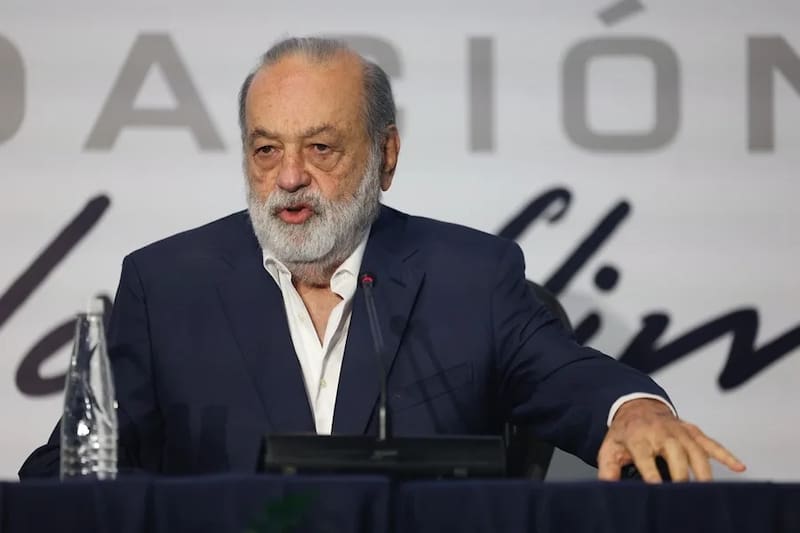
In that sense, he said periods of crisis can be favorable for finding available assets and businesses.
“We invest more,” he said, describing his group’s strategy during those times. He added: “It’s a better time to invest because you find many things, many opportunities from people who want to leave”.
What principles does Carlos Slim apply to run his companies?
During the interview, the businessman also described some management rules he attributed to his business group. Among them, he highlighted:
- Reinvesting resources
- Upgrading technology
- An administrative structure with few layers.
“One is that the money from the business stays in the business, and you look to reinvest it,” he explained. He also said companies have to stay competitive through the use of modern equipment and technology.
Another of his principles is to prepare during good times to get through the hard ones. Slim explained it with a reference to the years of “fat cows” and “lean cows”: companies should build capital when conditions are good, so they do not have to lay off staff when difficult times arrive.
“In the years of fat cows, businesses should build capital and speed up their development so that in the years of lean cows you don’t have to lay people off,” he said.