
En esta noticia
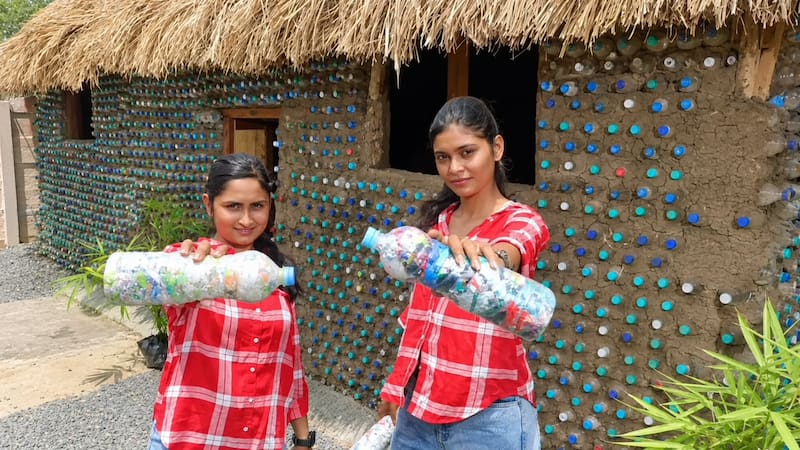
A house built with thousands of plastic bottles, tons of waste and cow dung may seem hard to imagine, but two 23-year-old friends living in India carried out the project and built a home that stays comfortable year-round without air conditioning or heating.
The project was led by two friends who saw discarded materials as an alternative way to build. To do it, they gathered 16,000 bottles and used between 12 and 13 tons of nonrecyclable plastic, along with other natural materials they incorporated into the walls and structure.
The build took 10 months and resulted in Wawar, a home that combines traditional techniques with reclaimed materials. Its design stands out not only for the materials used, but also for the way it uses the properties of the earth to keep indoor conditions comfortable as temperatures change.


How two 23-year-old friends built a house with 16,000 bottles and 13 tons of plastic
Namita Kapale and Kalyani Bharmbe are two friends from Aurangabad, India, who decided to create a home with recycled materials after learning in 2021, during the COVID-19 pandemic, about a school project in Assam that used bottles filled with plastic to make seats. The idea sparked their interest and they began collecting materials from the streets and by going to garbage collectors, hotels and businesses.
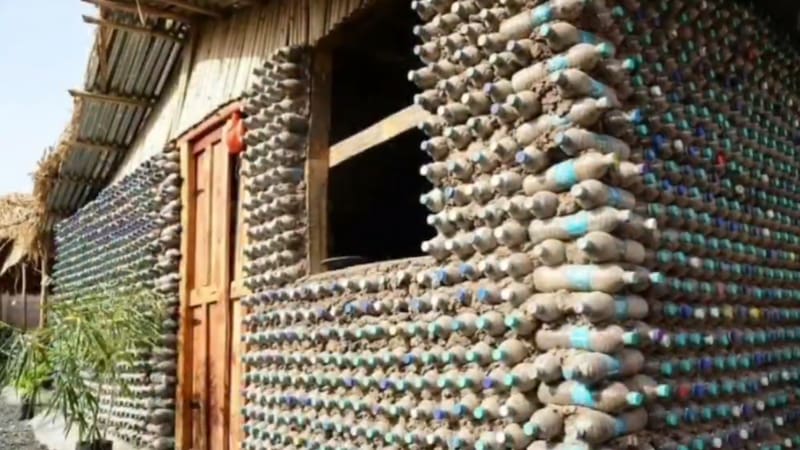
They also gathered about 16,000 bottles to build the home: 10,000 were filled with multilayer plastic and the other 6,000 with soil, for a total of 13 tons of nonrecyclable plastic, plus mud and cow dung to coat the walls. The process, however, was not easy, as the first test walls collapsed two or three times because the materials could not withstand water.
How the house regulates its temperature without air conditioning or heating
One of the most striking features of the home is that it does not need air conditioning or heating because of the properties of mud buildings, which keep indoor conditions comfortable as outdoor temperatures change. So even though the walls include thousands of bottles and plastic waste, the home’s thermal performance is mainly tied to the use of earth as a building material, Namita explained in an interview with The Better India.
The friends took about 10 months to finish the house, with the help of 15 local workers, and spent about 70,000 rupees from their savings, in addition to financial support from their families. The home was named Wawar, which means field or open space, and was built on a plot of nearly 4,000 square feet. It has two partially open square rooms and a circular structure.
Its creators estimate it can last between 10 and 15 years if it receives regular maintenance with a mixture of soil and cow dung.