
En esta noticia
When you decide to travel, it is common to look for options to protect luggage and prevent possible theft, openings or tampering during transit. Among the available options are TSA locks and security seals, two tools that help keep suitcases closed and alert you if someone tried to get into them.
However, they do not offer the same features or work the same way during airport screening. While a TSA lock allows authorized staff to inspect luggage without breaking the device, a seal works as a disposable closure.


What is a TSA lock and how do you get one?
A TSA lock is a security device designed to protect luggage during travel and allow airport security officers to inspect it without breaking it. Its name comes from the Transportation Security Administration, or TSA, the U.S. agency in charge of airport security screenings.
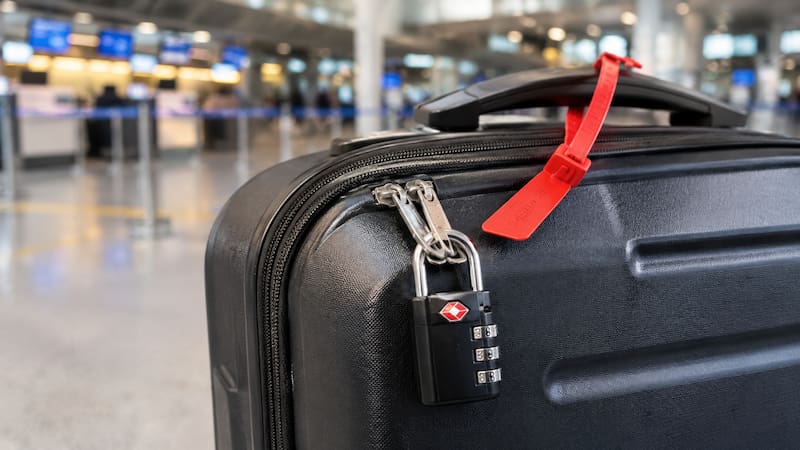
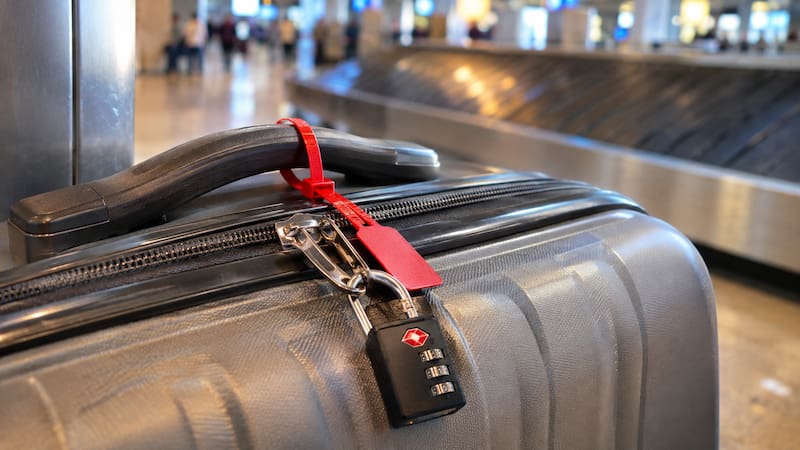
These locks have a special mechanism that can be opened with a master key used by authorized personnel. That way, agents can inspect the suitcase without damaging the device. They are sold at travel goods stores, leather goods shops and online retailers. They are identified by a red diamond symbol, which indicates they are compatible with the TSA inspection system.
Why should you protect your suitcase when flying?
Protecting luggage helps reduce the risk that unauthorized people can access your belongings during transit, layovers or while waiting in airport terminals.
Although airports have security checks, suitcases can still be opened, tampered with, stolen from or damaged while moving through the system. That is why using a lock or a seal adds another layer of protection and lets you know if someone tried to get into the contents.
What are the drawbacks of using a security seal?
Security seals are an inexpensive alternative for securing a suitcase’s zippers and detecting possible tampering. However, they have some limitations:
- They cannot be reused: once cut, a new one must be put in place.
- They can be cut easily: they do not offer the same resistance as a lock.
- They do not stop all attempts to open the bag: they do not guarantee that no one can access the contents of the suitcase.
- They can break during an inspection: if security personnel need to open the luggage, they may remove or cut them.
Because of these features, their main purpose is to warn of possible tampering, rather than to prevent any attempt to get inside.
Which is better for protecting a suitcase?
The best option is to combine both to add more protection to your luggage. The TSA lock lets you secure the suitcase’s zippers and, at the same time, makes airport security checks easier, since authorized agents can open it with a master key.
The seal, meanwhile, can be used to attach the lock to a fixed part of the suitcase, such as the top handle, and add an extra point of security. In this way, both serve complementary functions: the lock keeps the suitcase closed and the seal helps alert you to possible tampering.