
En esta noticia
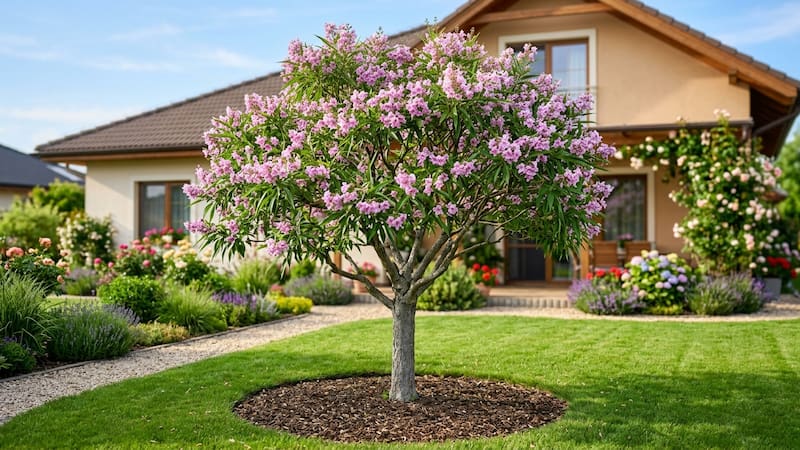
The chitalpa is an ornamental tree that stands out for its pink flowers and its ability to withstand high temperatures and lack of water. This species, originating from a cross between two trees, combines striking blooms with characteristics that make it an alternative for gardens and small green spaces where the goal is to reduce water consumption.
According to Utah State University, this tree grows quickly, tolerates drought, and can develop in alkaline soils. Its flowers, which can also be white or lavender, appear in late spring and can last through the summer, adding color to the landscape for much of the warm months.


What is the chitalpa like? The pink-flowered tree that resists heat and lack of water
The chitalpa is an ornamental tree that stands out for its flowers in pink, white, or lavender tones and for its ability to tolerate heat and drought. According to Utah State University, it is a hybrid obtained from crossing southern catalpa and desert willow, two species that give it particular characteristics.
Among the most notable characteristics of the chitalpa are:
- Striking flowers: they can be pink, white, or lavender and add color to the garden.
- Drought resistance: it tolerates water scarcity and is suitable for low-water-use green spaces.
- Wind resistance: it withstands strong winds without its branches breaking easily, according to the university fact sheet.
- Little fruit production: it generally does not produce fruit, which can reduce debris falling to the ground.
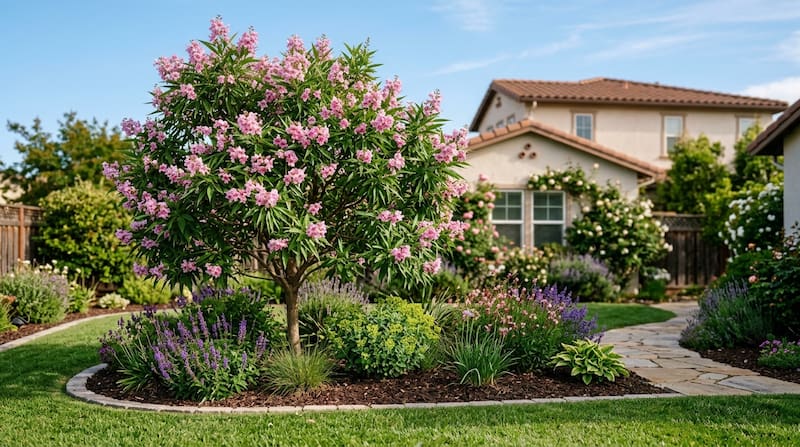
In this sense, the chitalpa can be an alternative for residential gardens with limited space, since it has a compact size compared with other shade trees. However, it is important to choose a place where it can develop its canopy without obstacles for healthy growth.
What care the chitalpa needs and where it is best to plant it so it grows healthy
The chitalpa is an option for those looking for an ornamental tree that does not require large amounts of water once established. According to Utah State University, it tolerates high temperatures, drought, and alkaline soils, so it can adapt to different environments.
These are some of the care tips to keep in mind:
- Sunlight: it prefers full sun, though it can also grow in areas with partial shade.
- Watering: it tolerates drought, but it needs an adequate water supply during establishment and during especially dry periods.
- Soil type: it withstands soils with a high pH, a useful trait in alkaline ground.
- Available space: although it is described as a small shade tree, it is important to leave room for the development of its branches and canopy.
- Location: it can be planted in gardens and low-water-use green spaces. According to the University of Utah, it has a deep root system that helps prevent damage to patios and walkways.
The institution’s fact sheet also indicates that the chitalpa grows in hardiness zones 6 to 9 of the U.S. system, a classification based on minimum winter temperatures. This means that adaptation to each region depends not only on heat and water availability, but also on winter conditions.