
En esta noticia
The oven is one of the appliances in the kitchen that can accumulate the most dirt with use. Food residue, grease splatters and stuck-on stains on its walls can make cleaning difficult, especially when they remain for a long time.
To deal with this dirt, the University of Georgia in the United States recommends a procedure that uses baking soda, white vinegar and water as part of a deep cleaning of the oven.
As the Cooperative Extension Service of the University of Georgia explains, the vinegar and water mixture is applied after a baking soda paste is left to act on the interior surfaces.
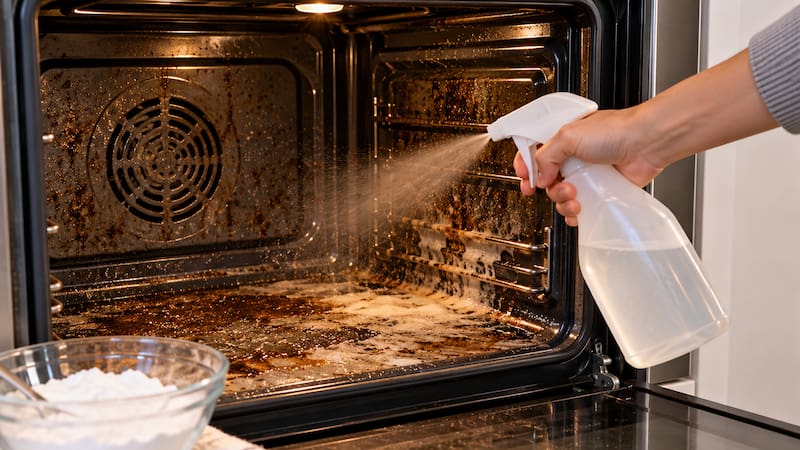
What is spraying white vinegar inside the oven for?
White vinegar diluted in water is used as part of a procedure intended to remove grease, food residue, and dirt accumulated in the oven.
The university recommends first applying a baking soda paste and letting it sit for several hours, preferably overnight.
After that time, a mixture of equal parts vinegar and water is sprayed onto the treated surface. Next, it is scrubbed with a sponge or a nylon scouring pad to loosen the dirt.
The procedure can be repeated if stuck-on residue remains.
How do you clean the oven with vinegar and baking soda?
According to the University of Georgia’s instructions, the procedure consists of the following steps:
- Remove the oven racks to make it easier to access the interior surfaces.
- Remove loose food residue and dirt that can be taken out before starting.
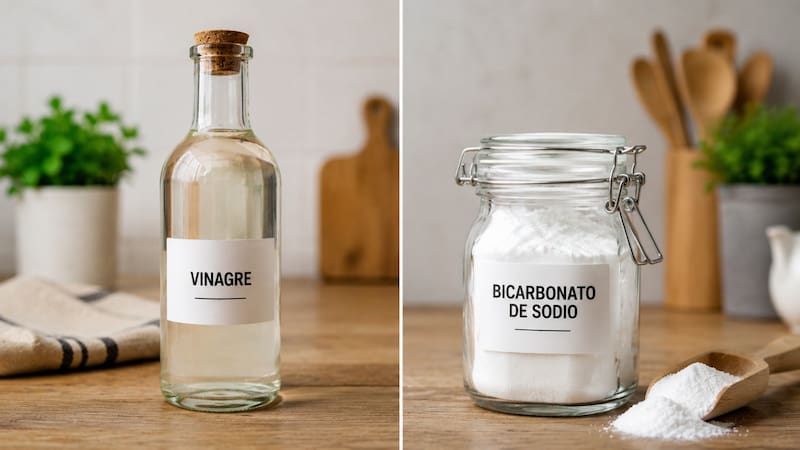
- Prepare a paste with approximately half a cup of baking soda and three tablespoons of water.
- Spread the paste inside the oven and let it sit for several hours, ideally overnight.
- Spray a mixture of equal parts white vinegar and water on the treated surfaces.
- Scrub with a nylon scouring pad to help remove the dirt.
- Wipe with a damp sponge and repeat the procedure if necessary.
Finally, the university advises wiping again with a damp sponge to remove the baking soda residue before putting the racks back in place.
What precautions should be taken when cleaning the oven?
Before starting, it is important that the oven be turned off and completely cool. It is also advisable to check the manufacturer’s instructions to see which products and materials are suitable for cleaning it.
The University of Georgia recommends protecting the heating elements during the procedure and testing cleaning methods beforehand in an inconspicuous area when there is a risk of damaging a surface.
In addition, the guide warns that removing very stuck-on residue may require several passes, so all the dirt is not necessarily removed in a single attempt.