
En esta noticia
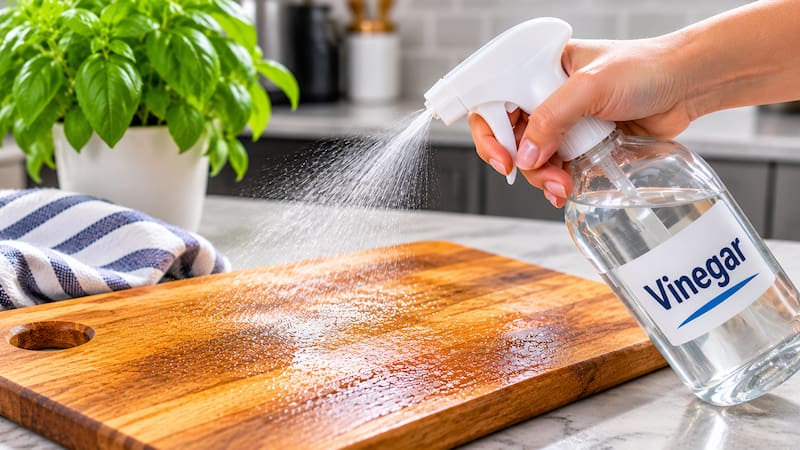
Because wooden cutting boards are common kitchen tools, daily use can lead to a buildup of food residue, moisture and bad odors on their surface. To clean them and keep them in better condition, one household trick is to spray them with white vinegar.
This method takes advantage of vinegar’s acidity, which helps loosen certain residues, neutralize odors and reduce some microorganisms on the surface.
What does spraying white vinegar on wooden cutting boards do?
Spraying white vinegar on wooden cutting boards helps clean the surface, neutralize bad odors and reduce the presence of some microorganisms that can remain after cutting food.
Wooden boards can collect food scraps, moisture and odors, especially when used to cut garlic, onion, fish or meat. In this context, vinegar works because it lets you treat the surface without relying on scented products.
How does white vinegar clean wooden cutting boards?
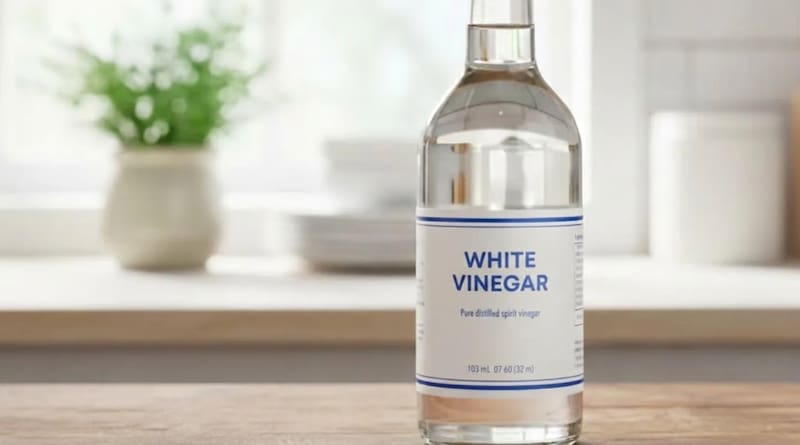
The main active ingredient in white vinegar is acetic acid (CH3COOH), a weak organic acid that gives it its characteristic smell and sour taste. When applied to a wooden board, its chemical action is mainly linked to lowering the surface’s pH.
Acetic acid can affect certain microorganisms because it changes the chemical conditions around them. In particular, some of its molecules can pass through the cell membranes of some bacteria and, once inside, dissociate and release protons (H+). This alters the cells’ internal balance and can interfere with metabolic processes needed for survival.
In addition, its acidity helps loosen some mineral residue and surface deposits. It also helps neutralize certain odors associated with food scraps, although it does not necessarily eliminate all the substances responsible for them.
How do you use the white vinegar trick to clean wooden boards?
To use this method at home, you can use white vinegar and follow these steps:
- Remove food scraps: clear away any crumbs, particles and residue left on the board after use.
- Wash the surface: scrub with warm water and dish soap using a sponge or clean brush.
- Apply the white vinegar: put white vinegar in a spray bottle and spray enough to cover the board’s surface.
- Let it sit: allow the product to remain on the wood for a few minutes so its acidity can come into contact with surface residue.
- Wipe away the residue: use a clean, damp cloth to remove excess vinegar.
- Let it dry: stand the board upright in a ventilated area until it is completely dry before storing it.
It is not a good idea to leave the board submerged in water or keep it wet for long periods, because the wood can warp, crack or deteriorate.